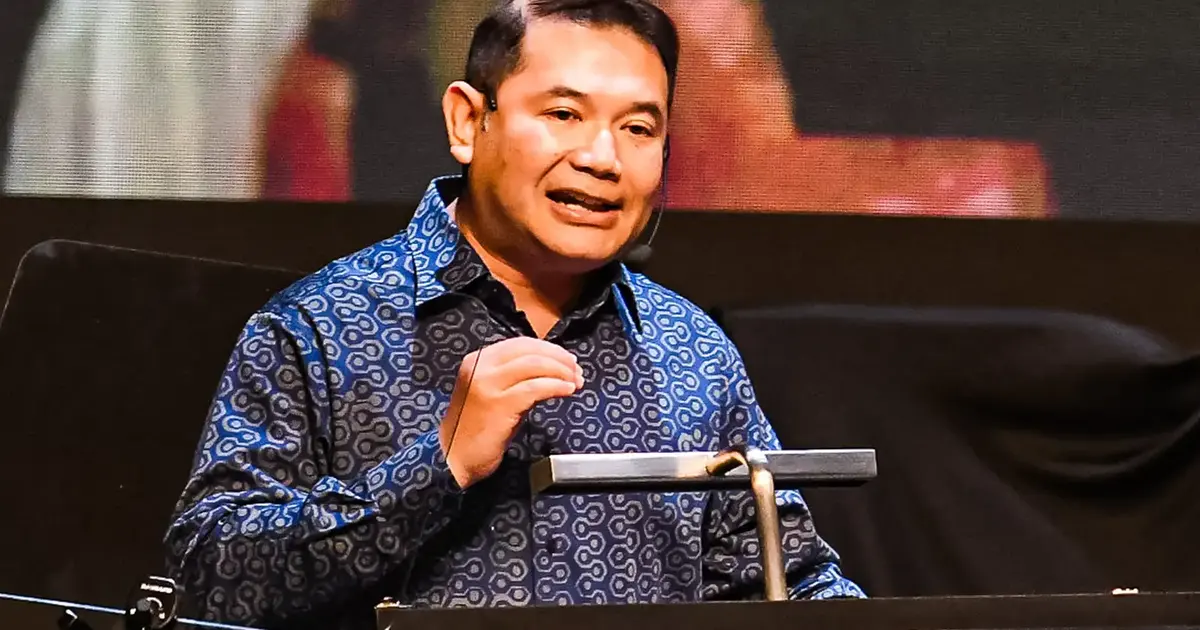
Parti Bersama Malaysia has completed its internal selection process for the upcoming Johor state election, with 73 candidates expressing interest in contesting seats under the relatively new political vehicle. Party president Rafizi Ramli announced that the shortlisted candidates would be revealed on Friday, marking a significant milestone in the party's preparation for what could be a defining electoral test for the nascent organisation.
The scale of interest—73 volunteers competing for nomination—underscores the momentum that Bersama has generated since its formation. The party, which positions itself as a reform-minded alternative in Malaysia's fragmented political landscape, appears to be attracting grassroots enthusiasm in Johor, a state that has traditionally been dominated by Umno and more recently contested by Pakatan Harapan and Perikatan Nasional. The large candidate pool suggests either considerable organisational capacity or broad appeal among potential office-seekers in the state.
The completion of the selection process itself represents an administrative undertaking of some complexity. Bersama must have evaluated applications, conducted interviews, assessed candidates' viability in their respective constituencies, and balanced competing demands between party loyalty, electoral mathematics, and factional considerations. The public announcement of a completion date indicates confidence in the process and suggests that the party is maintaining discipline in its timeline, an important signal for voters assessing whether the organisation possesses the competence required to govern.
Johor holds particular significance in Malaysian politics. As the most developed state on Peninsular Malaysia's southern coast and home to a substantial urban population in cities like Johor Bahru, electoral outcomes there often reflect broader national sentiment and can influence coalition dynamics at the federal level. A strong showing by Bersama in Johor could enhance the party's credibility nationally and potentially position it as a kingmaker in future federal negotiations, depending on how its performance translates into seats won.
The announcement of the shortlist on Friday will reveal not only which candidates have survived the selection process but also provide clues about Bersama's electoral strategy. The party will likely contest in constituencies where polling data or grassroots assessment suggests competitive prospects, balancing ambition against realistic expectations. The geographic distribution of candidates across urban and rural districts, their demographic profile, and their professional backgrounds will offer insights into how Bersama intends to appeal to Johor voters.
Rafizi Ramli's stewardship of the selection process carries personal weight. As a former PKR deputy president and a figure with established credibility in reform circles, his management of candidate nominations will be scrutinised for consistency with the party's stated principles. Any perception that selection was influenced by cronyism or factional loyalty rather than merit could undermine Bersama's positioning as a reform alternative to established parties.
The composition of Bersama's candidate slate also matters for what it signals about the party's coalition prospects. Whether Bersama contests alone, coordinates with other opposition parties, or pursues direct negotiations with Barisan Nasional or Perikatan Nasional will likely become clearer as the election campaign unfolds. The candidates selected may include individuals with pre-existing relationships to other political organisations, hinting at potential post-election alignments.
For Johor voters, the emergence of a third substantial political force represented by Bersama potentially enriches electoral choice but complicates balloting decisions. In a three-way or multi-way contest, vote-splitting becomes a factor, and voters must weigh whether supporting Bersama advances their preferred policy agenda or merely fragments the opposition and benefits their least-preferred option. Bersama will need to communicate clearly why its candidates represent a superior alternative to incumbents and other challengers.
The timing of Bersama's Johor participation is significant given the state's electoral cycle and broader political developments. The party has positioned itself as an alternative to the perceived lethargy of established opposition coalitions while maintaining distance from the governing Perikatan Nasional administration. Early election results in Johor could provide momentum for the party heading into any future federal polls, particularly if Bersama demonstrates the capacity to win seats and retain them.
With the shortlist announcement imminent, Bersama enters the campaign phase proper. The 73 candidates who made it through selection will now face the challenge of building campaign machinery, fundraising, and connecting with voters in their constituencies. For those who fell short, the process itself generates data for future candidate development. The coming weeks will test whether Bersama's organisational capacity extends from internal selection to ground operations capable of converting candidate ambitions into electoral victories.

%22%2F%3E%3C%2Fpattern%3E%3C%2Fdefs%3E%3Crect%20width%3D%22100%25%22%20height%3D%22100%25%22%20fill%3D%22url(%23ph4oatfg)%22%2F%3E%3Crect%20width%3D%22100%25%22%20height%3D%22100%25%22%20fill%3D%22url(%23ph4oatfp)%22%2F%3E%3Ctext%20x%3D%2250%25%22%20y%3D%2250%25%22%20text-anchor%3D%22middle%22%20dominant-baseline%3D%22central%22%20fill%3D%22rgba(255%2C255%2C255%2C0.95)%22%20font-family%3D%22Georgia%2C%20'Times%20New%20Roman'%2C%20serif%22%20font-weight%3D%22700%22%20font-size%3D%22320%22%20letter-spacing%3D%22-0.02em%22%3EPM%3C%2Ftext%3E%3C%2Fsvg%3E)
%22%2F%3E%3C%2Fpattern%3E%3C%2Fdefs%3E%3Crect%20width%3D%22100%25%22%20height%3D%22100%25%22%20fill%3D%22url(%23ph42gckg)%22%2F%3E%3Crect%20width%3D%22100%25%22%20height%3D%22100%25%22%20fill%3D%22url(%23ph42gckp)%22%2F%3E%3Ctext%20x%3D%2250%25%22%20y%3D%2250%25%22%20text-anchor%3D%22middle%22%20dominant-baseline%3D%22central%22%20fill%3D%22rgba(255%2C255%2C255%2C0.95)%22%20font-family%3D%22Georgia%2C%20'Times%20New%20Roman'%2C%20serif%22%20font-weight%3D%22700%22%20font-size%3D%22151%22%20letter-spacing%3D%22-0.02em%22%3EMuhyiddin%3C%2Ftext%3E%3C%2Fsvg%3E)