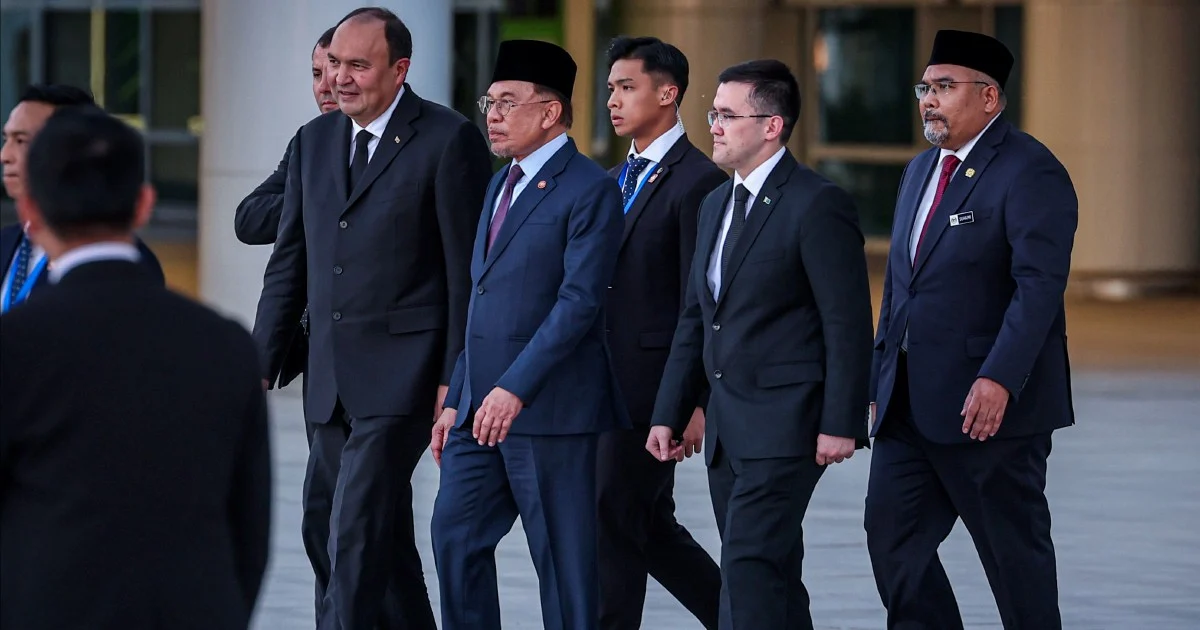
Prime Minister Datuk Seri Anwar Ibrahim is wrapping up his state visit to Turkmenistan with an intensive schedule of high-level diplomatic engagements designed to cement closer economic ties with the Central Asian nation. The visit represents Malaysia's concerted effort to diversify trading partnerships and tap into opportunities within the largely untapped markets of Central Asia, a region increasingly viewed as strategically important for Southeast Asian economies seeking to reduce dependence on traditional Western markets.
Turkmenistan, positioned strategically along the eastern shores of the Caspian Sea, occupies a significant position within Central Asia's economic landscape. The country possesses substantial energy reserves, particularly natural gas, and serves as a critical hub for regional trade corridors connecting Europe, Asia, and the Middle East. For Malaysia, engagement with Turkmenistan opens pathways to broader Central Asian markets while offering potential partnerships in sectors ranging from energy to infrastructure development.
The timing of Anwar's visit underscores Malaysia's growing recognition of Central Asia's importance. While Southeast Asia has historically focused on intra-regional trade and partnerships with established global powers, the business environment in Central Asia remains relatively underexplored by Malaysian enterprises. Turkmenistan's government has signalled openness to foreign investment, particularly in sectors aligned with the country's economic diversification goals beyond hydrocarbon exports.
During the concluding phase of his visit, Anwar is expected to hold formal discussions with Turkmenistan's president and senior government officials. These talks will likely focus on identifying concrete areas for collaboration, potentially including bilateral trade frameworks, investment facilitation mechanisms, and possibly cooperation in emerging sectors such as renewable energy and technology transfer. Malaysian businesses operating in sectors like construction, engineering, telecommunications, and consumer goods may find receptive markets in Turkmenistan's developing economy.
Malaysia's approach to Central Asia reflects broader foreign policy objectives. By cultivating relationships with nations outside traditional trading blocs, Malaysia positions itself as a bridge economy capable of facilitating North-South commerce and investment flows. This strategy complements Malaysia's existing roles within ASEAN and its engagement with other regional groupings, creating multiple pathways for economic growth.
The energy sector represents one potential area of mutual interest. While Malaysia itself is an energy producer, Malaysian companies have expertise in petroleum services, liquefied natural gas infrastructure, and downstream operations. Turkmenistan's substantial gas reserves and ongoing efforts to develop domestic industries could create partnership opportunities where Malaysian technical knowledge and capital deployment capabilities prove valuable.
Beyond energy, manufacturing and agricultural products present promising avenues for trade expansion. Malaysian manufactured goods, ranging from electrical and electronic components to palm oil-based products, could find demand within Turkmenistan and neighbouring Central Asian markets. Conversely, Turkmenistan's raw materials and processed goods could diversify Malaysian import sources, potentially reducing supply chain risks from existing major trading partners.
Investment protection and commercial facilitation frameworks typically feature prominently in such high-level diplomatic visits. Anwar and Turkmenistan's leadership may discuss establishing bilateral investment agreements that provide regulatory certainty and dispute resolution mechanisms attractive to Malaysian investors considering Central Asian expansion. Such frameworks remove perceived risks associated with operating in markets with which Malaysian businesses have limited historical experience.
The geopolitical dimension of this engagement merits consideration. Central Asia's stability and development carry implications for global energy security and regional balance. Malaysia's constructive engagement with Central Asian nations signals its commitment to inclusive multilateralism and diversified partnerships, distinguishing its approach from zero-sum geopolitical competition. This positions Malaysia favourably with multiple international stakeholders while advancing concrete economic interests.
From Turkmenistan's perspective, Malaysian engagement carries distinct value. Malaysia's experience as a successful Muslim-majority developing economy with established institutional frameworks and business culture resonates with policymakers in Ashgabat. Malaysian investments and partnerships could facilitate Turkmenistan's integration into broader Asian economic networks, complementing its existing relationships with Russia, China, and Iran.
The practical outcomes of Anwar's visit may include memoranda of understanding in specific sectors, business delegation exchanges, and possibly the establishment of joint commissions tasked with developing detailed collaboration frameworks. These mechanisms create momentum for subsequent commercial engagement even after the high-level political visit concludes.
For Malaysian enterprises, particularly small and medium-sized enterprises interested in international expansion, Turkmenistan represents a frontier market. Government-facilitated engagements reduce entry barriers and provide legitimacy that independent market entry would lack. As bilateral relationships strengthen, practical support structures including trade financing facilities and market intelligence may develop, lowering risks for Malaysian businesses exploring Central Asian opportunities.
Looking forward, this visit establishes foundational diplomatic and commercial relationships that may yield tangible results over subsequent years. While Central Asia remains peripheral to most Malaysian companies' immediate strategic concerns, the region's long-term potential combined with current under-penetration by Malaysian businesses suggests that early movers establishing credibility and networks may enjoy competitive advantages as these markets develop.