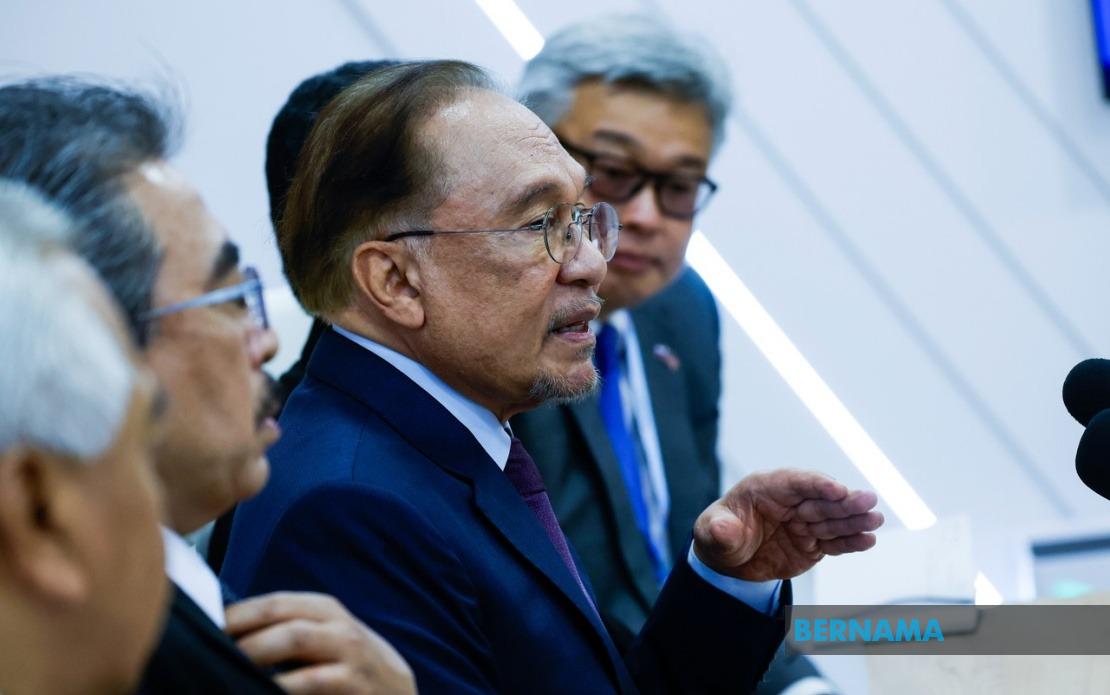
Prime Minister Datuk Seri Anwar Ibrahim has secured a watershed commitment from Russia to provide Malaysia with long-term guarantees of petrol, oil and gas supplies, a development that represents a fundamental shift in how the two nations approach energy security cooperation. During his two-day working visit to Kazan for the 35th ASEAN-Russia Commemorative Summit, Anwar emphasised that the energy arrangement would move beyond the conventional annual or seasonal renewal model that has historically characterised bilateral energy contracts. Instead, both governments have committed to establishing a multi-year framework that provides Malaysia with greater stability and predictability in meeting its energy requirements, a critical consideration as global energy markets remain vulnerable to geopolitical shocks and supply disruptions.
The breakthrough comes at an opportune moment for Malaysia's energy security strategy. Rather than relying on spot-market purchases or short-term contracts vulnerable to price volatility and supply interruptions, the long-term agreement with Russia offers the prospect of negotiated pricing and guaranteed volumes over an extended period. Anwar disclosed that the foundational work on this arrangement has largely been completed, with company representatives from both nations having already participated in preliminary discussions. The drafting stage has passed, core principles have won approval from both governments, and what remains is the formal review and signing by designated delegations—a process Anwar indicated would be expedited upon Malaysia's return from the Central Asian tour.
The energy component of Malaysia-Russia bilateral relations received particular attention during discussions with Russian President Vladimir Putin, with Anwar expressing gratitude for Moscow's willingness to deepen cooperation through state oil company Petronas. This engagement reflects a broader Malaysian strategy to diversify energy sources and reduce dependence on any single supplier, particularly given regional supply vulnerabilities and the unpredictable nature of global energy markets. The emphasis on long-term contracts rather than transactional arrangements also suggests that both nations recognise the mutual benefits of stable, predictable energy trade relationships that extend well beyond immediate commercial considerations.
Beyond the energy sector, Anwar articulated a philosophy that Malaysia must pursue bolder and more assertive economic engagement with Russia and other emerging markets, rather than adopting an overly cautious posture in international commerce. This represents a significant messaging shift, suggesting that Malaysia intends to view Russia as a legitimate strategic economic partner despite international sanctions and geopolitical tensions that have complicated Western engagement with Moscow. The position reflects Malaysia's commitment to maintaining non-aligned foreign policy principles while pursuing tangible economic benefits through diversified partnerships across continents and development stages.
Practical facilitation measures designed to strengthen the people-to-people dimension of bilateral relations also featured prominently in the Kazan discussions. Anwar called for the implementation of visa-free travel arrangements between the two countries and the establishment of direct aviation services, both mechanisms expected to stimulate tourist flows and deepen commercial and cultural exchanges. These proposals address practical barriers that have historically constrained the development of closer Malaysia-Russia ties, particularly in sectors such as tourism where geographic distance and visa requirements have limited bilateral activity compared to relationships with geographically proximate nations.
At the regional level, Malaysia participated in finalising the ASEAN-Russia Strategic Programme on Trade and Investment Cooperation covering 2026 through 2035, an initiative Anwar characterised as a transformative framework for the next decade of economic collaboration between the Southeast Asian bloc and Moscow. The ten-year timeframe reflects both parties' commitment to moving beyond episodic engagement toward institutionalised mechanisms for economic interaction. This regional architecture complements bilateral arrangements, creating multiple channels through which Malaysia can advance its economic interests while maintaining its influential position within ASEAN's collective dealings with major powers.
Existing economic data underscore the growth trajectory of Malaysia-Russia commercial relations, though bilateral trade volumes remain modest relative to Malaysia's overall international commerce. In 2025, Russia ranked as Malaysia's ninth-largest trading partner among European nations, with total bilateral trade reaching RM8.72 billion, equivalent to approximately US$2.04 billion. Malaysian exports to Russia predominantly comprise electrical and electronic products, industrial machinery, equipment and component parts, and processed food items, reflecting Malaysia's comparative advantages in manufactured goods and agricultural processing. Conversely, Malaysian imports from Russia centre on petroleum products, mineral resources, and chemical-based materials—trade flows that align logically with Russia's resource endowments and Malaysia's energy requirements.
Anwar's bilateral engagement with Rais of Tatarstan, Rustam Minnikhanov, extended the cooperation discussion into the subnational realm, recognising that Tatarstan functions as one of Russia's leading oil-producing territories and thus possesses particular relevance for Malaysia's energy diversification objectives. Their conversation encompassed trade expansion, investment opportunities, educational exchanges, tourism development, halal industry collaboration, technological advancement, and human resource development—a comprehensive agenda reflecting the multifaceted nature of contemporary international economic partnerships. The specific emphasis on downstream petroleum activities, refining capacity, and petrochemical production opportunities demonstrates that Malaysia envisions partnership with Tatarstan extending beyond simple crude oil or gas purchases toward more value-added participation in energy transformation and manufacturing.
Anwar's broader assessment identified enormous untapped potential in Malaysia-ASEAN-Russia cooperation across energy security, cybersecurity, agricultural production, digital technology, scientific research and higher education collaboration. These sectors represent domains where complementarities exist between the Southeast Asian region's development needs and Russia's technical capabilities, capital availability, or resource endowments. The identification of these opportunity areas suggests that future engagement will likely expand beyond the energy focus that has dominated the current phase of relationship development, gradually incorporating dimensions reflecting the increasing complexity of contemporary economic interdependence.
The Kazan visit represented the preliminary stage of an extended Central Asian tour, with Anwar subsequently departing for Turkmenistan to pursue a parallel two-day official engagement focused similarly on energy cooperation expansion and long-term supply arrangements. This sequential engagement across multiple energy-rich nations underscores Malaysia's systematic approach to addressing energy security through geographic and supplier diversification. The tour reflects recognition that Malaysia cannot depend on any single external source and that building relationships simultaneously across multiple jurisdictions reduces vulnerability to supply interruptions, political pressure, or commercial disputes affecting any particular bilateral relationship.
Underlying this strategic energy diplomacy is Malaysia's need to strengthen and diversify its energy supply foundation amid persistent global uncertainty and volatility characterising oil and gas markets. Geopolitical tensions, disruptions affecting supply chains, and fluctuating energy prices have created an environment where long-term certainty through contractual commitment offers genuine strategic value. Malaysia's vulnerability to energy price shocks and supply interruptions—given its status as a net energy importer in certain categories and its energy-intensive industrial base—creates compelling incentives for the government to systematically cultivate relationships with multiple suppliers capable of fulfilling Malaysia's requirements over extended periods.
Prior to departing Kazan, Anwar characterised the visit as productive and successful, expressing optimism that the subsequent Turkmenistan engagement would generate even more substantial outcomes. This measured optimism reflects the reality that while significant frameworks have been established and broad commitments secured in Kazan, the translation of these understandings into binding legal instruments and commercial reality remains contingent on subsequent bureaucratic and technical processes. The sequencing of announcements across multiple stops on the Central Asian tour also permits Anwar to frame each engagement as building incrementally upon previous achievements, creating momentum and demonstrating concrete progress in addressing Malaysia's energy security imperatives through diversified partnership development.