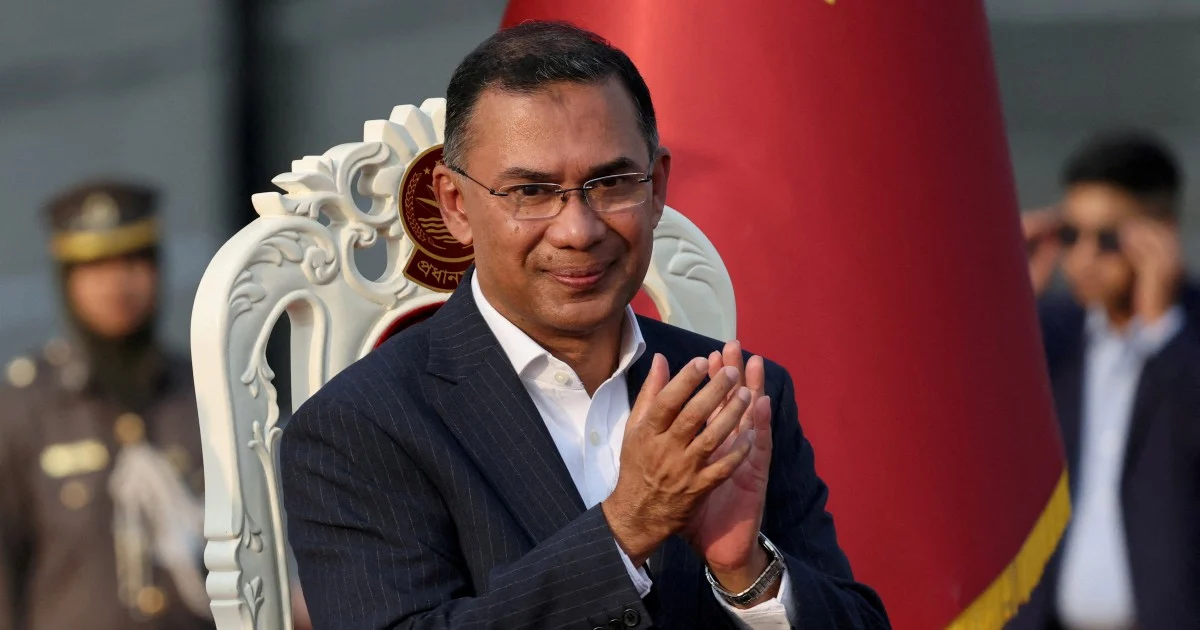
Bangladesh Prime Minister Tarique Rahman touched down at Sepang today, marking the beginning of an official state visit that carries significant implications for Malaysia-Bangladesh relations and broader Southeast Asian diplomatic engagement. The arrival of one of South Asia's leading political figures underscores the growing importance both nations place on direct high-level dialogue and institutional cooperation.
The timing of this visit reflects a broader pattern of renewed engagement between Dhaka and Kuala Lumpur, two countries that share important maritime boundaries in the Bay of Bengal and have expanding economic ties. For Malaysian observers, Rahman's journey signals Bangladesh's continued pivot towards Southeast Asia as a key component of its foreign policy strategy, moving beyond traditional partnerships to build substantive connections across the region.
Official sources indicate the visit encompasses an ambitious agenda focused on deepening institutional partnerships and exploring untapped opportunities for mutual benefit. The discussions are expected to cover multiple sectors, reflecting the diverse nature of modern state-to-state relations beyond traditional diplomacy. This comprehensive approach suggests both nations recognize the need for multi-faceted engagement that addresses contemporary challenges and opportunities.
Economically, the bilateral relationship has shown resilience despite regional complexities. Malaysian companies maintain considerable investments in Bangladesh's manufacturing and energy sectors, while Bangladeshi workers form a significant diaspora community in Malaysia contributing to both nations' development. The visit provides an occasion to review existing arrangements and identify new sectors where cooperation could flourish, from technology transfer to infrastructure development.
Regionally, Bangladesh's diplomatic overtures carry weight in Southeast Asian calculations. As a major South Asian economy with considerable influence in Bay of Bengal affairs and within BIMSTEC and other multilateral frameworks, Bangladesh's engagement with ASEAN members like Malaysia holds strategic dimensions. The visit reflects efforts to create stronger institutional links that could enhance regional stability and create forums for addressing transnational challenges.
The visit also carries implications for maritime cooperation and resource management in shared waters. Both nations maintain interests in the Bay of Bengal's maritime resources and shipping lanes, making practical cooperation on maritime security and environmental protection important agenda items. Enhanced dialogue channels established during such visits can prove invaluable for resolving potential disputes through peaceful mechanisms.
For Malaysia, receiving high-profile visitors from South Asia reinforces its position as a neutral, respected diplomatic hub within Southeast Asia. The country's ability to facilitate meaningful engagement between parties with different strategic orientations demonstrates its soft power and regional influence. This positioning has long-term benefits for Malaysia's standing within both ASEAN and broader Asian diplomatic networks.
Bangladesh's developmental trajectory and demographic dynamics also make it an increasingly important partner for Malaysian planners. With a population exceeding 170 million and growing economic ambitions, Bangladesh represents both a significant market and a potential source of skilled migration, addressing some of Malaysia's demographic challenges. Deeper bilateral cooperation could unlock complementarities that benefit both societies.
Cultural and educational exchanges feature prominently in contemporary Malaysia-Bangladesh relations. Malaysian universities attract growing numbers of Bangladeshi students, while business partnerships and professional networks continue expanding. Official visits like Rahman's provide opportunities to institutionalize these connections and perhaps launch new educational and cultural initiatives that deepen people-to-people bonds.
The geopolitical context surrounding this visit merits attention. Both Malaysia and Bangladesh navigate complex relationships with larger regional powers while pursuing independent foreign policies. Enhanced bilateral engagement offers both nations platforms to articulate shared interests and potentially coordinate positions on regional issues where perspectives align, from climate change adaptation to maritime governance.
Trade data indicates room for expansion in bilateral commerce. Despite geographic proximity and complementary economies, two-way trade volumes remain below potential levels. The visit creates opportunities for business delegations and investment discussions that could unlock greater economic integration. Discussions on tariff rationalization, supply chain integration, and sectoral collaboration may emerge from high-level meetings.
Looking forward, this visit likely establishes frameworks for sustained engagement beyond the ceremonial aspects of state visits. Joint commissions, working groups, and regular ministerial consultations can be formalized or reinvigorated to ensure momentum builds. For Malaysia's Southeast Asian positioning and Bangladesh's regional integration strategies, such institutional mechanisms prove more valuable than isolated high-level meetings.
The arrival of Prime Minister Tarique Rahman thus represents more than diplomatic courtesy. It embodies both nations' recognition that their futures are interconnected and that deliberate cooperation serves mutual interests in an increasingly complex Asian landscape where bilateral relationships form the building blocks of regional stability and prosperity.
%22%2F%3E%3C%2Fpattern%3E%3C%2Fdefs%3E%3Crect%20width%3D%22100%25%22%20height%3D%22100%25%22%20fill%3D%22url(%23ph2h5apg)%22%2F%3E%3Crect%20width%3D%22100%25%22%20height%3D%22100%25%22%20fill%3D%22url(%23ph2h5app)%22%2F%3E%3Ctext%20x%3D%2250%25%22%20y%3D%2250%25%22%20text-anchor%3D%22middle%22%20dominant-baseline%3D%22central%22%20fill%3D%22rgba(255%2C255%2C255%2C0.95)%22%20font-family%3D%22Georgia%2C%20'Times%20New%20Roman'%2C%20serif%22%20font-weight%3D%22700%22%20font-size%3D%22320%22%20letter-spacing%3D%22-0.02em%22%3EMUDA%3C%2Ftext%3E%3C%2Fsvg%3E)