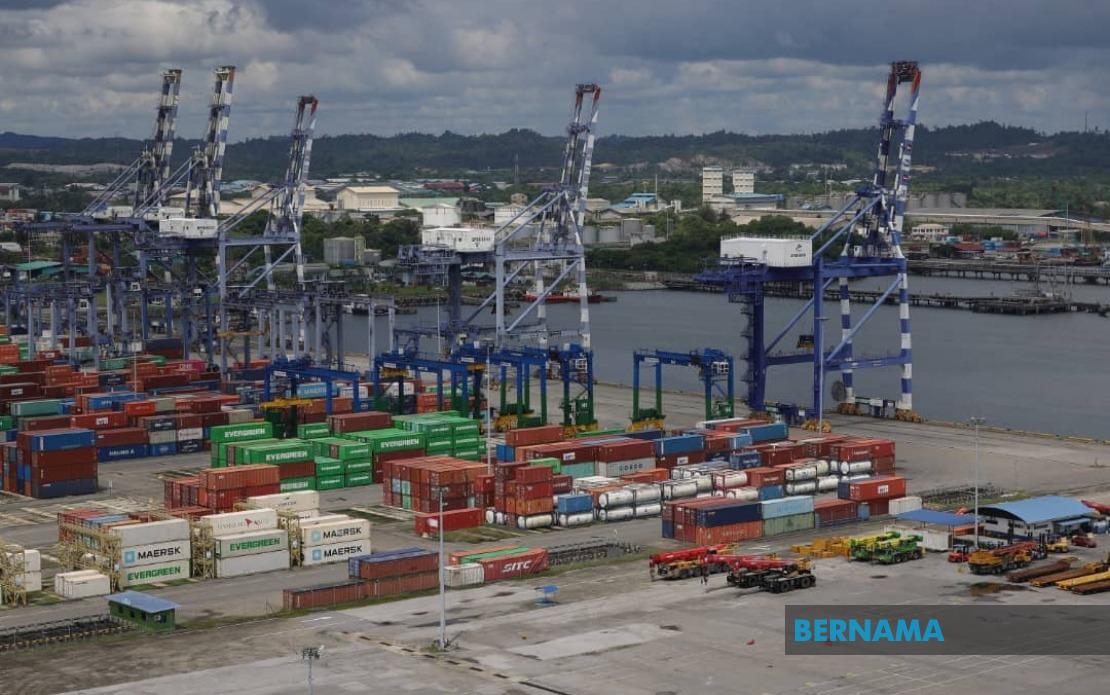
The Sarawak state government has assumed regulatory control of Bintulu Port in what officials describe as a landmark achievement in the implementation of the Malaysia Agreement 1963 (MA63). Datuk Mustapha Sakmud, Minister in the Prime Minister's Department (Sabah and Sarawak), characterised the transition as emblematic of how federal and state authorities can collaborate productively to advance shared national interests. The formal handover ceremony, held in Bintulu today, was attended by Prime Minister Datuk Seri Anwar Ibrahim and Sarawak Premier Tan Sri Abang Johari Tun Openg, underscoring the symbolic importance of the moment for both administrations.
The shift from federal to state port authority represents more than a simple bureaucratic reorganisation. According to Mustapha, the handover fundamentally acknowledges Sarawak's constitutional standing as one of Malaysia's founding partners and validates the contemporary interpretation of MA63 as a living agreement capable of delivering mutual benefits. The minister framed the development as proof that power-sharing arrangements need not be zero-sum competitions but can instead strengthen the federation by recognising and unlocking the distinct capabilities of constituent states. This framing may carry particular resonance in Malaysian political discourse, where questions about federal-state relations and the autonomy of Sabah and Sarawak remain sensitive.
Bintulu Port has long served as the nation's primary liquefied natural gas export terminal, a role that has sustained significant economic value for both Sarawak and Malaysia's international trade position. However, officials envision a far broader operational scope for the facility under state management. The port is positioned to evolve into a comprehensive industrial and logistics hub, leveraging Sarawak's established energy infrastructure and competitive advantages in manufacturing and trade. This diversification strategy reflects growing recognition that single-commodity export facilities face structural vulnerabilities in volatile global markets, making economic diversification essential for long-term stability.
A particularly significant dimension of Sarawak's development plans centres on positioning Bintulu as a regional green energy nexus. The state possesses substantial hydroelectric power capacity, one of Malaysia's most underutilised clean energy assets, and the port's strategic location on the South China Sea makes it increasingly attractive to multinational enterprises actively seeking production sites with low-carbon credentials. As environmental regulations tighten globally and investors face mounting pressure from shareholders and regulators to decarbonise supply chains, locations offering genuine renewable energy advantages gain competitive appeal. Bintulu's combination of abundant hydropower, port infrastructure, and industrial capacity creates a compelling proposition for energy-intensive manufacturing operations, from petrochemicals refining to semiconductor production.
The green energy dimension carries implications extending well beyond Sarawak's borders. Southeast Asia faces acute pressure to transition toward sustainable industrial models while maintaining economic growth and employment. Many regional competitors—Indonesia, Vietnam, Thailand—are actively competing for the same investor pool seeking low-carbon production locations. Sarawak's ability to leverage hydroelectric resources as a differentiation factor could position the state as an increasingly attractive alternative destination. For Malaysia more broadly, demonstrating that federal-state cooperation can unlock regional competitive advantages provides a model potentially applicable to other economic development challenges.
Musapha's framing of MA63 implementation as a strengthening rather than weakening of federal authority deserves scrutiny in the context of ongoing constitutional debates. He explicitly rejected the notion that devolving port regulatory control represents a loss of federal power, instead characterising it as enabling Sabah and Sarawak to realise their full economic and political potential. This rhetorical move sidesteps longstanding tensions about how MA63's provisions should be interpreted and implemented. However, it also suggests that the federal government has consciously chosen to frame recent devolutions to Sabah and Sarawak not as reluctant concessions but as deliberate strategic decisions. Whether this reframing influences broader perceptions of federalism in Malaysia remains to be seen.
The ceremony's high-level attendance by both the Prime Minister and Sarawak's Premier served multiple political functions. It demonstrated federal-state cooperation at the apex level, sent a reassuring message to Sarawak's population about meaningful implementation of MA63, and provided both administrations with opportunity to claim credit for advancing regional economic interests. Such symbolic moments carry disproportionate weight in Malaysian politics, particularly in East Malaysia, where questions about equity in federal arrangements and recognition of indigenous rights remain potent electoral issues.
The port's transformation trajectory will merit close monitoring by economic observers and policymakers across Malaysia and the region. If Sarawak successfully leverages state control to attract green industry investment and diversify Bintulu's economic base, the case could become a template for similar federal-state arrangements elsewhere. Conversely, if state management encounters operational or financial difficulties, critics may question whether the devolution was premature or whether adequate transition arrangements were established.
The intersection of MA63 implementation, green energy transition, and regional economic competition creates a complex backdrop for Bintulu Port's future development. Success would require coordinated effort among state authorities, private investors, federal agencies responsible for broader economic policy, and international market participants. The federal government's apparent willingness to support Sarawak's vision through this handover suggests commitment to that coordinated approach, though political relationships and budgetary priorities can shift. For Malaysian readers observing from Peninsula Malaysia, the Bintulu development illustrates how constitutional arrangements and economic strategy intertwine, and how recognising regional strengths can generate opportunities extending beyond individual states.

%22%2F%3E%3C%2Fpattern%3E%3C%2Fdefs%3E%3Crect%20width%3D%22100%25%22%20height%3D%22100%25%22%20fill%3D%22url(%23ph2h5apg)%22%2F%3E%3Crect%20width%3D%22100%25%22%20height%3D%22100%25%22%20fill%3D%22url(%23ph2h5app)%22%2F%3E%3Ctext%20x%3D%2250%25%22%20y%3D%2250%25%22%20text-anchor%3D%22middle%22%20dominant-baseline%3D%22central%22%20fill%3D%22rgba(255%2C255%2C255%2C0.95)%22%20font-family%3D%22Georgia%2C%20'Times%20New%20Roman'%2C%20serif%22%20font-weight%3D%22700%22%20font-size%3D%22320%22%20letter-spacing%3D%22-0.02em%22%3EMUDA%3C%2Ftext%3E%3C%2Fsvg%3E)