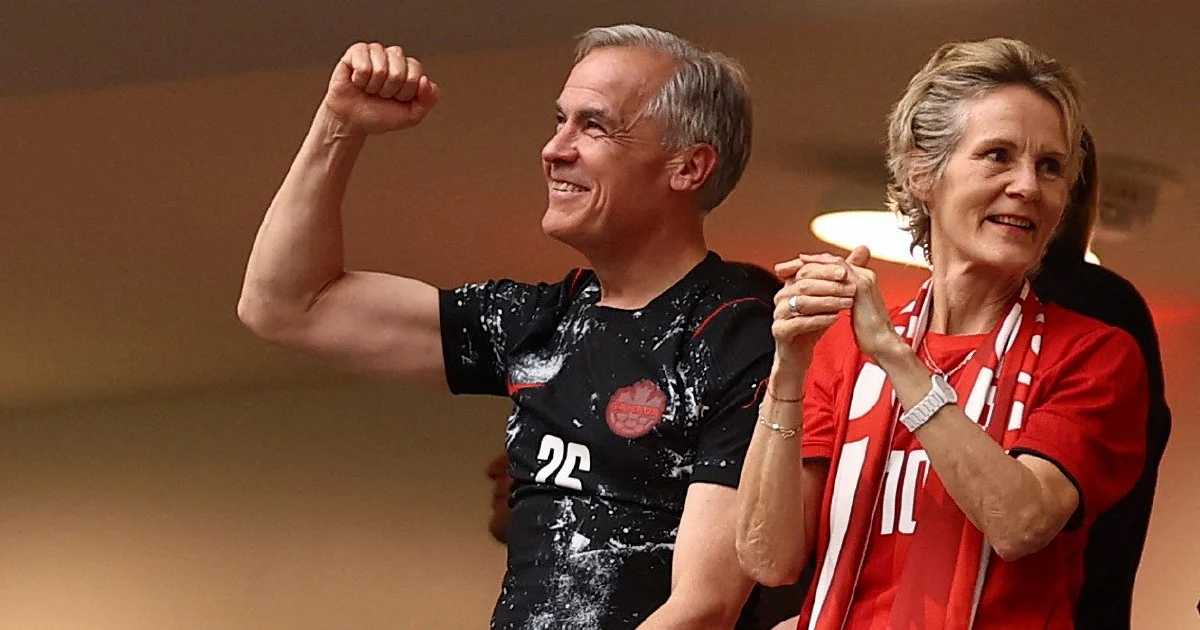
Canada's football programme has reached an unprecedented milestone with the national team recording its maiden victory in World Cup finals competition, a breakthrough that drew immediate recognition from the nation's political leadership. Prime Minister Mark Carney made his way to the team's locker room following the match to deliver his congratulations in person, underscoring the cultural significance of the achievement within the Canadian sporting landscape.
The significance of this victory extends well beyond the match itself. For a nation with a robust ice hockey tradition and growing baseball popularity, the Canadian football team's World Cup breakthrough carries symbolic weight that resonates across the country. The sport has struggled to gain mainstream traction in Canada relative to its North American neighbours, making this result a potentially transformative moment for the development of football at grassroots and professional levels.
During his visit to the dressing room, Carney focused his remarks on the character demonstrated by the players, suggesting that the manner of the victory was equally noteworthy as the result itself. The Prime Minister's decision to personally acknowledge the squad reflects the elevated status this win holds for Canada's sporting identity and national pride, elevating what might ordinarily be a sporting achievement into a broader cultural conversation.
The match itself was marred by adversity when one of Canada's players suffered a broken leg during play. Such injuries are always concerning for player welfare, yet the team's ability to overcome this setback and secure the victory became a defining narrative of the encounter. The resilience displayed by the squad in continuing to compete effectively despite losing a teammate to serious injury exemplifies the mental fortitude that distinguishes successful sporting teams.
Carney's specific commendation of the team's character in response to this injury suggests that how the players responded to adversity became as important as their tactical execution. In professional football, setbacks including injuries are inevitable, and how a team collectively responds—maintaining focus, supporting injured colleagues, and converting pressure into performance—often determines which sides advance and which falter. The Canadian squad's composure in these circumstances appears to have impressed their nation's highest political office.
From a regional Southeast Asian perspective, Canada's breakthrough offers instructive lessons for developing football nations. The achievement of a first World Cup finals victory often requires patience, investment, and sustained institutional support. Southeast Asian football federations have similarly invested in youth development and competitive infrastructure, and Canada's success demonstrates that even established nations with competing sporting priorities can achieve surprising breakthroughs through dedication to player development and team cohesion.
The broader implications for Canadian football cannot be overstated. A World Cup finals victory generates media attention, inspires youth participation, and attracts investment to domestic leagues and academies. Countries across Asia—including Malaysia, Thailand, and Vietnam—have witnessed how international football success can catalyse interest in the sport among younger generations and create commercial opportunities for domestic competition. Canada now enters this virtuous cycle where success breeds participation and investment.
The timing of Carney's visit and personal endorsement also carries political messaging. By appearing in the locker room and emphasizing the team's character, the Prime Minister aligned himself with themes of Canadian resilience and achievement. Such gestures, while appearing spontaneous, underscore how governments increasingly recognize the diplomatic and soft power dimensions of sporting success in an interconnected world.
Looking ahead, this victory provides the Canadian squad with considerable momentum for subsequent World Cup matches. The psychological breakthrough of recording that first finals win often liberates teams from the burden of expectation that accumulates with repeated disappointments. Players can now focus on performance rather than history, potentially enabling more effective play in coming fixtures. The team's demonstrated ability to overcome adversity suggests they possess the mental tools necessary for navigating the rigours of international tournament football.
For Canadian football development more broadly, this moment presents an opportunity to build institutional support and sustained investment in the sport. Nations that have leveraged World Cup successes into longer-term competitive improvements typically combine strong domestic leagues, youth academies, and continued international competition exposure. Canada now has the platform to accelerate such development, potentially positioning itself as an increasingly competitive force in future tournaments.
The injury suffered during the match and the team's response to it will likely become part of the match narrative and perhaps Canadian football folklore. Such stories of overcoming adversity resonate powerfully with supporters and can contribute to building a stronger emotional connection between the team and the broader public. This deepened connection, when combined with tangible success on the pitch, creates powerful momentum for growing the sport's popularity and participation rates across the country.
%22%2F%3E%3C%2Fpattern%3E%3C%2Fdefs%3E%3Crect%20width%3D%22100%25%22%20height%3D%22100%25%22%20fill%3D%22url(%23ph51vrpg)%22%2F%3E%3Crect%20width%3D%22100%25%22%20height%3D%22100%25%22%20fill%3D%22url(%23ph51vrpp)%22%2F%3E%3Ctext%20x%3D%2250%25%22%20y%3D%2250%25%22%20text-anchor%3D%22middle%22%20dominant-baseline%3D%22central%22%20fill%3D%22rgba(255%2C255%2C255%2C0.95)%22%20font-family%3D%22Georgia%2C%20'Times%20New%20Roman'%2C%20serif%22%20font-weight%3D%22700%22%20font-size%3D%22320%22%20letter-spacing%3D%22-0.02em%22%3EPKR%3C%2Ftext%3E%3C%2Fsvg%3E)
%22%2F%3E%3C%2Fpattern%3E%3C%2Fdefs%3E%3Crect%20width%3D%22100%25%22%20height%3D%22100%25%22%20fill%3D%22url(%23ph517cjg)%22%2F%3E%3Crect%20width%3D%22100%25%22%20height%3D%22100%25%22%20fill%3D%22url(%23ph517cjp)%22%2F%3E%3Ctext%20x%3D%2250%25%22%20y%3D%2250%25%22%20text-anchor%3D%22middle%22%20dominant-baseline%3D%22central%22%20fill%3D%22rgba(255%2C255%2C255%2C0.95)%22%20font-family%3D%22Georgia%2C%20'Times%20New%20Roman'%2C%20serif%22%20font-weight%3D%22700%22%20font-size%3D%22320%22%20letter-spacing%3D%22-0.02em%22%3EUS%3C%2Ftext%3E%3C%2Fsvg%3E)
%22%2F%3E%3C%2Fpattern%3E%3C%2Fdefs%3E%3Crect%20width%3D%22100%25%22%20height%3D%22100%25%22%20fill%3D%22url(%23ph1fcgcg)%22%2F%3E%3Crect%20width%3D%22100%25%22%20height%3D%22100%25%22%20fill%3D%22url(%23ph1fcgcp)%22%2F%3E%3Ctext%20x%3D%2250%25%22%20y%3D%2250%25%22%20text-anchor%3D%22middle%22%20dominant-baseline%3D%22central%22%20fill%3D%22rgba(255%2C255%2C255%2C0.95)%22%20font-family%3D%22Georgia%2C%20'Times%20New%20Roman'%2C%20serif%22%20font-weight%3D%22700%22%20font-size%3D%22320%22%20letter-spacing%3D%22-0.02em%22%3EPAS%3C%2Ftext%3E%3C%2Fsvg%3E)