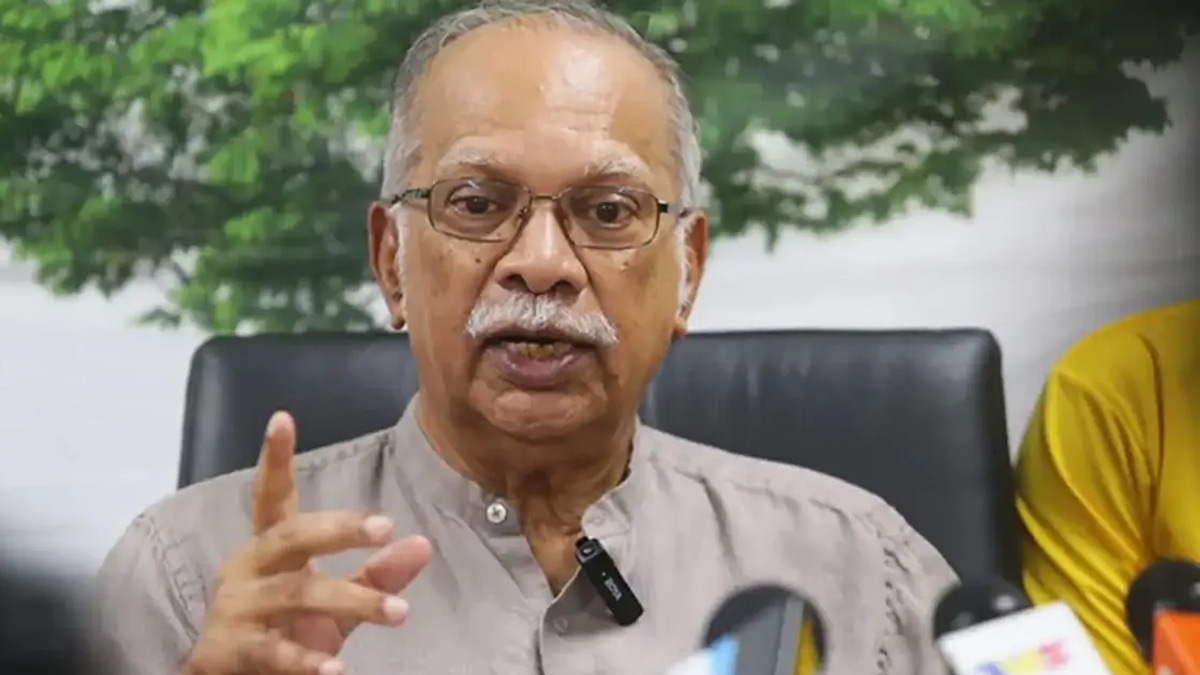
The opposition Democratic Action Party in Johor has escalated scrutiny of a major transit infrastructure realignment, pressing Menteri Besar Onn Hafiz to publicly justify the strategic pivot away from the conventional bus rapid transit framework towards an elevated autonomous rail solution. The party's intervention signals emerging political divisions over how the state intends to structure its urban mobility infrastructure, particularly as investment commitments and long-term planning implications become increasingly apparent to stakeholders across the Iskandar region.
At the heart of the controversy lies the government's decision to abandon the Iskandar Malaysia Bus Rapid Transit initiative, a project that had been developed to address congestion and mobility challenges within the sprawling urban agglomeration south of Kuala Lumpur. This established transportation model, familiar to Malaysian cities through implementations in Kuala Lumpur and other major centres, represented a proven methodology for rapid transit deployment. The shift towards the Elevated Autonomous Rapid Transit system represents a fundamental departure from tried-and-tested approaches, introducing untested autonomous vehicle technology into a setting where conventional transit modes remain the dominant framework across Southeast Asia.
DAP's intervention reflects broader concerns that extend beyond mere project substitution. The party is demanding transparency regarding the financial implications of this transition, particularly how public funds initially allocated for the IMBRT have been redirected or repurposed. In the Malaysian political context, where accountability for government spending remains a contentious issue, such demands for fiscal transparency resonate strongly with constituents already wary of infrastructure project overruns and budget reallocations. The questions being posed are not merely technical but fundamentally about governance and the stewardship of resources designated for public benefit.
The E-ART system itself represents cutting-edge transportation technology—autonomous vehicles operating on dedicated elevated tracks promise reduced operational costs, minimal staff requirements, and potential for high-frequency service. However, such systems remain largely experimental globally, with few full-scale deployments comparable to what the Johor government appears to be proposing. The absence of extensive operating history means questions about scalability, maintenance costs, integration with existing transit networks, and long-term sustainability remain genuinely unanswered. For a regional government committing substantial capital to infrastructure, these uncertainties warrant public discussion and expert scrutiny before implementation proceeds.
The timing of DAP's challenge carries political significance within Johor's fractious state assembly dynamics. With coalition alignments remaining fluid and the Menteri Besar's political position potentially vulnerable to shifts in support, opposition parties recognize opportunities to frame government decision-making as questionable or inadequately justified. By focusing on transparency and explanation rather than outright rejection, DAP is constructing a narrative of accountability that resonates with voters who have witnessed infrastructure projects across Malaysia encounter delays, cost escalations, and performance shortfalls.
For the Johor government, the E-ART initiative may represent genuine innovation aimed at positioning the state as a forward-thinking economic competitor within Southeast Asia. Yet without clear articulation of how autonomous technology specifically addresses mobility needs better than conventional solutions, and without transparent cost comparisons between the abandoned IMBRT and the new system, the optics of abandonment remain problematic. Malaysian voters have grown increasingly sceptical of infrastructure decisions that appear to reflect political preference rather than rigorous planning and cost-benefit analysis.
The implications extend beyond Johor's borders. Other Malaysian states contemplating rapid transit solutions will observe how this transition unfolds. Should the E-ART system encounter technical difficulties, cost overruns, or delayed implementation, it would discourage adoption of autonomous transport technologies across the region. Conversely, successful deployment could position Malaysia as an innovator in Southeast Asian transit solutions. The stakes are therefore significant for Malaysia's positioning as a technology-forward nation versus perceptions of chasing fashionable solutions without adequate planning infrastructure.
The IMBRT cancellation also raises questions about institutional continuity and planning stability within Johor's development administration. Investors and development partners value predictability; major infrastructure reorientation creates uncertainty about future policy directions and suggests that previous planning frameworks may be vulnerable to sudden reversal. This instability can have subtle but measurable impacts on investor confidence and the pace of broader economic development initiatives dependent on reliable transport infrastructure.
For commuters and residents within the Iskandar region—the ostensible beneficiaries of enhanced transit—the situation presents genuine uncertainty. Implementation timelines for experimental systems typically extend beyond original projections. The transition period between IMBRT cancellation and E-ART deployment could extend the duration of inadequate transit infrastructure, potentially worsening congestion and affecting economic productivity and quality of life.
DAP's demand for explanation ultimately reflects healthy democratic practice: significant government expenditures and strategic policy shifts require public justification and expert scrutiny. The Menteri Besar's office would be well-advised to provide comprehensive, publicly accessible documentation of the planning rationale, comparative cost analyses, risk assessments, and implementation timelines. Such transparency would either validate the E-ART decision or illuminate genuine concerns requiring policy reconsideration. Either outcome would serve the public interest better than continued opacity regarding the reasoning behind infrastructure realignment of this magnitude.