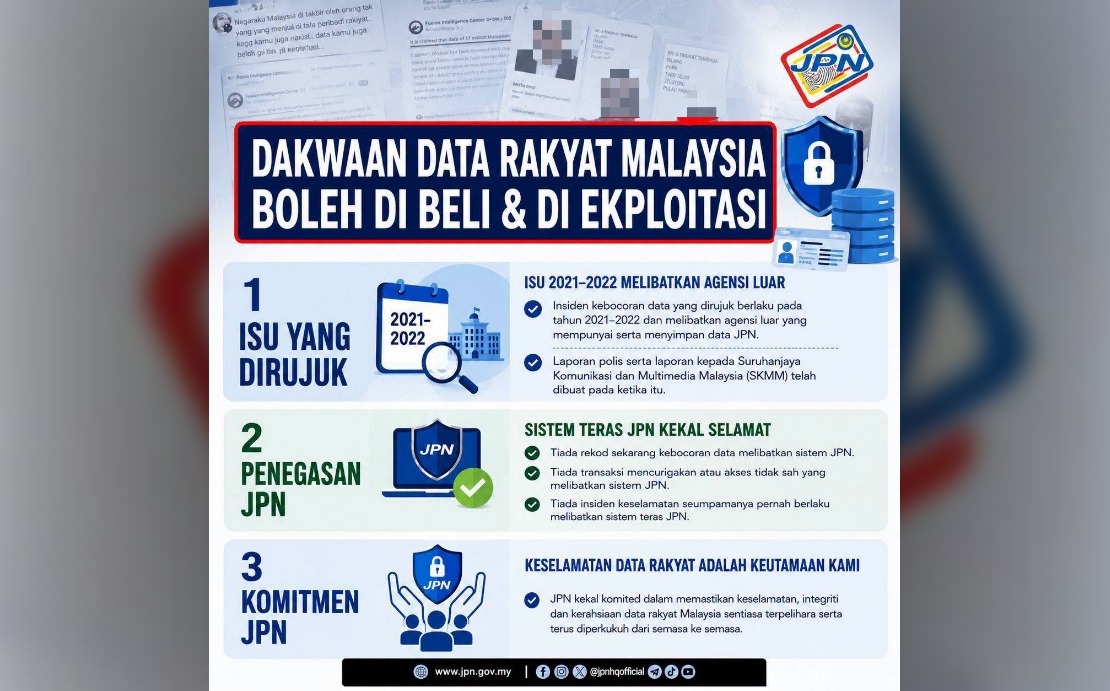
Malaysia's security establishment has moved quickly to dispel concerns over viral claims of a personal data leak, with the National Security Council (MKN) stating that the information being shared online originated from cyber intrusions that occurred well before 2022. The clarification, issued through the National Cyber Security Agency (NACSA), underscores the distinction between legacy data breaches and contemporary digital infrastructure, addressing public anxiety about the safety of present-day platforms and services.
According to MKN and NACSA, the personal information now circulating on social media was unlawfully extracted from various computer systems through cyber attacks conducted in the years leading up to 2022. Rather than representing a fresh breach of active infrastructure, the leak constitutes the unauthorised redistribution of data that has been dormant in criminal networks before resurfacing online without proper consent. This timeline matters significantly for Malaysian businesses and consumers who rely on digital services, as it suggests that security vulnerabilities from that earlier period have since been identified and remedied.
The authorities have underscored that disseminating or providing access to information obtained through illegal means violates Malaysian law, regardless of where the hosting servers are physically located. This legal position carries weight for anyone sharing such information or utilising services that traffick in stolen data, as participation in these activities can result in criminal liability. The statement serves as a warning to the estimated millions of Malaysians who engage with social media, cautioning against downloading or subscribing to platforms that advertise access to protected personal information.
In response to the leak, NACSA has coordinated with MyNIC and the Personal Data Protection Department to take immediate preventative measures. These efforts include engaging international service providers to identify, remove, and block access to websites involved in hosting or distributing the compromised data. The multi-agency approach reflects the cross-border nature of modern cybercrime, requiring cooperation with foreign technology companies to effectively contain the spread of sensitive information across global networks.
Simultaneously, the Royal Malaysia Police has begun digital forensic investigations aimed at tracing the individuals responsible for the original breaches and the subsequent redistribution campaigns. These investigations represent a critical enforcement component, as identifying and prosecuting those involved sends a deterrent message to other potential cybercriminals operating within or targeting Malaysia. The law enforcement response indicates that authorities are treating the matter with sufficient seriousness to mobilise technical expertise and investigative resources.
The incident has prompted policymakers to accelerate legislative measures designed to strengthen Malaysia's cybersecurity framework. The anticipated Cyber Crime Bill, which will soon be introduced to Parliament, proposes expanded definitions of unlawful conduct and harsher penalties for various forms of digital offences. The proposed legislation will specifically criminalise unauthorised system access and damage to computer infrastructure without legitimate authorisation, while also addressing identity theft that involves fraudulent use of another person's credentials to commit crimes.
Complementing the legislative push, the Cyber Security Act 2024, which took effect in August 2024, establishes new obligations for operators of National Critical Information Infrastructure (NCII). These designated entities must now implement sophisticated protection measures, including adherence to codes of practice, systematic risk assessments, and regular security audits. The regulatory framework aims to fortify the nation's digital resilience by ensuring that essential services—utilities, financial systems, healthcare networks, and telecommunications—maintain robust defences against intrusion and data theft.
Among the government's digital identity initiatives, MyDigital ID has achieved significant adoption, with registrations exceeding 16 million users. Authorities have been careful to clarify that this platform does not function as a storage repository for personal data but rather as a verification mechanism that authenticates identities by directly interfacing with the National Registration Department. This architectural distinction proves important for public confidence, as it means the system does not concentrate sensitive information in a single target point vulnerable to breach. Instead, authentication occurs in real time through direct departmental queries, reducing the surface area for potential attack.
The widespread deployment of MyDigital ID across government agencies and private-sector organisations—from telecommunications operators to banking institutions—represents a strategic effort to create a more secure digital ecosystem. As more transaction touchpoints integrate this identity verification standard, the cumulative effect should reduce opportunities for identity theft and fraudulent access. Officials contend that expanding MyDigital ID adoption strengthens digital transaction integrity by ensuring that users can be reliably authenticated without relying on weak password-based security or third-party data repositories.
The MKN has reiterated the government's overarching commitment to enabling all Malaysians to benefit from digital transformation while maintaining rigorous cybersecurity standards. This balancing act requires continued investment in technical capabilities, legislative modernisation, and public awareness. As digital services become increasingly embedded in daily life—from commerce and banking to healthcare and government services—the stakes associated with data security and system resilience grow proportionally higher for both individuals and the national economy.
Looking forward, officials signalled that NACSA and the broader security apparatus remain vigilant in monitoring emerging threats and responding to incidents as they arise. The disclosure and management of this data leak incident illustrates the government's posture of transparency and swift action, though sustained effectiveness will depend on the successful passage and implementation of legislative reforms, the continued cooperation of international technology partners, and the success of law enforcement investigations in holding perpetrators accountable.

%22%2F%3E%3C%2Fpattern%3E%3C%2Fdefs%3E%3Crect%20width%3D%22100%25%22%20height%3D%22100%25%22%20fill%3D%22url(%23ph2h5apg)%22%2F%3E%3Crect%20width%3D%22100%25%22%20height%3D%22100%25%22%20fill%3D%22url(%23ph2h5app)%22%2F%3E%3Ctext%20x%3D%2250%25%22%20y%3D%2250%25%22%20text-anchor%3D%22middle%22%20dominant-baseline%3D%22central%22%20fill%3D%22rgba(255%2C255%2C255%2C0.95)%22%20font-family%3D%22Georgia%2C%20'Times%20New%20Roman'%2C%20serif%22%20font-weight%3D%22700%22%20font-size%3D%22320%22%20letter-spacing%3D%22-0.02em%22%3EMUDA%3C%2Ftext%3E%3C%2Fsvg%3E)