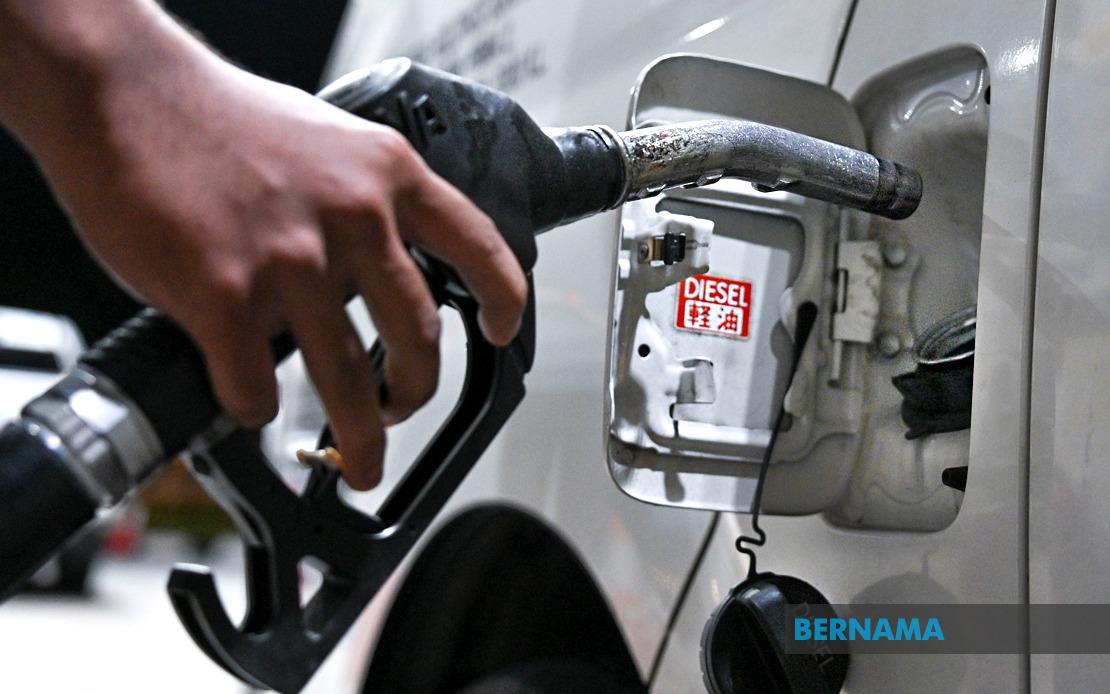
The Malaysian government's decision to lower subsidised diesel pricing to RM2.10 per litre starting July 2026 represents a significant shift in fuel subsidy policy, offering tangible relief to the business community while introducing stricter eligibility mechanisms. Prime Minister Datuk Seri Anwar Ibrahim unveiled the announcement on June 21, signalling the administration's commitment to targeted subsidies under the broader BUDI MADANI framework that already governs subsidised RON95 petrol distribution across the country.
The new pricing structure addresses a longstanding disparity in fuel costs that has particularly affected small-scale operators and self-employed individuals whose livelihoods depend heavily on transportation. For traders operating in the informal economy, such as night market vendors and delivery personnel, lower fuel costs translate directly into improved profit margins and reduced operational pressures. The subsidy mechanism mirrors the existing BUDI95 programme, which restricts petrol subsidies to Malaysian citizens and permanent residents through MyKad verification, ensuring that public funds support the intended beneficiaries rather than fuel speculators or cross-border purchasing.
Currently, the landscape presents stark regional variations that have disadvantaged businesses in Peninsular Malaysia. Sabah and Sarawak residents have enjoyed subsidised diesel at RM2.15 per litre, while their counterparts on the peninsula face unsubsidised prices of RM4.37 per litre—a disparity of more than RM2 that has created unfair competitive conditions and placed additional financial burdens on peninsular-based operators. By standardising the subsidised rate across all regions including Sabah, Sarawak, and Labuan, the government aims to foster more equitable business conditions and reduce transport cost disadvantages for firms operating in rural or eastern Malaysian locations.
Small business operators have cautiously welcomed the initiative, though their optimism hinges on successful implementation. Tan Chee Keong, a contractor in Johor Bahru relying on four-wheel drive vehicles for construction material delivery, exemplifies the small-to-medium enterprise sector most affected by fuel price volatility. For such operators, fuel represents one of the three largest cost categories alongside labour and materials. A reduction of RM0.05 per litre from the current Peninsular Malaysia rate may appear modest in absolute terms, but compounds significantly across the high fuel consumption typical of maintenance work and logistics operations. The contractor's emphasis on preventing subsidy abuse reflects broader concerns within the business community about programme sustainability and ensuring that benefits reach genuine users rather than those seeking to arbitrage pricing differences.
Vegetable farmers and agricultural input suppliers face particular challenges in meeting rising operational costs, as fuel expenses directly impact their ability to transport perishable goods to markets within tight time windows. R. Mageswaran, operating a vegetable delivery operation in Perak, depends on maintaining low fuel costs to preserve product freshness and competitive pricing at market stalls. Agricultural sectors across Malaysia, which employ hundreds of thousands and form a critical component of the rural economy, stand to benefit from reduced transport costs that could theoretically strengthen farm-gate economics without requiring wholesale restructuring of agricultural supply chains.
The implementation mechanism deserves scrutiny, as successful execution depends on seamless MyKad verification systems at petrol station point-of-sale. Mohd Faizal Ahmad, a Shah Alam trader, articulated a common concern: the verification process must remain simple and efficient to avoid creating bottlenecks that negate the subsidy's practical benefits. If verification procedures prove cumbersome or unreliable, drivers may face delays during fuel purchases, reducing the programme's appeal and potentially driving some users toward black-market alternatives or smuggled fuel. The government must therefore invest adequately in point-of-sale technology and staff training to ensure smooth rollout.
Second Finance Minister Datuk Seri Amir Hamzah Azizan was scheduled to outline implementation specifics on June 22, with details regarding transition timelines, verification procedures, and potential exemptions or special cases. The timing of July 2026 provides approximately ten months for system preparation, suggesting the government recognises the technical complexity of integrating verification systems across Malaysia's extensive petrol station network. This extended implementation window also allows businesses to plan fuel procurement strategies and adjust budgets accordingly.
The policy reflects broader government thinking about targeted versus universal subsidies. Rather than maintaining uniform pricing for all consumers regardless of nationality or residency status, the MADANI administration has embraced means-testing and citizenship verification as tools to concentrate limited fiscal resources on citizen welfare. This approach stands in contrast to historical fuel subsidy models that benefited all purchasers equally and created conditions for cross-border smuggling and speculation. The cost to the national budget remains unquantified in public statements, though substantial, and will likely feature in parliamentary discussions when the 2026 budget is tabled.
Regional implications for Southeast Asia deserve consideration, as Malaysia's subsidy policies influence cross-border fuel purchasing and regional price dynamics. Neighbouring countries including Thailand, Indonesia, and the Philippines maintain different subsidy structures, creating incentives for fuel smuggling or strategic purchasing patterns. A more affordable diesel price in Malaysia could intensify cross-border trade, potentially benefiting transporters but straining fuel supply chains and creating regulatory enforcement challenges at maritime and land borders.
Small contractors and agricultural operators represent the constituency most likely to benefit immediately from lower fuel costs. However, sustained advantages depend on the subsidy remaining durable across electoral cycles and budget pressures. If global crude prices spike significantly, the government may face difficult choices between maintaining subsidy levels and managing fiscal deficits. The 2026 implementation also introduces uncertainty regarding the policy's longevity; subsequent administrations could modify or eliminate the programme, creating planning challenges for businesses that base investment decisions on sustained fuel cost advantages.
The announcement carries implicit acknowledgment that fuel costs disproportionately affect lower-income and small-business communities in ways that broad economic growth metrics may not capture. By prioritising subsidised fuel availability for citizens, the government signals commitment to protecting domestic constituencies from global commodity price volatility. This represents a deliberate policy choice favouring localised economic resilience over fiscal austerity or market liberalisation approaches that other countries have pursued.
Businesses awaiting implementation should monitor official guidance from the Ministry of Finance and petrol station operators to understand verification requirements and any transitional arrangements. Early adoption of MyKad-linked fuel purchasing systems could provide competitive advantages during initial phases. For Malaysian operators competing regionally, lower fuel costs represent a tangible competitive advantage that, if sustained, could strengthen cost competitiveness in logistics, agriculture, and transport-dependent sectors across Southeast Asia.

%22%2F%3E%3C%2Fpattern%3E%3C%2Fdefs%3E%3Crect%20width%3D%22100%25%22%20height%3D%22100%25%22%20fill%3D%22url(%23ph2h5apg)%22%2F%3E%3Crect%20width%3D%22100%25%22%20height%3D%22100%25%22%20fill%3D%22url(%23ph2h5app)%22%2F%3E%3Ctext%20x%3D%2250%25%22%20y%3D%2250%25%22%20text-anchor%3D%22middle%22%20dominant-baseline%3D%22central%22%20fill%3D%22rgba(255%2C255%2C255%2C0.95)%22%20font-family%3D%22Georgia%2C%20'Times%20New%20Roman'%2C%20serif%22%20font-weight%3D%22700%22%20font-size%3D%22320%22%20letter-spacing%3D%22-0.02em%22%3EMUDA%3C%2Ftext%3E%3C%2Fsvg%3E)