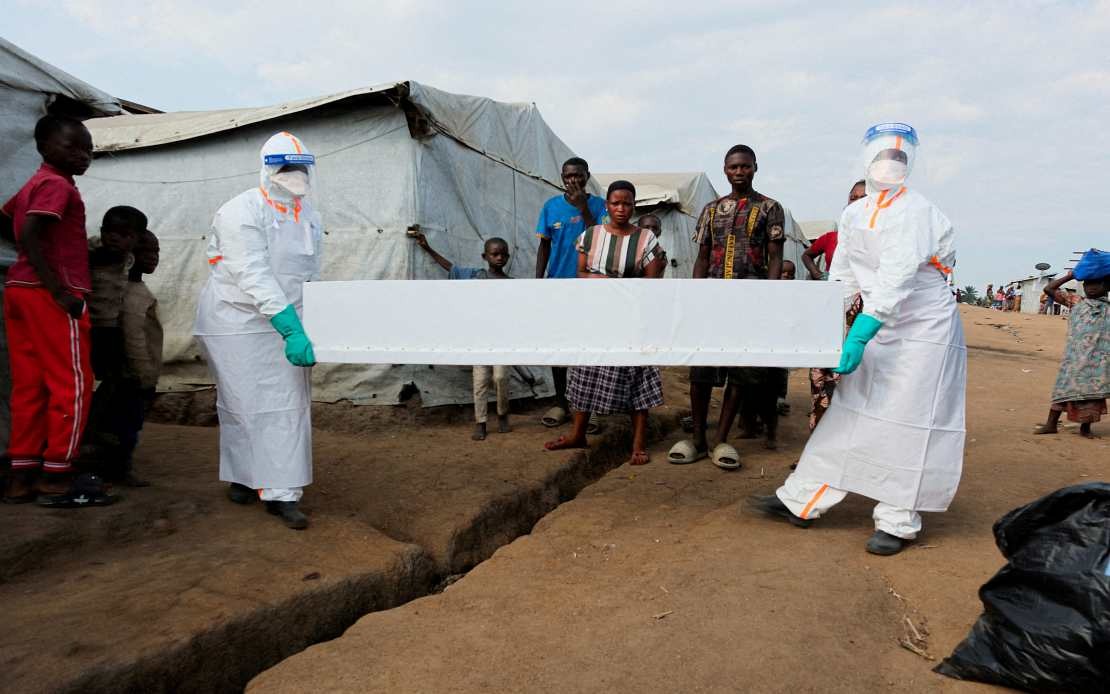
The Democratic Republic of Congo is grappling with a rapidly escalating Ebola crisis, with confirmed cases now exceeding 1,000 as the outbreak shows no immediate signs of abating. As of late June, health authorities reported 1,003 documented infections alongside 254 fatalities, representing a concerning 25.3 per cent mortality rate since the health emergency was officially declared on May 15. The trajectory of new infections continues to rise, signalling that containment efforts have yet to achieve decisive impact despite intensive international and local interventions across the affected territories.
The geographical footprint of the disease remains concentrated in the eastern provinces, where health authorities have focused their response operations. Response teams are actively working across Ituri, North Kivu and South Kivu, the three hardest-hit regions where transmission chains have proven particularly difficult to interrupt. Health Minister Roger Kamba acknowledged that while recovery numbers have shown modest improvement, with at least 100 individuals now cleared of the virus, the broader surveillance picture remains troubling. Currently, 365 patients remain either hospitalised or in isolation, representing a substantial ongoing caseload that strains local medical infrastructure and personnel.
A particularly alarming development emerged from assessments by the Africa Centres for Disease Control and Prevention, which drew stark parallels to history's deadliest Ebola pandemic. Officials warned that without swift and sustained transmission control, the current outbreak could eclipse the 2014-2016 West African epidemic that killed more than 11,000 people across Guinea, Liberia and Sierra Leone. That catastrophic event overwhelmed healthcare systems and exposed the region's vulnerability to viral haemorrhagic fever outbreaks. The warning underscores the stakes involved and the urgency of preventing similar scale escalation in Central Africa.
Despite these grim projections, Congolese health authorities have maintained that their response machinery, though resource-constrained, continues functioning. The ministry issued statements confirming that active investigations, epidemiological surveillance and prevention activities persist in affected communities. These measures form the backbone of disease containment strategy, targeting the identification of contacts, tracking their movements and monitoring for symptom development. The contact follow-up rate has reportedly declined, however, which represents a significant vulnerability in preventing secondary transmission and accelerating the progression of new cases.
Minister Kamba emphasised that intensified efforts in community communication, rapid diagnostic testing and case management form the cornerstone of the containment approach. Community engagement proves particularly vital in contexts where trust in health authorities may be compromised or where cultural practices intersect with disease transmission pathways. Case management improvements, from isolation protocols to supportive care and treatment options, directly influence survival outcomes and reduce the window for onward transmission. The focus on diagnosis ensures that suspected cases enter the healthcare system promptly rather than remaining undetected within communities.
A critical scientific finding emerged from joint research conducted by Uganda's Department of National Health Laboratory and Diagnostic Services alongside Congo's Institute of National Biomedical Research. Scientists identified the circulating strain as Ebola Bundibugyo, and significantly, they determined that this represents a novel zoonotic spillover event rather than a residual infection from a previous outbreak that had persisted undetected. This conclusion rules out the possibility that an old epidemic had been smouldering in hidden populations, which would have complicated epidemiological understanding. Instead, the evidence points to a fresh introduction from wildlife reservoirs, suggesting ongoing ecological conditions favour viral transmission from animals to humans.
The identification of Ebola Bundibugyo rather than the Zaire subtype carries epidemiological implications. Bundibugyo typically produces somewhat lower fatality rates than Zaire-strain outbreaks, though the current 25.3 per cent mortality remains extraordinarily high by any standard. The strain's emergence underscores a persistent reality: the Democratic Republic of Congo, with its vast forest ecosystems and frequent human-wildlife contact, remains vulnerable to periodic zoonotic spillover events. Without addressing the underlying ecological and behavioural factors that facilitate spillover, similar outbreaks may recur with regularity.
For Malaysia and broader Southeast Asia, developments in Central African disease outbreaks carry indirect but meaningful implications. The region's international travel networks mean that any large-scale epidemic could theoretically introduce imported cases, placing strain on local surveillance and quarantine systems. The 2014-2016 West African Ebola epidemic demonstrated that even distant outbreaks demand heightened awareness from health systems globally. Malaysian authorities, as part of the regional disease surveillance architecture, have clear incentives to monitor the Congo situation closely and ensure that preparedness protocols remain current.
The response mounted by Congolese authorities, though hampered by limited resources and ongoing security challenges in the affected provinces, demonstrates determination to control spread. Yet the numbers tell a sobering story: cases continuing to accumulate despite months of intervention suggests that either transmission pathways remain incompletely understood, community cooperation faces obstacles, or available resources fall short of operational demands. The international community's support through technical expertise, diagnostic capacity and medical supplies remains essential, though responses to African health emergencies have historically been slow and inadequate relative to need.

%22%2F%3E%3C%2Fpattern%3E%3C%2Fdefs%3E%3Crect%20width%3D%22100%25%22%20height%3D%22100%25%22%20fill%3D%22url(%23ph4oatfg)%22%2F%3E%3Crect%20width%3D%22100%25%22%20height%3D%22100%25%22%20fill%3D%22url(%23ph4oatfp)%22%2F%3E%3Ctext%20x%3D%2250%25%22%20y%3D%2250%25%22%20text-anchor%3D%22middle%22%20dominant-baseline%3D%22central%22%20fill%3D%22rgba(255%2C255%2C255%2C0.95)%22%20font-family%3D%22Georgia%2C%20'Times%20New%20Roman'%2C%20serif%22%20font-weight%3D%22700%22%20font-size%3D%22320%22%20letter-spacing%3D%22-0.02em%22%3EPM%3C%2Ftext%3E%3C%2Fsvg%3E)
%22%2F%3E%3C%2Fpattern%3E%3C%2Fdefs%3E%3Crect%20width%3D%22100%25%22%20height%3D%22100%25%22%20fill%3D%22url(%23ph42gckg)%22%2F%3E%3Crect%20width%3D%22100%25%22%20height%3D%22100%25%22%20fill%3D%22url(%23ph42gckp)%22%2F%3E%3Ctext%20x%3D%2250%25%22%20y%3D%2250%25%22%20text-anchor%3D%22middle%22%20dominant-baseline%3D%22central%22%20fill%3D%22rgba(255%2C255%2C255%2C0.95)%22%20font-family%3D%22Georgia%2C%20'Times%20New%20Roman'%2C%20serif%22%20font-weight%3D%22700%22%20font-size%3D%22151%22%20letter-spacing%3D%22-0.02em%22%3EMuhyiddin%3C%2Ftext%3E%3C%2Fsvg%3E)