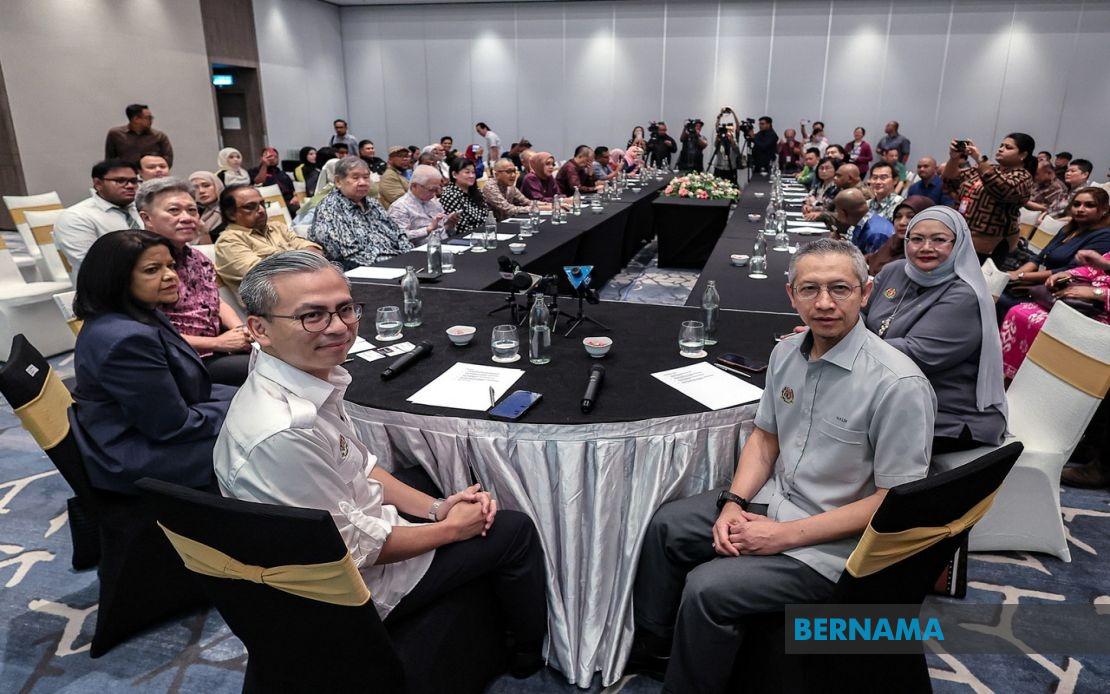
Communications Minister Datuk Fahmi Fadzil has outlined an ambitious initiative to institutionalise direct engagement between Malaysia's government and media sector by establishing dedicated retreat sessions at every future iteration of the National Journalists' Day (HAWANA) celebration. Speaking during a dialogue session in Butterworth on June 20, Fahmi indicated that his ministry would collaborate with the Malaysian Media Council to coordinate these structured forums, positioning them as regular touchpoints for substantive discussion between policymakers and news industry representatives.
The proposed retreat format represents an evolution in how the government intends to gather intelligence from the media sector. Rather than ad-hoc consultations or ceremonial interactions, Fahmi envisages these sessions functioning as dedicated feedback mechanisms where journalists, editors, and media executives can articulate collective concerns and propose concrete solutions. The ministry's stated objective is to create institutional pathways through which industry perspectives on policy matters, legislative amendments, and sectoral challenges can flow directly to cabinet consideration.
The scope of issues the retreats would address extends beyond immediate operational concerns to fundamental questions about media sustainability. Fahmi specifically highlighted the need to discuss regulatory frameworks, existing legislation that may require updating, and structural factors affecting the long-term viability of the Malaysian media ecosystem. This signals recognition that the sector faces systemic challenges that transcend individual organisations or commercial arrangements.
A particularly pressing economic issue the minister identified centres on the asymmetry between content creation and revenue generation. Mainstream media outlets invest substantial resources in journalism that circulates across social media platforms, yet these same platforms capture advertising revenue without compensating original content creators. This dynamic has squeezed the financial model of traditional news organisations across the region, forcing cost-cutting that threatens editorial capacity and professional standards. Fahmi's acknowledgement of this structural imbalance indicates the government recognises the urgency of addressing platform economics.
The minister indicated that his government intends to position itself as an active facilitator in resolving content-platform disputes. By pledging to assist the Malaysian Media Council in engaging with major social media companies on matters of content compensation and fair dealing, the Communications Ministry signalled its willingness to leverage regulatory authority and international negotiating capacity on behalf of local media interests. This approach mirrors similar efforts underway in other regional democracies grappling with identical platform-power asymmetries.
Fahmi's initiative must be understood within the broader context of media sector instability affecting Southeast Asia. The collapse of print advertising revenue, the rise of digital distribution, and audience fragmentation have fundamentally altered the economics of news production throughout the region. Malaysia's media sector, dependent historically on a mix of advertising revenue, government advertising support, and licensing fees, faces pressure to demonstrate its continued relevance and financial sustainability to stakeholders including investors, employees, and the government itself.
The participation of senior government figures and media industry leadership at the Butterworth dialogue underscores the official importance assigned to this engagement. The presence of Communications Ministry secretary-general Datuk Abdul Halim Hamzah and deputy secretary-general Datuk Bahria Mohd Tamil, alongside Malaysian National News Agency leadership including chairman Datuk Seri Wong Chun Wai and chief executive officer Datin Paduka Nur-ul Afida Kamaludin, indicated this was not a routine event but a consequential meeting designed to reset the tone of government-media relations.
The inclusion of Malaysian Media Council chairman Tan Sri Nallini Pathmanathan and representatives from major local news organisations suggested broad sectoral consensus on the need for formalised dialogue channels. Media councils in diverse democracies often function as mediation bodies between government, industry, and public interest, and their involvement in coordinating retreats would add legitimacy and structural integrity to the process.
For Malaysian readers and media practitioners, the implications of this proposal extend to questions of journalistic independence and government-media relations more broadly. Regular structured dialogue with government officials creates both opportunities and risks. On one hand, retreat sessions offer legitimate platforms for the industry to advocate for policies supporting editorial freedom, fair regulation, and economic sustainability. On the other hand, institutionalised engagement could potentially moderate critical scrutiny or create expectation of collaborative problem-solving that compromises investigative function.
The proposal also reflects wider regional trends in how governments are responding to media sector fragility. Rather than allowing the traditional news industry to collapse under digital disruption, several Southeast Asian governments are exploring interventions including subsidies, advertising support, regulatory protection, and formal dialogue mechanisms. Malaysia's approach through structured retreats represents a softer intervention than direct state ownership or subsidisation, relying instead on policy consultation and platform negotiations.
The question of implementation details remains unresolved. The retreat format, frequency, participation criteria, confidentiality protocols, and mechanisms for translating industry input into government action all require clarification. Whether these sessions will produce public outcomes, parliamentary consideration, or merely serve as behind-closed-doors sounding boards will significantly affect their practical impact and the sector's perception of government receptiveness.
For practitioners in Malaysia and across Southeast Asia watching these developments, Fahmi's proposal signals that traditional media sector challenges are registering with policymakers as issues requiring formal institutional response rather than market forces alone. Whether annual retreats can meaningfully address fundamental economic pressures facing journalism remains uncertain, but the commitment to regular structured dialogue represents a meaningful shift in how government and media sector relations are conceptualised and formalised.
%22%2F%3E%3C%2Fpattern%3E%3C%2Fdefs%3E%3Crect%20width%3D%22100%25%22%20height%3D%22100%25%22%20fill%3D%22url(%23ph6xupg)%22%2F%3E%3Crect%20width%3D%22100%25%22%20height%3D%22100%25%22%20fill%3D%22url(%23ph6xupp)%22%2F%3E%3Ctext%20x%3D%2250%25%22%20y%3D%2250%25%22%20text-anchor%3D%22middle%22%20dominant-baseline%3D%22central%22%20fill%3D%22rgba(255%2C255%2C255%2C0.95)%22%20font-family%3D%22Georgia%2C%20'Times%20New%20Roman'%2C%20serif%22%20font-weight%3D%22700%22%20font-size%3D%22170%22%20letter-spacing%3D%22-0.02em%22%3EMalaysia%3C%2Ftext%3E%3C%2Fsvg%3E)
%22%2F%3E%3C%2Fpattern%3E%3C%2Fdefs%3E%3Crect%20width%3D%22100%25%22%20height%3D%22100%25%22%20fill%3D%22url(%23ph6450g)%22%2F%3E%3Crect%20width%3D%22100%25%22%20height%3D%22100%25%22%20fill%3D%22url(%23ph6450p)%22%2F%3E%3Ctext%20x%3D%2250%25%22%20y%3D%2250%25%22%20text-anchor%3D%22middle%22%20dominant-baseline%3D%22central%22%20fill%3D%22rgba(255%2C255%2C255%2C0.95)%22%20font-family%3D%22Georgia%2C%20'Times%20New%20Roman'%2C%20serif%22%20font-weight%3D%22700%22%20font-size%3D%22136%22%20letter-spacing%3D%22-0.02em%22%3EGovernment%3C%2Ftext%3E%3C%2Fsvg%3E)
%22%2F%3E%3C%2Fpattern%3E%3C%2Fdefs%3E%3Crect%20width%3D%22100%25%22%20height%3D%22100%25%22%20fill%3D%22url(%23ph2ojpsg)%22%2F%3E%3Crect%20width%3D%22100%25%22%20height%3D%22100%25%22%20fill%3D%22url(%23ph2ojpsp)%22%2F%3E%3Ctext%20x%3D%2250%25%22%20y%3D%2250%25%22%20text-anchor%3D%22middle%22%20dominant-baseline%3D%22central%22%20fill%3D%22rgba(255%2C255%2C255%2C0.95)%22%20font-family%3D%22Georgia%2C%20'Times%20New%20Roman'%2C%20serif%22%20font-weight%3D%22700%22%20font-size%3D%22194%22%20letter-spacing%3D%22-0.02em%22%3EBercham%3C%2Ftext%3E%3C%2Fsvg%3E)