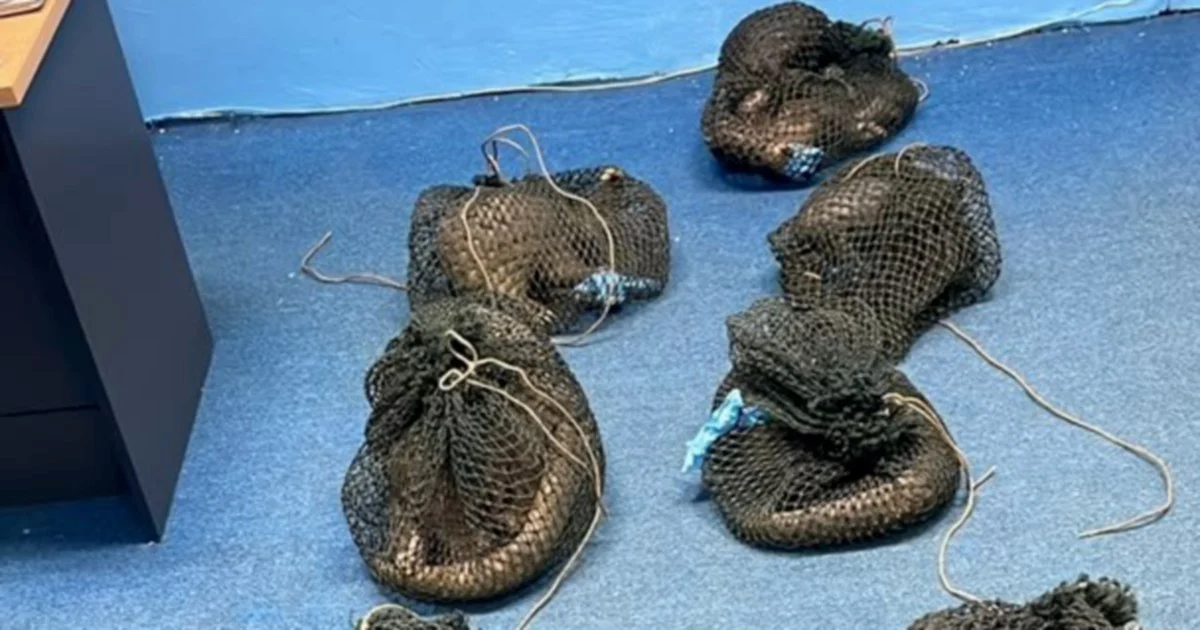
A 27-year-old Filipino national has been apprehended in Kinabatangan following a raid at a plantation facility in Kampung Paris 3, where authorities uncovered 10 live pangolins alongside an elephant tusk, marking another significant seizure in Malaysia's ongoing battle against wildlife trafficking.
The arrest underscores the troubling reality that rare animal contraband continues to move through Southeast Asian borders with alarming frequency. Pangolins remain among the world's most trafficked mammals, prized in illegal markets for their scales, which are used in traditional medicine preparations and crafted into ornamental items. The simultaneous discovery of elephant ivory further illustrates the interconnected nature of wildlife crime networks operating in the region, where poachers and smugglers often diversify their illicit inventory to maximize profits across multiple trafficking routes.
The Kinabatangan discovery is particularly significant given Sabah's geography. The state sits at the geographical crossroads of Borneo, with maritime access and porous land borders that smugglers routinely exploit to move contraband between Malaysia, Indonesia, and the Philippines. Wildlife authorities have long warned that criminal syndicates leverage this positioning, using established smuggling corridors to transport animals destined for markets in China, Vietnam, and other Southeast Asian nations where demand for protected species remains stubbornly high despite international regulations.
Pangolin trafficking has escalated dramatically over the past decade, with estimates suggesting that hundreds of thousands of these creatures are poached annually across Asia and Africa. The animals, which possess distinctive overlapping scales and feed primarily on ants and termites, are increasingly difficult to find in the wild as populations plummet. Conservation organizations classify multiple pangolin species as vulnerable or endangered, yet enforcement challenges persist across enforcement agencies hampered by limited resources and the sophisticated methods employed by trafficking networks.
The elephant tusk seized alongside the pangolins demonstrates how wildlife crime operates on multiple fronts. Ivory trafficking, though reduced following international trade bans, continues to generate substantial profits through underground networks. The combination of pangolin scales and elephant ivory in a single location suggests either a middleman operation consolidating inventory for onward shipment, or a smuggler diversifying holdings to hedge against law enforcement interdiction of any single commodity.
Malaysia's position as a transit hub for trafficking remains problematic despite enhanced enforcement efforts in recent years. The country's ports, airports, and border regions experience constant pressure from criminal syndicates seeking to move contraband through to international markets. Enforcement agencies have ramped up operations, yet the sheer volume of legitimate trade and movement across borders complicates detection efforts. Corruption within supply chains and border management also remains an obstacle that authorities continue addressing through institutional reforms and inter-agency cooperation.
The arrest reflects coordination between Malaysian wildlife authorities and regional law enforcement mechanisms, though gaps remain in the tracking and interdiction of trafficking networks. The cross-border nature of the crime—involving a Filipino national and contraband likely destined for markets beyond Malaysia—highlights why bilateral and multilateral cooperation has become essential for disrupting these syndicates. The Association of Southeast Asian Nations has acknowledged wildlife trafficking as a critical transnational criminal threat, though implementation of coordinated strategies varies significantly across member states.
For Malaysian readers, the persistent nature of wildlife crime carries implications beyond conservation concerns. The same criminal networks involved in animal trafficking often intersect with operations moving narcotics, counterfeit goods, and other contraband. Disrupting these networks requires sustained investment in investigative capacity, intelligence sharing, and prosecution resources. The Kinabatangan case demonstrates that enforcement remains reactive rather than proactive in many instances, with seizures occurring only when operations are discovered by chance or through targeted raids.
The case also raises questions about the demand side of wildlife trafficking, which remains fundamentally driven by consumer markets in Asia. While international agreements including the Convention on International Trade in Endangered Species establish regulatory frameworks, enforcement effectiveness depends on coordinated action across consumer nations, transit countries, and source regions. Education campaigns highlighting the ecological and ethical dimensions of wildlife trafficking have achieved limited traction in markets where traditional medicine practices and luxury consumption patterns maintain demand for protected species.
Looking forward, the trajectory of wildlife trafficking in Southeast Asia will likely intensify absent more aggressive interventions. Climate change, habitat loss, and human encroachment into remaining wild spaces are simultaneously reducing animal populations in their natural ranges while increasing poaching pressure as populations contract. The regulatory infrastructure exists to combat trafficking, yet political will, funding, and enforcement capacity remain insufficient across much of the region to meaningfully reverse current trends in wildlife crime.
%22%2F%3E%3C%2Fpattern%3E%3C%2Fdefs%3E%3Crect%20width%3D%22100%25%22%20height%3D%22100%25%22%20fill%3D%22url(%23ph6xupg)%22%2F%3E%3Crect%20width%3D%22100%25%22%20height%3D%22100%25%22%20fill%3D%22url(%23ph6xupp)%22%2F%3E%3Ctext%20x%3D%2250%25%22%20y%3D%2250%25%22%20text-anchor%3D%22middle%22%20dominant-baseline%3D%22central%22%20fill%3D%22rgba(255%2C255%2C255%2C0.95)%22%20font-family%3D%22Georgia%2C%20'Times%20New%20Roman'%2C%20serif%22%20font-weight%3D%22700%22%20font-size%3D%22170%22%20letter-spacing%3D%22-0.02em%22%3EMalaysia%3C%2Ftext%3E%3C%2Fsvg%3E)
%22%2F%3E%3C%2Fpattern%3E%3C%2Fdefs%3E%3Crect%20width%3D%22100%25%22%20height%3D%22100%25%22%20fill%3D%22url(%23ph6450g)%22%2F%3E%3Crect%20width%3D%22100%25%22%20height%3D%22100%25%22%20fill%3D%22url(%23ph6450p)%22%2F%3E%3Ctext%20x%3D%2250%25%22%20y%3D%2250%25%22%20text-anchor%3D%22middle%22%20dominant-baseline%3D%22central%22%20fill%3D%22rgba(255%2C255%2C255%2C0.95)%22%20font-family%3D%22Georgia%2C%20'Times%20New%20Roman'%2C%20serif%22%20font-weight%3D%22700%22%20font-size%3D%22136%22%20letter-spacing%3D%22-0.02em%22%3EGovernment%3C%2Ftext%3E%3C%2Fsvg%3E)
%22%2F%3E%3C%2Fpattern%3E%3C%2Fdefs%3E%3Crect%20width%3D%22100%25%22%20height%3D%22100%25%22%20fill%3D%22url(%23ph2ojpsg)%22%2F%3E%3Crect%20width%3D%22100%25%22%20height%3D%22100%25%22%20fill%3D%22url(%23ph2ojpsp)%22%2F%3E%3Ctext%20x%3D%2250%25%22%20y%3D%2250%25%22%20text-anchor%3D%22middle%22%20dominant-baseline%3D%22central%22%20fill%3D%22rgba(255%2C255%2C255%2C0.95)%22%20font-family%3D%22Georgia%2C%20'Times%20New%20Roman'%2C%20serif%22%20font-weight%3D%22700%22%20font-size%3D%22194%22%20letter-spacing%3D%22-0.02em%22%3EBercham%3C%2Ftext%3E%3C%2Fsvg%3E)