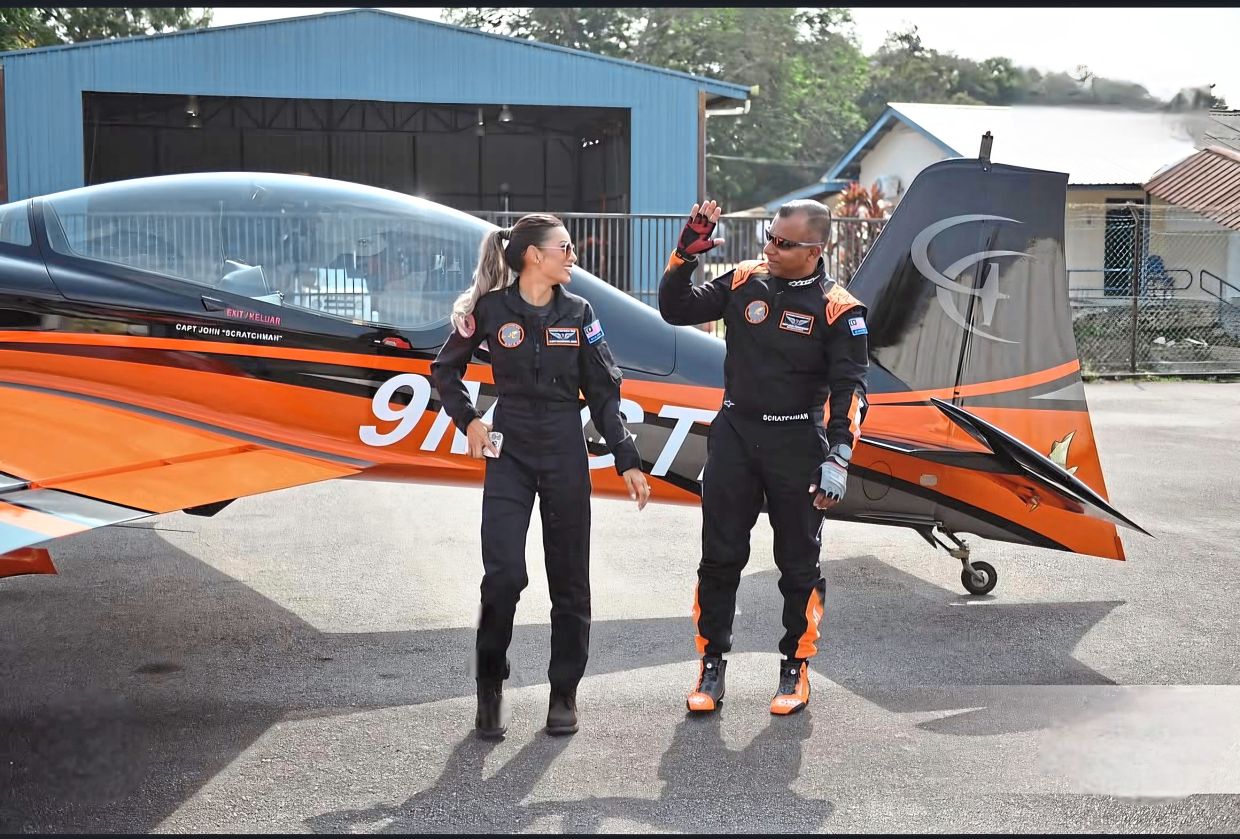
At 26, Samantha Laura John has realised a lifelong ambition that took root watching her father prepare for combat training missions as a child. The daughter of retired Royal Malaysian Air Force fighter pilot Lieutenant-Colonel (R) John Sham Alagarsamy has graduated from flight school in Ipoh as a qualified pilot, joining a profession still dominated by men in Malaysia. Her achievement represents more than personal accomplishment; it embodies a generational continuity in a field where family influence plays a pivotal role in shaping career trajectories.
Samantha's journey to the cockpit was shaped fundamentally by her upbringing on Malaysian air force bases. The sight of uniformed personnel, the discipline embedded in military communities, and the knowledge that her father was serving the nation created an indelible impression during her formative years. She recalls being drawn to the ceremonial and purposeful nature of aviation from earliest childhood, though she understood even then that female pilots were uncommon in Malaysia's aviation sector. Rather than deterring her, this rarity strengthened her resolve. The relative absence of women in cockpits became motivation rather than obstacle, reflecting a determination inherited perhaps from her father's own unconventional path of combining military and aerobatic excellence with creative pursuits.
John Sham Alagarsamy's 26-year tenure in the RMAF encompassed roles as fighter pilot, instructor, and examiner before his transition to the commercial aviation sector in 2019. Beyond his military credentials, he holds the distinction of being Malaysia's first and only civil aviator certified by the Civil Aviation Authority of Malaysia for aerobatics—a recognition that underscores technical mastery and innovation. His aerobatic performances have become fixtures at major aviation events, most notably the Langkawi International Maritime and Aerospace Exhibition (LIMA), where he demonstrates precision flying in the GB1 GameBird aircraft. This public dimension of his aviation career made his work visible and tangible to his children in ways that desk-bound professions rarely achieve, creating a compelling model of expertise combined with public service.
What distinguishes John's approach to parenting is his refusal to impose his own ambitions onto his children. He articulated a philosophy centred on encouraging aspiration without coercion, telling them that aiming for the stars guarantees reaching the sky. This measured guidance created space for Samantha to explore her own interests while remaining anchored to the possibilities that aviation represented. When she completed her International General Certificate of Secondary Education qualifications, she initially pursued a different direction, enrolling in a two-year cadet pilot programme with an airline based in Sepang, Selangor in 2018. That experience, though professionally valuable, ultimately clarified rather than crystalised her ambitions—she realised that the role, whilst rewarding, lacked the depth of engagement she craved.
The family's geographical mobility throughout Samantha's childhood proved formative in unexpected ways. Her father's postings took the household from Labuan to Kuantan, then to Alor Setar and Butterworth in Penang, often before she had entered primary school. These frequent relocations, whilst challenging for family stability, exposed her to the disciplined environment of military installations and cultivated understanding of RMAF pilots' responsibilities in safeguarding Malaysia's airspace and maritime borders. In 2012, when John was attached to the Australian Defence Force and pursuing a master's degree in military and defence studies from the Australian National University in Canberra, Samantha gained exposure to international defence cooperation and comparative aviation systems. This expatriate experience broadened her contextual understanding of aviation beyond Malaysia's borders, enriching her eventual approach to the profession.
The decision to pursue pilot training appeared inevitable in hindsight, yet Samantha describes it as a journey of self-discovery rather than predetermined inheritance. Having settled on aviation as her path, she completed flight school in Ipoh during 2025, achieving licencing as a fully qualified pilot. Interestingly, her current life does not revolve around commercial flying despite her hard-won credentials. Based in Kota Kinabalu with her husband David Chong, she operates an event management company while providing vocal coaching services. This apparent departure from aviation represents not abandonment of the field but rather a conscious reordering of immediate priorities. She remains committed to eventually returning to commercial aviation as a career, suggesting that her pilot's licence represents potential rather than immediate trajectory.
Samantha's experience reflects broader patterns in Malaysian professional development, where parental influence shapes career aspirations significantly. Research from Universiti Teknologi Malaysia's social science journal, in a study titled "Parental Influence and Undergraduates' Career Choice Intentions", demonstrates that strong parent-child relationships, open communication, and mutual trust create conditions encouraging career exploration and long-term planning. The john household exemplifies these conditions—neither parent forced predetermined outcomes, yet both communicated genuine belief in their children's capacity for achievement. Her mother, businesswoman Lynda Shanti Ganesaguru, and her brother Shayne Zacchaeus John, now based in the Klang Valley, provided a family ecosystem supporting individual choice rather than dictating it.
Notably, Samantha's achievement sits within a broader context of Malaysian women increasingly entering aviation professions. She acknowledges other examples, including sisters Safia Amira Abu Bakar and Safia Anisa Abu Bakar, who pursued aviation following their father Captain Abu Bakar Shafie's career path. These examples demonstrate that family legacy in aviation extends beyond single father-son or father-daughter relationships; rather, aviation professions create household cultures where the technical knowledge, professional networks, and psychological disposition toward flying become intergenerational assets.
When aloft in a cockpit, Samantha describes flying as a therapeutic experience demanding intense cognitive engagement across multiple dimensions. The profession requires complete focus and environmental awareness, continuous forward-thinking, and situational monitoring across what she characterises as six dimensions—a poetic articulation of the complexity pilots navigate routinely. This description suggests that beyond fulfilling a childhood aspiration, she has discovered intrinsic satisfaction in the cognitive and technical demands of piloting. The decision to defer full-time commercial flying whilst maintaining her licence suggests she has discovered how to integrate aviation's rewards into her broader life rather than subordinating all other ambitions to it.
The relationship between father and daughter reflects values cultivated through military discipline and reinforced by civilian life. Samantha speaks of her father with evident respect alongside affection, acknowledging how her upbringing instilled particular manners and behavioural standards. John himself emphasises that lasting influence derives from demonstrating values rather than merely articulating them—his children learn more through observing his conduct than through his explicit instruction. This approach has proven effective; his receipt of the Most Gallant Order of Military Service (Kesatria Angkatan Tentera) during his RMAF tenure represented public recognition of professional excellence and commitment that his daughter witnessed firsthand. Her achievement becoming a qualified pilot validates this parenting philosophy—she has internalised not just the aspiration to fly, but the discipline, professionalism, and dedication required to achieve it.
Today, as John heads training operations at a flying school in Ipoh, the intergenerational connection remains active. Family gatherings, such as recent lunches where father and daughter reminisce about their years across Malaysian air bases, sustain these bonds whilst creating space for Samantha to integrate her aviation identity with her other professional roles. Her story demonstrates that inheritance in modern Malaysia operates not as predetermined obligation but as a complex negotiation between family influence, individual agency, and evolving life circumstances. The path she has chosen—qualified pilot but not yet full-time aviator—reflects the sophisticated balance contemporary professionals strike between passion, practicality, and personal fulfilment.