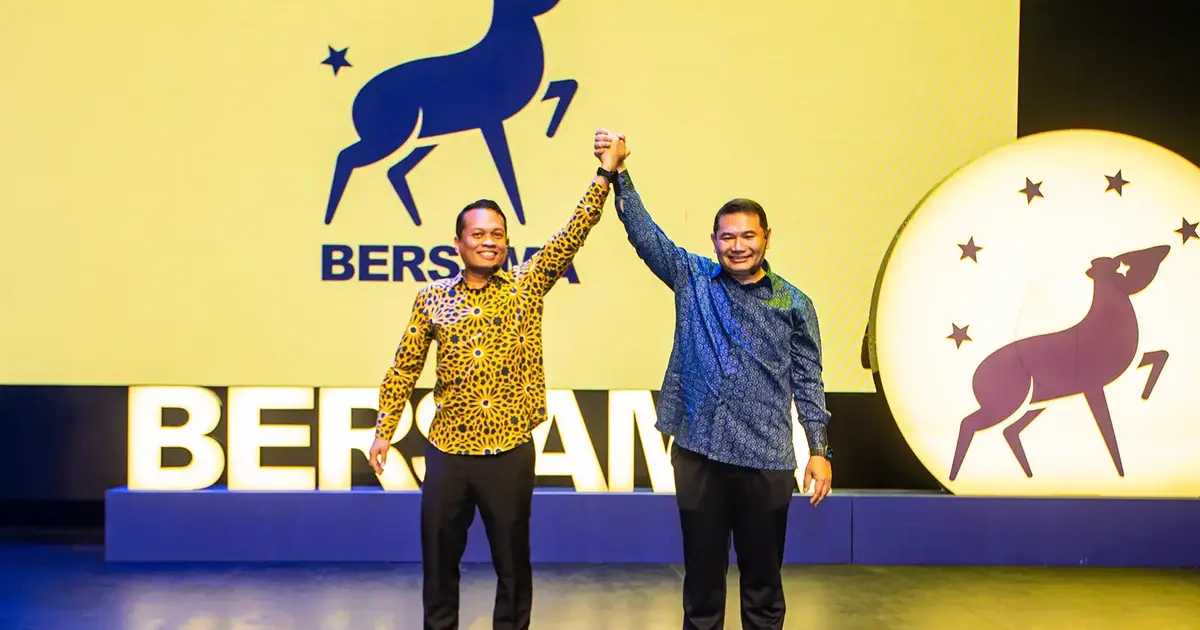
Bersama, the newer entrant to Malaysia's political landscape, is drawing encouraging interest from former senior civil servants who wish to stand as candidates in the upcoming state elections in Johor and Negeri Sembilan, according to party leadership. Rafizi, a key figure within the party's organisational structure, made the revelation while discussing the party's candidate recruitment strategy and the calibre of individuals stepping forward to join its electoral push.
The influx of interest from retired bureaucrats represents a notable development for Bersama as it positions itself as a political force capable of attracting experienced administrative professionals. These former civil servants bring to the table institutional knowledge, experience in governance, and an understanding of how state apparatus functions—assets that could prove valuable in the electoral arena and, should Bersama fare well, in the administration of state governments.
Johor and Negeri Sembilan represent significant testing grounds for the party's electoral viability and grassroots organisation. Johor, Malaysia's second-largest state by economy and population, has historically been a political battleground where multiple parties compete fiercely. Negeri Sembilan, meanwhile, carries its own strategic importance within the broader peninsular political matrix. The timing of elections in these two states could influence the momentum and narrative surrounding smaller political parties attempting to carve out meaningful space in Malaysia's competitive electoral environment.
The attraction of former senior civil servants to Bersama's candidacy pool underscores a broader phenomenon in Malaysian politics where retired bureaucrats increasingly seek electoral platforms. These individuals often possess advantages that conventional politicians may lack: credibility built through years of public service, professional networks spanning multiple sectors, and a perceived distance from the patronage networks that sometimes characterise traditional political parties. Their entry into electoral politics can reshape voter perceptions and introduce fresh perspectives into campaigns.
Rafizi's emphasis on the encouraging response suggests that Bersama's leadership views this recruitment success as validation of the party's appeal and positioning. For a political party that is still establishing itself within Malaysia's crowded political marketplace, demonstrating the capacity to attract experienced professionals serves both practical and symbolic purposes. It signals organisational competence and suggests that the party offers something sufficiently attractive to draw individuals who have spent their professional lives outside the political arena.
The mechanics of how Bersama will select candidates from this pool of interested former civil servants remain to be clarified. Political parties typically employ various criteria—including party loyalty, local connections, electoral viability assessments, and demographic considerations—when finalising candidate lists. The calibre of civil servants willing to stand should be scrutinised: are these individuals from senior management grades with substantial influence during their service, or are they from various levels of the administration? This distinction matters for understanding what kind of candidates will ultimately represent Bersama.
For Malaysian voters in these states, the presence of former civil servants as candidates presents both opportunities and questions. On one hand, such candidates may be perceived as competent administrators familiar with governance realities. On the other hand, questions may arise about whether retirement from the civil service translated into active engagement with local communities and grassroots concerns. Voters will likely evaluate whether these former bureaucrats have developed genuine connections with constituents or whether they are seeking electoral office primarily as a post-retirement career move.
The strategic context cannot be ignored either. Both Johor and Negeri Sembilan have established political configurations, with particular coalitions and parties holding sway in different areas. Bersama's ability to make electoral inroads will depend not only on the quality of candidates it fields but also on its messaging, ground-level organisation, and how effectively it differentiates itself from existing political entities. Former civil servants alone cannot guarantee electoral success; they must be integrated into a coherent political strategy.
For Bersama specifically, cultivating candidates with administrative credentials aligns with apparent strategic positioning as a party emphasising competence and technocratic governance. This contrasts with some competitor narratives and may resonate with voters concerned about administrative effectiveness. However, the party must be careful to ensure that this emphasis on professional credentials does not obscure the political values, policy positions, and vision that should ultimately define its electoral appeal.
The coming months will reveal how successfully Bersama translates this recruitment interest into actual candidacies and, subsequently, electoral performance. The party's willingness to embrace former civil servants as potential representatives demonstrates adaptability and an openness to diverse talent pools. Whether this proves sufficient to establish Bersama as a serious electoral force in these two states, and whether such candidates can genuinely connect with local voters and communities, will become apparent only when campaigns intensify and voters render their judgment.

%22%2F%3E%3C%2Fpattern%3E%3C%2Fdefs%3E%3Crect%20width%3D%22100%25%22%20height%3D%22100%25%22%20fill%3D%22url(%23phusd7g)%22%2F%3E%3Crect%20width%3D%22100%25%22%20height%3D%22100%25%22%20fill%3D%22url(%23phusd7p)%22%2F%3E%3Ctext%20x%3D%2250%25%22%20y%3D%2250%25%22%20text-anchor%3D%22middle%22%20dominant-baseline%3D%22central%22%20fill%3D%22rgba(255%2C255%2C255%2C0.95)%22%20font-family%3D%22Georgia%2C%20'Times%20New%20Roman'%2C%20serif%22%20font-weight%3D%22700%22%20font-size%3D%22226%22%20letter-spacing%3D%22-0.02em%22%3EPenang%3C%2Ftext%3E%3C%2Fsvg%3E)