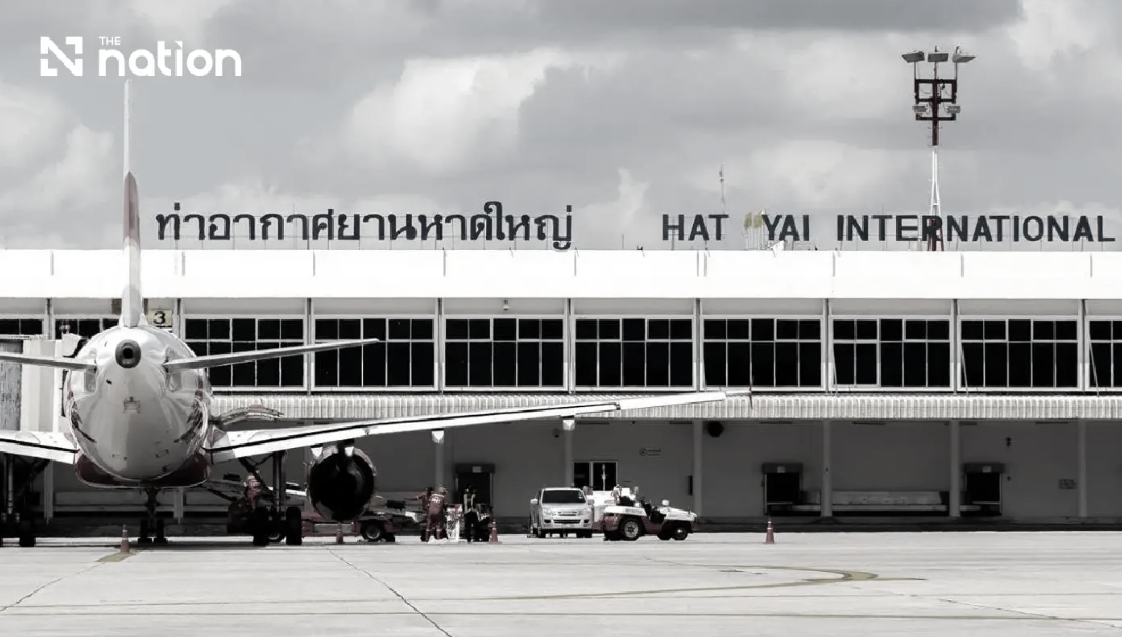
A runway closure at Hat Yai International Airport in southern Thailand's Songkhla province disrupted air operations on Wednesday afternoon, forcing airport authorities to divert several inbound flights to alternative facilities. The incident centred on Runway 26, which serves as a critical landing and takeoff strip for the airport's daily operations. An accident involving one of the airport's emergency response vehicles triggered the temporary suspension, creating a brief but significant disruption to regional flight schedules during peak afternoon hours.
Authorities issued a formal NOTAM—a Notice to Airmen—to alert aviation operators and pilots about the runway closure. The notice indicated that Runway 26 would remain inaccessible from 1.55pm until 4.30pm on June 17, 2026. This roughly two-and-a-half-hour window represented a substantial restriction for airport operations, particularly given that Hat Yai serves as a major transport hub connecting southern Thailand to regional destinations and international markets. The closure effectively prevented any aircraft from attempting landings at the facility during this timeframe, creating immediate logistical challenges for ground controllers and flight dispatchers managing inbound traffic.
The decision to close the runway stemmed from safety considerations rather than structural damage. Airport officials prioritised securing the incident site and ensuring no further operational hazards existed before reopening normal flight operations. This cautious approach reflected standard aviation safety protocols, which mandate that runways remain closed following emergency situations until comprehensive assessments confirm that conditions are safe for resuming regular traffic flows. The nature of the fire engine accident itself was not detailed in official statements, though the involvement of a large emergency vehicle on an active runway naturally necessitated thorough investigation before operations could resume.
The closure's immediate consequence was the redirection of arriving aircraft to Krabi Airport, located roughly 140 kilometres away in neighbouring Krabi province. Flight tracking data from Flightradar24 provided visible confirmation of this diversion pattern, demonstrating how modern aviation monitoring systems enable transparency during operational disruptions. Two flights were definitively identified as being rerouted: Thai Airways flight TG263 and Thai Lion Air flight SL712, both of which had been scheduled to arrive at Hat Yai but instead proceeded to Krabi during the closure period.
Passengers aboard affected flights faced considerable uncertainty during the incident. One traveller attempting to track a relative on Thai Airways flight TG263 contacted the airport directly to understand why landing appeared impossible. Airport staff confirmed that an emergency situation was unfolding but could not immediately provide specific details about the nature of the incident or expected resolution timeframe. This information gap, while understandable given the real-time nature of the crisis, nevertheless generated concern among passengers and their families who had limited visibility into the developing situation.
The passenger contacted regarding TG263 subsequently received confirmation that the flight had touched down safely at Krabi Airport, indicating that despite the operational disruption, all safety systems functioned appropriately and crews successfully executed the diversion without incident. This outcome underscored the effectiveness of Thailand's aviation infrastructure and pilot training standards, which enabled swift adaptation to changing circumstances while maintaining passenger safety as the paramount priority. Nevertheless, the incident highlighted vulnerability in runway systems and the cascading effects that single-point operational failures can produce across an airport's entire network.
For passengers, the consequences of this disruption extended beyond mere inconvenience. Travellers who had arranged ground transportation, accommodation, or business commitments at Hat Yai faced sudden schedule changes that could impact their itineraries significantly. Airlines typically provide accommodation and meal vouchers for passengers on diverted flights, but such arrangements cannot fully compensate for the lost time and disrupted plans that redirection creates. The shift to Krabi added approximately two to three hours to passenger journey times when accounting for ground transportation and the additional distance involved.
The incident underscores the operational complexity that regional airports manage daily. Hat Yai International Airport handles thousands of passengers weekly on flights connecting Thailand to Malaysia, Singapore, and other Southeast Asian destinations. The airport's role as a gateway to southern Thailand's tourism sector and its significance to business travellers makes any prolonged disruption consequential for the broader regional economy. Fire engine accidents on runways, while rare, represent precisely the type of low-probability, high-impact event that aviation authorities must plan for and manage effectively.
From a regional perspective, the incident illustrated the importance of having viable alternative airports within reasonable distances. Krabi Airport's proximity and capacity to absorb diverted traffic without itself experiencing congestion proved beneficial, though larger-scale incidents affecting multiple airports simultaneously could create more serious bottlenecks. Malaysian readers monitoring Thai aviation developments should note that such diversions occasionally affect cross-border traffic flows, particularly for passengers originating from or transiting through Kuala Lumpur International Airport or other Malaysian hubs.
Operational recovery from such incidents typically proceeds quickly in modern aviation systems, with runway inspections completed and normal operations resumed within hours. Hat Yai's return to full operations by late afternoon Wednesday evening suggested that damage assessment and runway clearance proceeded efficiently, allowing the airport to resume its role serving the southern Thailand region. The incident, while disruptive, demonstrated that airport emergency protocols function as intended and that pilots and ground crews respond professionally to unexpected operational changes.