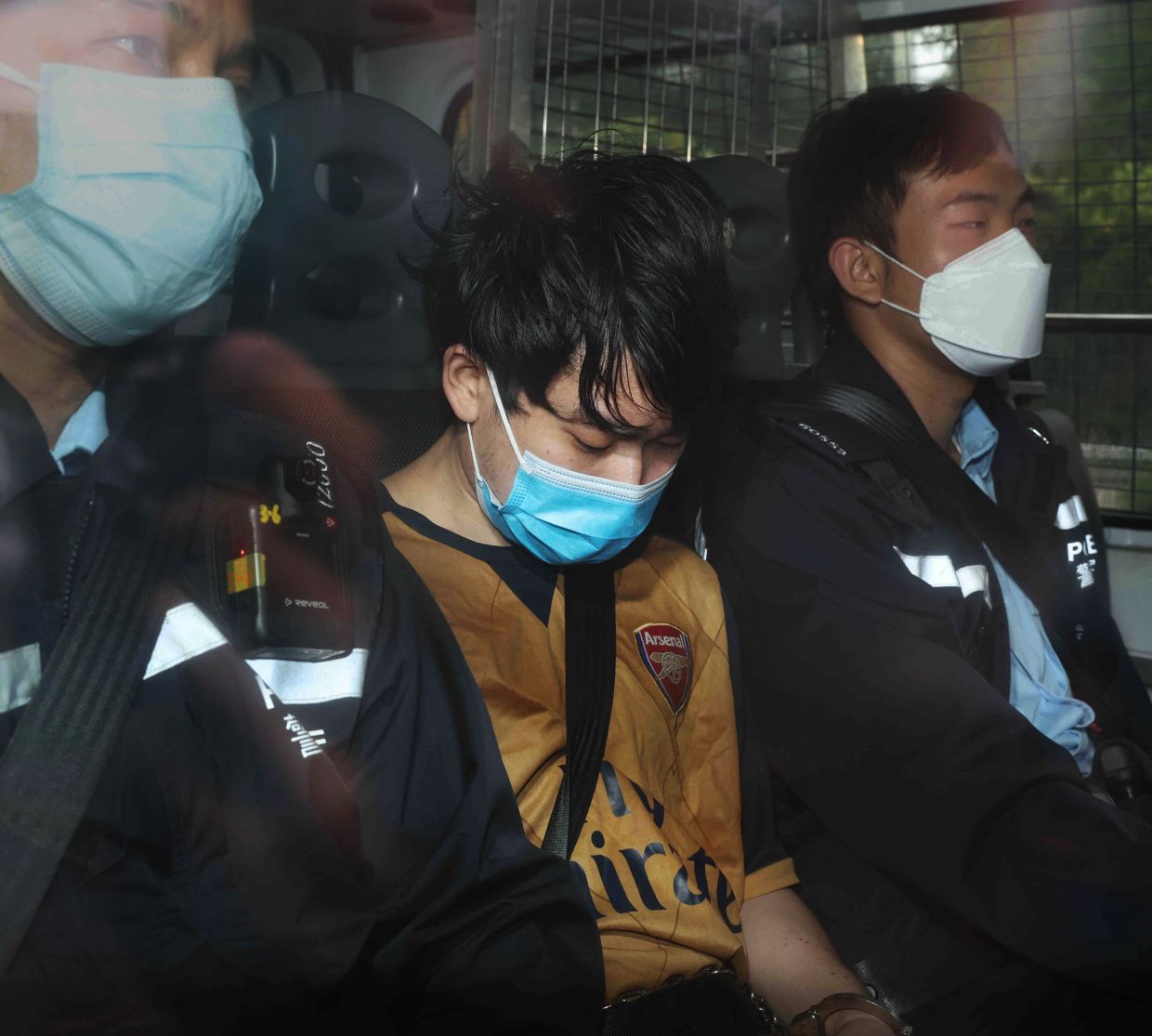
A 29-year-old unemployed man stands accused of fatally beating his 30-year-old girlfriend in a Hong Kong village flat four years ago, offering a troubling explanation that he was attempting to assist her weight loss by deliberately keeping her awake through night-time beatings. Ng Ka-sing's trial at the High Court has drawn attention to the tragic circumstances surrounding Yip Tsz-ching's death at their 700 square-foot residence in Galore Garden, Hung Shui Kiu, on the night of April 28-29, 2022. The case also encompasses charges related to the illegal transportation and disposal of her body, following its discovery by joggers early the following morning.
The defendant initially offered to plead guilty to manslaughter, a lesser charge that prosecutors declined, forcing the matter to proceed as a full murder trial before Justice Judianna Barnes and a seven-member jury. This rejection by the Crown signifies the Crown's assessment that sufficient evidence exists to support the more serious charge, suggesting prosecutors believe the evidence demonstrates either intent or recklessness of sufficient gravity to constitute murder. The trial is projected to extend over approximately eighteen days, indicating the complexity of the case and the volume of evidence the Crown intends to present.
According to accounts presented during opening statements by Senior Public Prosecutor Audrey Parwani, Ng maintained multiple conflicting explanations when questioned by police regarding the extensive injuries discovered on his girlfriend's body. Most significantly, Yip sustained corrosive chemical burns covering fifty-five percent of her body surface, injuries that demand explanation. Parwani explicitly told the jury that "the prosecution does not accept the accused was telling the whole truth," signalling her skepticism toward Ng's narrative and her intention to establish a pattern of dishonesty regarding events surrounding Yip's death.
The defendant's own cautioned interview with police, recorded when he was entitled to legal counsel, contained admissions that he repeatedly struck his girlfriend with a rod over an extended period. Ng claimed his motivation was to prevent her from sleeping between the evening of April 27 and the early morning of April 28, suggesting this sleep deprivation would somehow facilitate weight loss. According to prosecution accounts, this beating continued intermittently across multiple periods: from 10 p.m. on April 27 until 1:30 a.m. on April 28, and then again from 3 a.m. until 5:30 a.m. that morning. The accused reportedly justified continuing the assault by claiming Yip had not explicitly told him to stop, a troubling rationalization for extended violence.
The testimony of Ng's sworn sister, whose family also occupied the shared flat, adds another disturbing dimension to the narrative. When Ng allegedly asked whether he should cease the beating, she reportedly responded by encouraging him to "continue for a bit longer," potentially indicating either a shocking willingness to participate in harm or a fundamental misunderstanding of what was occurring. This detail raises questions about household awareness and any warning signs that might have preceded the fatal incident. The court heard that Yip herself was blamed for additional injuries, with Ng claiming she deliberately poured drain cleaner over her own body, while he merely splashed the chemical on the floor to "stimulate" her feet. He further asserted that Yip had struck herself against a wall seven or eight times after slipping on the wet floor.
The physical evidence collected by forensic specialists paints a stark picture of Yip's final hours. By approximately 5 a.m. on April 28, Yip reportedly told Ng she was experiencing severe pain and expressed fear that she might not survive the injuries she had sustained. Medical records indicated she subsequently lapsed into a coma, with her final spoken words recorded at 7:21 a.m. that morning. The timeline suggests Ng's account of accidental killing is contradicted by the extended nature of the assault and the period Yip remained conscious, aware of her deteriorating condition, and apparently isolated without medical intervention.
The discovery of the body revealed a carefully concealed attempt at disposal that contradicts Ng's casual, almost unintentional narrative. When joggers spotted a human leg protruding from a rolled-up quilt loaded onto a wheelboard at approximately 6 a.m. on April 29, they alerted authorities. Jogger Lau Kwok-yan, who reported the discovery, testified that Ng stood near the body showing no apparent alarm or distress. Street cleaner Wong Ah-sum, who questioned Ng about the contents of the wheelboard, reported that Ng identified the bundle as a "corpse" and claimed he intended to transport it to a police station, a statement that raises credibility questions about his claimed ignorance of what had occurred.
Forensic examination by government pathologist Dr. Foo Ka-chung established that Yip's body bore evidence of multiple brutal injuries far exceeding what an accident might produce. She had been bound to an overturned wooden chair using black plastic bags, covered with a quilt, and her head was wrapped multiple times with cling film and adhesive tape. Multiple bruises, abrasions, and lacerations across her head and other body parts were consistent with blunt force trauma from punching and kicking. The pathologist estimated death had occurred twelve to twenty-four hours before discovery, placing it firmly in the timeframe when Ng was alone with Yip.
Dr. Foo determined that suffocation following head injuries and extensive corrosive burns to the chest, abdomen, and limbs constituted Yip's cause of death. The layered protective wrapping of the head with film and tape suggests an intentional mechanism to prevent breathing, potentially accounting for the suffocation diagnosis. This clinical assessment directly contradicts any narrative of accidental death or passive causation, pointing instead to deliberate actions taken after the beating.
The case raises broader concerns about domestic violence escalation and the vulnerability of individuals in intimate relationships. Yip's apparent inability to escape or seek help despite hours of ongoing violence reflects patterns documented in cases of intimate partner homicide. The involvement of Ng's sworn sister as a household member who allegedly encouraged continued violence suggests this was not a sudden, uncontrolled outburst but rather behavior that continued across hours with apparent awareness from others present. For Malaysian observers, the case underscores the reality that domestic fatalities can occur even in urban, developed jurisdictions and that the explanations offered by accused perpetrators frequently contradict objective physical evidence.
Ng's claim upon arrest—"This was my girlfriend. I hit her to death with a rod by mistake"—presents prosecutors with a mixed admission of fact and intention. While acknowledging he caused her death through striking her with a rod, the word "mistake" frames the act as unintentional. This distinction between cause and intent lies at the heart of the murder versus manslaughter distinction, with the Crown apparently determining that evidence of extended, repeated violence over many hours demonstrates sufficient recklessness or intention to warrant the more serious charge. The jury will ultimately determine whether to accept Ng's explanation or the Crown's assertion that the evidence reveals a more calculated pattern of abuse.

%22%2F%3E%3C%2Fpattern%3E%3C%2Fdefs%3E%3Crect%20width%3D%22100%25%22%20height%3D%22100%25%22%20fill%3D%22url(%23ph2h5apg)%22%2F%3E%3Crect%20width%3D%22100%25%22%20height%3D%22100%25%22%20fill%3D%22url(%23ph2h5app)%22%2F%3E%3Ctext%20x%3D%2250%25%22%20y%3D%2250%25%22%20text-anchor%3D%22middle%22%20dominant-baseline%3D%22central%22%20fill%3D%22rgba(255%2C255%2C255%2C0.95)%22%20font-family%3D%22Georgia%2C%20'Times%20New%20Roman'%2C%20serif%22%20font-weight%3D%22700%22%20font-size%3D%22320%22%20letter-spacing%3D%22-0.02em%22%3EMUDA%3C%2Ftext%3E%3C%2Fsvg%3E)