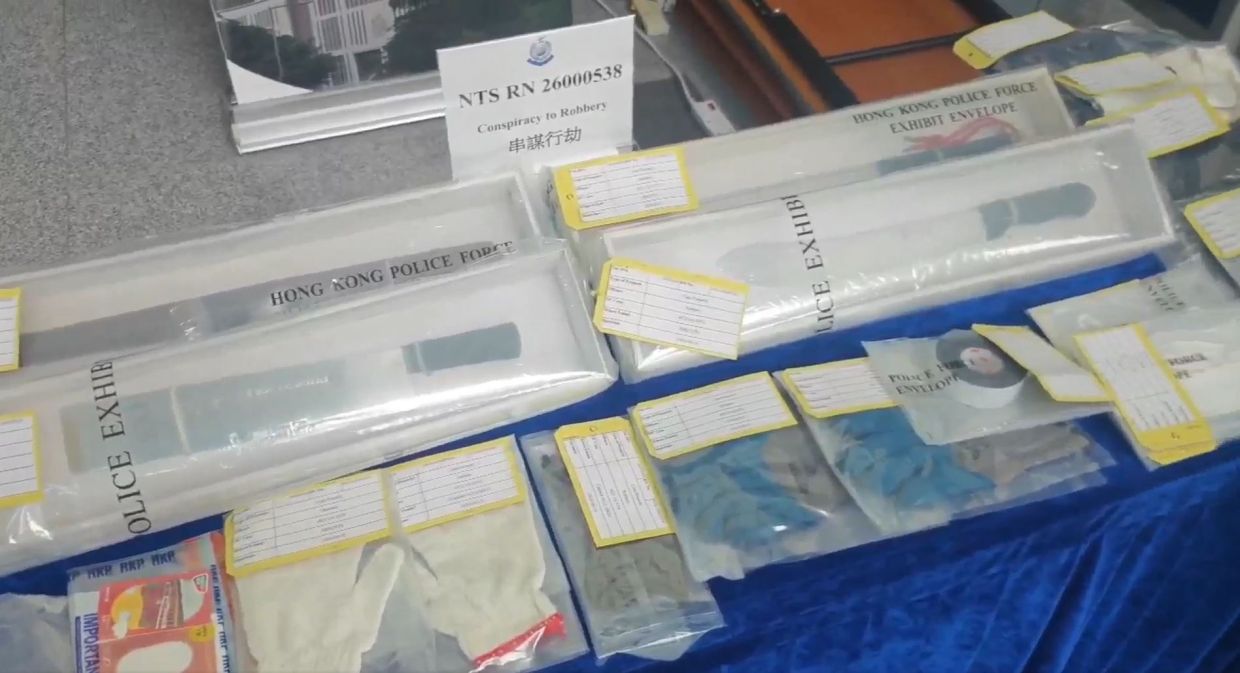
Hong Kong police have made rapid progress in investigating a high-value gold heist at Hong Kong International Airport, announcing the arrest of seven individuals just 12 hours after the crime occurred on Thursday, June 18. The swift operation demonstrates the territory's law enforcement capabilities in responding to organized theft, though the suspected involvement of triad members and potential flight of accomplices to mainland China underscores the cross-border criminal challenges facing regional authorities.
The arrested suspects—four men and three women ranging in age from 20 to 39 years—face charges of conspiracy to commit robbery and abetting criminal activity. According to police statements made public on Saturday, June 20, the detainees are being investigated for their roles in the coordinated attack. The rapid apprehension reflects both effective police work and the density of security infrastructure surrounding one of Asia's busiest aviation hubs, where CCTV coverage and checkpoint systems enable quick suspect identification and tracking.
The victim, a courier transporting valuables for a mainland business client, arrived at Hong Kong International Airport early Thursday morning from Bali, Indonesia, carrying six gold bars valued at HK$7 million in his backpack. As he made his way to the airport car park 3 to retrieve his vehicle, three assailants wearing masks emerged and attacked with knives, targeting his left hand and foot. The violence of the assault—leaving the victim with stab wounds despite his cooperation—suggests the robbers operated with little regard for causing injury and were determined to secure the merchandise regardless of resistance.
The attackers fled the scene in a seven-seater vehicle after seizing the backpack containing the gold. This choice of getaway vehicle points to premeditation, as such a vehicle would provide both capacity for multiple suspects and sufficient space to conceal their prize. The rapid escape route and vehicle selection indicate careful planning rather than opportunistic crime, a factor that has prompted investigators to consider whether someone with knowledge of airport operations facilitated the heist.
Police recovery efforts proved successful within hours of the robbery. Investigators located the seven-seater vehicle used in the escape in Tsuen Wan, a district on Hong Kong's Kowloon peninsula. Along with the vehicle, authorities recovered the knives employed during the assault, providing crucial physical evidence. The quick discovery of these items suggests either careless disposal by the perpetrators or intelligence gathered from arrested individuals, accelerating the investigation's progression and enabling authorities to establish a clear chain of evidence.
The victim received medical treatment at Princess Margaret Hospital, where he was reported to be in stable condition following surgery. While the stab wounds to his hand and foot are serious injuries, the victim's survival and recovery prospects are favorable, and he will likely provide crucial testimony regarding the attackers' appearance, method of communication, and operational details.
Police have indicated that several individuals suspected of involvement remain at large, with strong indications that they have crossed into mainland China. This complicates apprehension efforts, as Hong Kong authorities lack direct law enforcement jurisdiction across the border. In response, Hong Kong police have formally requested assistance from mainland law enforcement authorities, invoking established cross-border cooperation mechanisms. Such arrangements typically involve information sharing and coordinated investigative efforts, though actually extraditing suspects or compelling their return presents diplomatic complexities that frequently strain resolution efforts.
A significant aspect of the investigation concerns the suspected involvement of individuals with triad backgrounds among those arrested. Organized crime syndicates in Hong Kong have historically specialized in armed robbery, particularly targeting high-value cargo and currency movements. The participation of triads suggests this robbery may represent a contract job or part of a larger organized crime operation rather than an isolated criminal venture. This dimension elevates the case beyond simple street crime and suggests possible connections to other smuggling or trafficking networks operating across the region.
Police have theorized that an insider may have played a role in the heist's success, given that the assailants demonstrated precise knowledge of the victim's arrival flight, his route through the airport, and his specific parking location. Such intelligence could only reliably be obtained through someone with access to flight manifests, cargo tracking systems, or direct communication with people within the airport infrastructure. This possibility has opened a secondary investigation thread examining employees or contractors with airport access, adding complexity to an already multilayered criminal inquiry.
The incident highlights vulnerabilities in transporting high-value goods through major transport hubs, even in jurisdictions with robust security frameworks. For Malaysian readers and Southeast Asian observers, the case demonstrates how organized crime syndicates leverage regional mobility and cross-border safe havens to execute major robberies and evade capture. It also underscores the growing importance of inter-agency and international cooperation in combating transnational organized crime, a challenge that impacts trade, security, and the movement of goods throughout the region.
The investigation continues as authorities pursue the remaining suspects believed to have fled to mainland China and examine potential insider involvement within airport operations. The rapid arrests and recovery of physical evidence represent a strong foundation for prosecution, though the cross-border dimensions and alleged triad connections suggest this case may have ramifications extending well beyond the immediate incident.

%22%2F%3E%3C%2Fpattern%3E%3C%2Fdefs%3E%3Crect%20width%3D%22100%25%22%20height%3D%22100%25%22%20fill%3D%22url(%23phusd7g)%22%2F%3E%3Crect%20width%3D%22100%25%22%20height%3D%22100%25%22%20fill%3D%22url(%23phusd7p)%22%2F%3E%3Ctext%20x%3D%2250%25%22%20y%3D%2250%25%22%20text-anchor%3D%22middle%22%20dominant-baseline%3D%22central%22%20fill%3D%22rgba(255%2C255%2C255%2C0.95)%22%20font-family%3D%22Georgia%2C%20'Times%20New%20Roman'%2C%20serif%22%20font-weight%3D%22700%22%20font-size%3D%22226%22%20letter-spacing%3D%22-0.02em%22%3EPenang%3C%2Ftext%3E%3C%2Fsvg%3E)