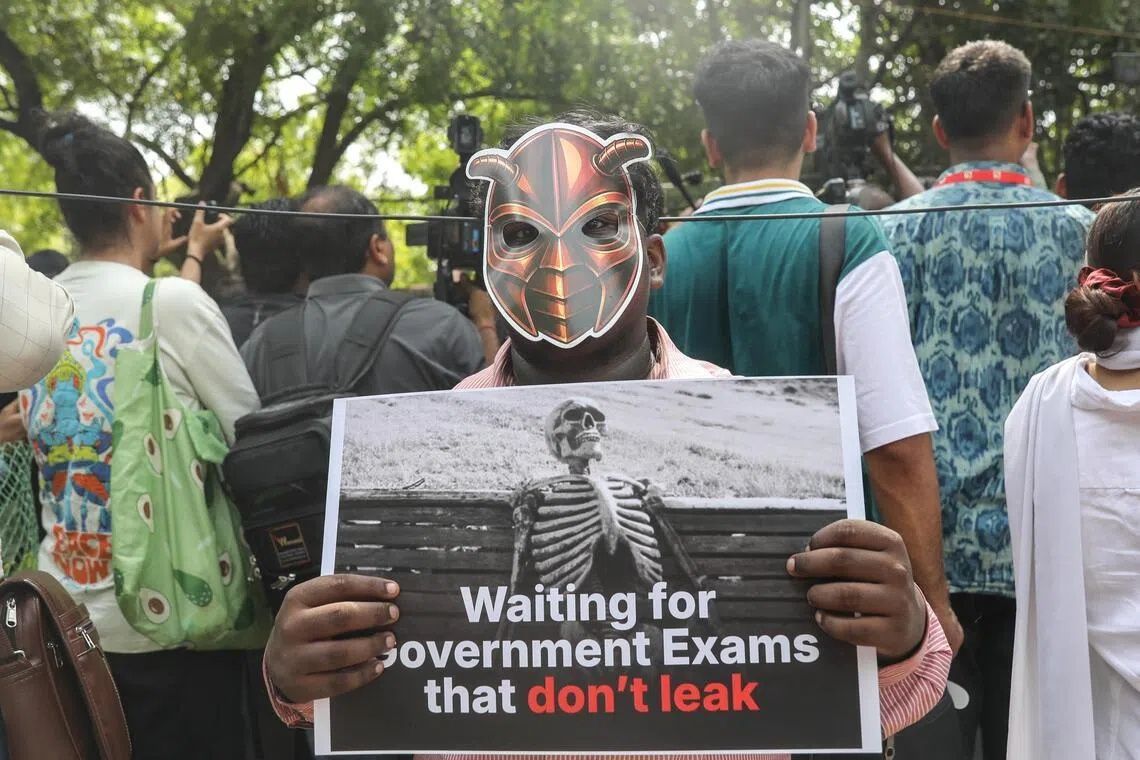
India's 2.2 million medical school aspirants are preparing for a critical re-examination on Sunday, June 21, under extraordinary security precautions following the cancellation of the previous test in what has become one of the country's most contentious educational crises in recent years. The scrapped National Eligibility cum Entrance Test, known as NEET, exposed vulnerabilities in one of India's most high-stakes examinations and triggered a wave of anger among students, parents, and youth activists demanding accountability from policymakers.
The original test fell victim to a significant paper leak that compromised its integrity and forced authorities to abandon the entire examination cycle. This decision came amid reports of student suicides linked to the scandal and broader accusations of systemic failure in India's examination management. The incident has reverberated beyond the medical entrance sector, casting a shadow over the government's education administration at a time when competition for university places is extraordinarily fierce and public trust in institutional oversight is fragile.
To restore confidence in the retest, Indian authorities have unveiled an elaborate security infrastructure that reflects the severity of the breach. The National Testing Agency has deployed more than 200,000 officials across examination centres nationwide, including police personnel and specialized security staff. This mobilisation represents one of the largest security operations undertaken for a single educational event in the country. The scale of deployment underscores how seriously the government has taken the criticism and the urgent need to demonstrate that the examination can be conducted fairly and transparently.
The multi-layered security framework introduced for the retest incorporates cutting-edge technologies designed to prevent unauthorised access to examination materials and detect suspicious activity in real time. Biometric authentication systems will verify the identity of candidates and invigilators, while artificial intelligence-enabled camera surveillance will monitor examination halls continuously. Additionally, GPS tracking has been installed on question paper batches to maintain a complete electronic record of their movement from printing facilities to examination centres, creating an auditable chain of custody that was evidently lacking in the failed test.
Beyond physical and technological measures, the government has taken the controversial step of temporarily restricting access to the Telegram messaging application, which investigation agencies determined was being exploited by cheating networks to distribute leaked examination questions among candidates willing to pay for such information. This restriction highlights the involvement of organised criminal syndicates in examination fraud, a shadow industry that has flourished in India alongside the legitimate but fiercely competitive entrance examination system. Telegram's head Pavel Durov publicly dismissed the effectiveness of the app ban, contending that such restrictions would simply redirect fraudulent communication to alternative platforms and that the fundamental problem lay with insiders who had access to question papers and were willing to sell them to criminal networks.
The NEET examination represents the gateway to India's medical colleges and is taken annually by millions of candidates competing for approximately 100,000 undergraduate seats in a country with severe shortages of medical professionals. The intense competition has spawned a sprawling coaching industry worth billions of rupees, creating perverse incentives for examination fraud schemes that promise shortcuts to success. For underprivileged students without access to expensive coaching centres, the prospect of leaked papers available through criminal networks has become a tempting but illegal alternative, further distorting a system already skewed in favour of those with financial means.
Investigation into the leak has led to the arrest of an alleged mastermind identified as a chemistry lecturer, according to the Central Bureau of Investigation. This detail suggests that breach involved individuals with professional credentials and institutional access, pointing to internal compromise rather than external hacking. The involvement of an educator in facilitating fraud has added moral weight to public demands for systemic reforms and heightened scrutiny of how examination agencies vet personnel with access to sensitive materials.
The controversy surrounding NEET has coincided with another major examination scandal affecting approximately two million high school students who experienced errors in an online marking system. Widespread complaints emerged that grades were assigned incorrectly or attributed to wrong candidates, creating chaos for students whose university admissions depend on these results. These parallel failures in examination management have compounded public anger and validated concerns that India's testing infrastructure suffers from fundamental governance problems that extend beyond a single breach.
The political fallout from these crises has been substantial, with Education Minister Dharmendra Pradhan facing intense pressure to resign. The outcry has transcended typical student grievances and evolved into broader youth protests questioning the government's competence and commitment to fair educational access. A satirical movement called the "Cockroach People's Party" has capitalised on this discontent, attracting millions of social media followers since its launch in May by channelling frustration into creative criticism of institutional incompetence and corruption.
For Malaysia and other Southeast Asian nations monitoring India's examination systems, these developments carry cautionary lessons about the risks of scaling entrance examinations without proportionate investment in security infrastructure and governance oversight. As regional economies compete for skilled talent and educational systems become increasingly competitive, the vulnerabilities exposed in India's NEET scandal underscore the importance of robust institutional frameworks that can withstand both deliberate fraud and administrative negligence. The retest will serve as a crucial test of whether India can restore institutional credibility or whether systemic reforms will be necessary to prevent future crises in its educational ecosystem.

%22%2F%3E%3C%2Fpattern%3E%3C%2Fdefs%3E%3Crect%20width%3D%22100%25%22%20height%3D%22100%25%22%20fill%3D%22url(%23ph2h5apg)%22%2F%3E%3Crect%20width%3D%22100%25%22%20height%3D%22100%25%22%20fill%3D%22url(%23ph2h5app)%22%2F%3E%3Ctext%20x%3D%2250%25%22%20y%3D%2250%25%22%20text-anchor%3D%22middle%22%20dominant-baseline%3D%22central%22%20fill%3D%22rgba(255%2C255%2C255%2C0.95)%22%20font-family%3D%22Georgia%2C%20'Times%20New%20Roman'%2C%20serif%22%20font-weight%3D%22700%22%20font-size%3D%22320%22%20letter-spacing%3D%22-0.02em%22%3EMUDA%3C%2Ftext%3E%3C%2Fsvg%3E)