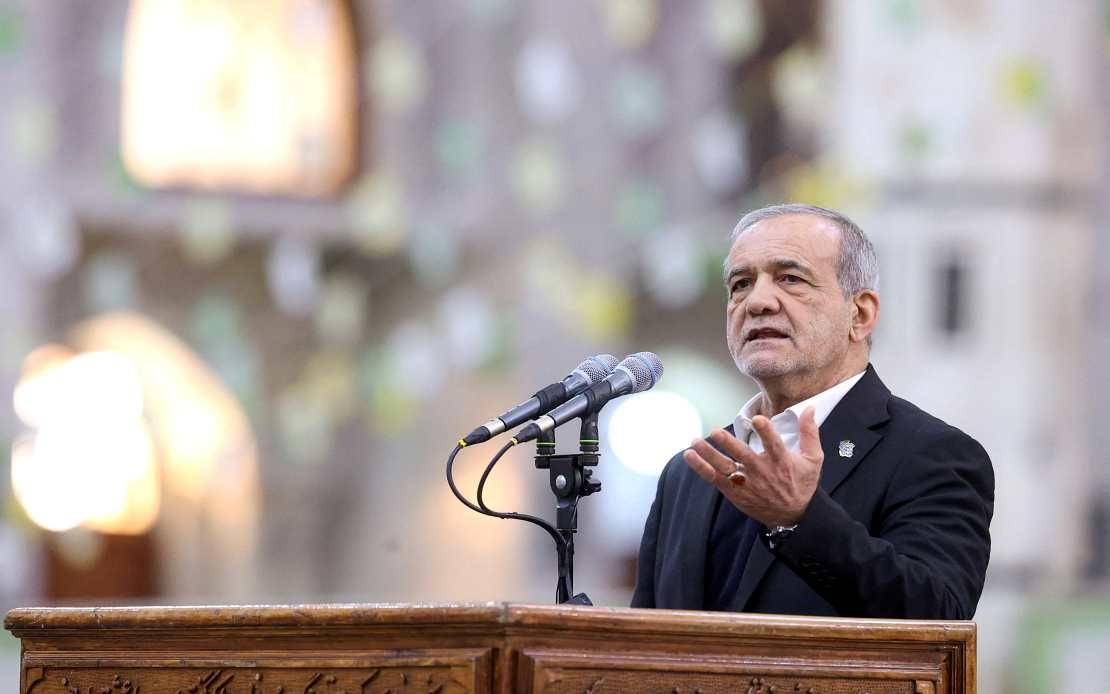
Iranian President Masoud Pezeshkian confirmed on Sunday that his country will recover US$6 billion in frozen assets currently held in Qatar as part of an emerging preliminary agreement with the United States. The announcement represents a significant breakthrough in months of stalled negotiations between the two nations and marks a concrete first step in defrosting long-frozen bilateral relations. Speaking through Iran's state broadcaster IRIB, Pezeshkian stated that the release of these assets would commence immediately following the initiation of formal talks between the two governments.
The unfreezing of these funds carries substantial implications for Iran's economy, which has been constrained by international sanctions and financial restrictions for years. The US$6 billion represents a meaningful injection of liquidity for Tehran's treasury and signals Washington's willingness to provide tangible concessions in exchange for Iran's participation in broader negotiations. For regional observers, the movement of these assets from Qatar—a neutral intermediary—to Iranian control demonstrates that both parties have sufficiently narrowed their differences to begin implementing early-stage confidence-building measures.
However, Pezeshkian made clear that Tehran's fundamental position on nuclear enrichment remains non-negotiable. In his statement, the Iranian leader asserted that his country will never relinquish its right to uranium enrichment and that the United States would ultimately be forced to accept this capability. This declaration establishes important parameters for the forthcoming negotiations, signalling that while Iran may be willing to compromise on certain issues, its nuclear programme will not be subject to the kind of restrictions that characterised previous international agreements such as the Joint Comprehensive Plan of Action.
The momentum toward dialogue has accelerated significantly following Wednesday's signing of a memorandum of understanding between Washington and Tehran. This preliminary framework document laid the groundwork for ending months of escalating Middle East tensions and, critically, for reopening the Strait of Hormuz—one of the world's most strategically important shipping routes. The closure or restriction of this waterway would have catastrophic consequences for global energy markets and regional trade, making its restoration a priority for multiple stakeholders beyond just Iran and the United States.
Delegations from both countries arrived in Switzerland early this week to engage in the technical negotiations that will flesh out the preliminary agreement's broader objectives. The talks are being conducted in Burgenstock under Pakistani mediation, underscoring Islamabad's evolving role as a regional diplomatic intermediary. Pakistan's involvement reflects broader patterns of diplomatic realignment in South and West Asia, where countries are increasingly positioning themselves as bridges between major powers.
On the American side, Vice President JD Vance is leading the negotiating team, signalling the high level of political priority Washington assigns to these discussions. The choice of the Vice President—rather than a lower-ranking official or career diplomat—underscores the administration's commitment to reaching a substantive resolution. For Iran, the delegation includes Parliament Speaker Mohammad Bagher Qalibaf and Foreign Minister Abbas Araghchi, both seasoned figures in Iranian politics and diplomacy. This composition suggests that Tehran is equally serious about achieving outcomes through negotiation rather than confrontation.
The recovery of the US$6 billion in Qatari-held assets addresses one of Iran's longstanding grievances about Western-imposed sanctions and financial isolation. These funds have been frozen for years, inaccessible to Iranian authorities despite belonging to the Iranian state. Their release represents not only monetary gain but also symbolic recognition that the sanctions regime that froze these assets in the first place is beginning to crack. For Malaysian policymakers and regional observers, this development is significant because it could influence broader patterns of international engagement in the Middle East and recalibrate the balance of power in a region that affects global energy security and maritime commerce.
The context of these negotiations extends beyond bilateral Iranian-American relations. The months of Middle East conflict referenced in the preliminary agreement have destabilised the region and disrupted global supply chains. The conflict has also raised insurance costs for vessels transiting disputed waters, increased tension among regional states, and created humanitarian crises. By opening channels for dialogue and demonstrating willingness to move forward incrementally—beginning with the return of frozen assets—both sides are signalling to their populations and regional partners that a path away from escalation exists.
For Southeast Asian nations including Malaysia, which depend heavily on uninterrupted flow of energy resources and free passage through international waterways, the reopening of dialogue between Iran and the United States carries practical importance. A destabilised Middle East or restricted Strait of Hormuz would directly impact energy prices, shipping costs, and economic stability across the region. Malaysia's position as a significant trading nation and energy importer means that regional peace and the restoration of normal diplomatic and commercial relations benefit the country's economic interests.
The uranium enrichment issue that Pezeshkian highlighted will likely dominate the technical discussions ahead. Previous negotiations on this subject have proven extraordinarily difficult, with fundamental disagreements between Iran's assertion of its right to nuclear technology and Western powers' concerns about proliferation. The fact that Pezeshkian has already declared this matter non-negotiable suggests that future agreements will need to accommodate some level of Iranian enrichment capacity rather than attempting to eliminate it entirely as previous frameworks sought to do.
The coming weeks of negotiations in Switzerland will test whether the preliminary agreement's framework can translate into durable arrangements on the multiple issues involved. Beyond nuclear questions, the discussions must address sanctions relief, the reopening of the Strait of Hormuz, and potentially broader questions about Iran's regional activities. The involvement of Pakistan as mediator suggests that these talks may also have implications for broader South Asian security dynamics, as countries in that region have their own interests in Middle Eastern stability.
Pezeshkian's public announcement of the US$6 billion asset release serves multiple domestic audiences within Iran. It allows him to demonstrate to Iranian citizens that engagement with the international community yields tangible benefits, potentially building domestic support for further negotiations and compromise. Simultaneously, by reiterating Iran's non-negotiable stance on uranium enrichment, he signals to hardliners within Iranian politics that national interests remain protected. This careful calibration of messaging suggests a leadership attempting to navigate between reform-minded elements seeking international engagement and more ideological factions suspicious of American intentions.
As these negotiations progress, regional stability and the specific outcomes regarding the Strait of Hormuz will command global attention. For Malaysia and other Southeast Asian economies with significant energy dependencies and maritime trade reliance, the success or failure of these talks carries direct economic implications that will ripple through supply chains and financial markets for years to come.
%22%2F%3E%3C%2Fpattern%3E%3C%2Fdefs%3E%3Crect%20width%3D%22100%25%22%20height%3D%22100%25%22%20fill%3D%22url(%23ph1l5c2g)%22%2F%3E%3Crect%20width%3D%22100%25%22%20height%3D%22100%25%22%20fill%3D%22url(%23ph1l5c2p)%22%2F%3E%3Ctext%20x%3D%2250%25%22%20y%3D%2250%25%22%20text-anchor%3D%22middle%22%20dominant-baseline%3D%22central%22%20fill%3D%22rgba(255%2C255%2C255%2C0.95)%22%20font-family%3D%22Georgia%2C%20'Times%20New%20Roman'%2C%20serif%22%20font-weight%3D%22700%22%20font-size%3D%22226%22%20letter-spacing%3D%22-0.02em%22%3ERussia%3C%2Ftext%3E%3C%2Fsvg%3E)