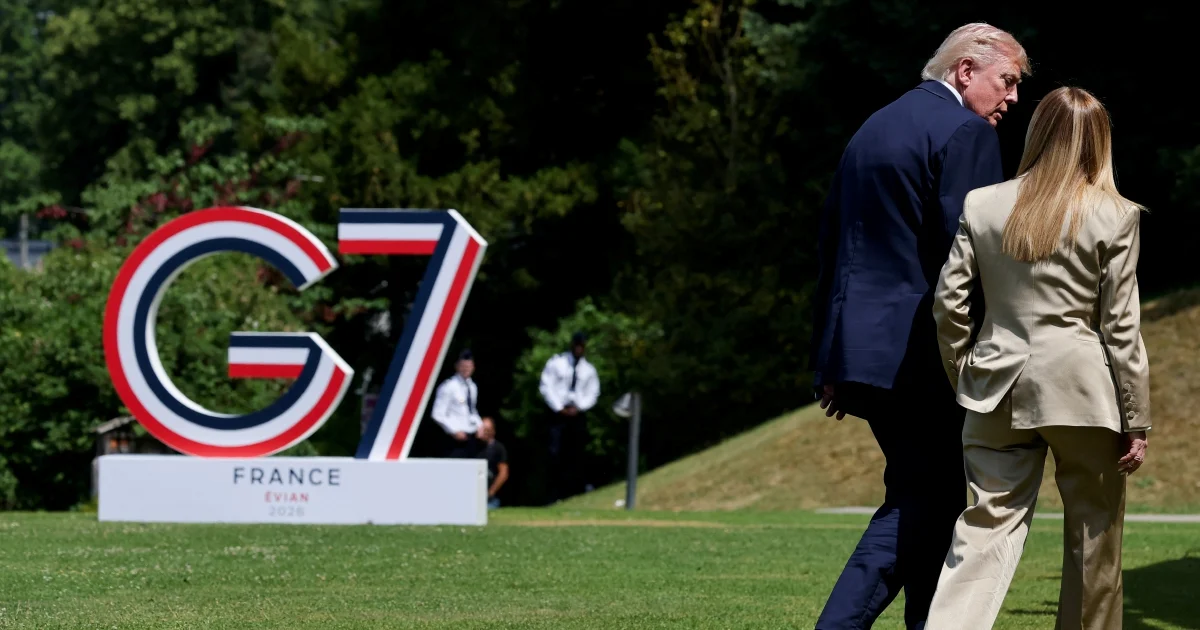
Italy's government lashed out at US President Donald Trump on Friday following reports that he had disparaged Prime Minister Giorgia Meloni in unflattering terms, prompting Foreign Minister Antonio Tajani to cancel a scheduled visit to the United States. The reported remarks, in which Trump allegedly characterised Meloni as having 'begged' for a photo opportunity, drew swift condemnation from Rome and underscored the increasingly fractious nature of transatlantic relations as Trump begins his second presidential term.
The incident marks a significant diplomatic misstep at a time when Italy, as a leading eurozone economy and NATO member state, occupies a delicate position in European geopolitics. Meloni, who has cultivated a close working relationship with the incoming US administration, found herself at the centre of an awkward situation that risked undermining her carefully constructed political standing both domestically and internationally. The cancellation of Tajani's trip signalled that Rome was not prepared to overlook what many officials characterised as disrespectful behaviour towards the nation's democratically elected leader.
The timing of the controversy is particularly sensitive given the broader context of European apprehension about Trump's America First agenda and its implications for NATO commitments, trade relations, and the defence of democratic values. Italy, despite Meloni's ideological affinity with some conservative positions, has sought to maintain strategic alignment with both Europe and the United States. The episode threatens to complicate those calculations and may force Italian policymakers to recalibrate their approach to engaging with Washington.
Tajani's decision to withdraw from his planned engagement with American counterparts represented a rare moment of Italian defiance toward the US administration. As foreign minister, Tajani typically endeavours to maintain diplomatic channels and smooth over disagreements behind closed doors. His public cancellation served as a clear signal that Trump's reported comments had crossed a threshold that Italian officials could not simply ignore or downplay.
The broader ramifications of this clash extend beyond bilateral relations between Rome and Washington. It demonstrates how quickly diplomatic goodwill can evaporate when personal slights intersect with political calculations. For Southeast Asian nations watching from afar, the episode offers a cautionary tale about the unpredictability of dealing with a Trump administration and the challenges of managing relationships with a US president who operates according to different diplomatic conventions than his predecessors.
Meloni's government has generally sought to present itself as a reliable Western ally and defender of traditional values, positioning Italy as a bridge between conservative and mainstream European politics. The ridicule levelled at the prime minister undermined that carefully constructed image and exposed the vulnerabilities inherent in attempting to build personal rapport with Trump. Her team now faces the awkward task of managing the fallout whilst attempting to maintain productive engagement with an administration it views as strategically important.
The incident also illuminates divisions within European capitals regarding how to approach the Trump presidency. Some leaders have signalled they will pursue pragmatic, issue-by-issue engagement, whilst others have adopted a more cautious stance. Italy's response suggests that even those friendly to Trump's philosophical outlook cannot entirely immunise themselves from the friction that his unconventional communication style inevitably creates.
Foreign ministry officials in Rome expressed frustration at what they characterised as unprovoked and undiplomatic language. The specific allegation that Meloni had 'begged' for a photograph struck many as particularly demeaning, implying desperation on her part and suggesting an asymmetrical power dynamic. Such rhetoric, whether intended as casual banter or deliberate provocation, carries considerable weight when directed at a sitting head of government on the international stage.
The controversy also raises questions about how other world leaders might respond if they become targets of similar commentary. Germany's Olaf Scholz, France's Emmanuel Macron, and other European principals are watching developments closely, calculating whether and how to defend their own dignity and sovereignty in their dealings with Trump. The precedent being set in Rome could influence how future disputes are handled across the Atlantic.
For Southeast Asian observers, particularly those in ASEAN nations with their own complex relationships with Washington, the episode serves as a reminder that diplomatic niceties and strategic alignment do not automatically shield smaller or middle-power nations from embarrassment or disrespect. It underscores the importance of maintaining independent foreign policy options and not placing excessive confidence in the personal relationships or ideological affinities with any single superpower.
Italy's response also reflects domestic political considerations. Meloni has cultivated an image as a strong nationalist leader capable of standing up to international pressure. Appearing to accept public mockery from an American president could damage her credibility at home, particularly among supporters who value her perceived toughness and independence. By authorising Tajani's cancellation, Meloni signalled to her political base that she would not tolerate disrespect, even from the United States.
The resolution of this incident remains uncertain. Whether Trump issues clarifications, apologies, or continues his pattern of provocative rhetoric will shape the trajectory of US-Italy relations in the coming weeks and months. What appears evident is that the Trump administration's unconventional diplomatic style is already generating friction with key Western allies, complicating efforts to maintain a united front on global challenges ranging from great-power competition to economic policy.
%22%2F%3E%3C%2Fpattern%3E%3C%2Fdefs%3E%3Crect%20width%3D%22100%25%22%20height%3D%22100%25%22%20fill%3D%22url(%23ph3x05qg)%22%2F%3E%3Crect%20width%3D%22100%25%22%20height%3D%22100%25%22%20fill%3D%22url(%23ph3x05qp)%22%2F%3E%3Ctext%20x%3D%2250%25%22%20y%3D%2250%25%22%20text-anchor%3D%22middle%22%20dominant-baseline%3D%22central%22%20fill%3D%22rgba(255%2C255%2C255%2C0.95)%22%20font-family%3D%22Georgia%2C%20'Times%20New%20Roman'%2C%20serif%22%20font-weight%3D%22700%22%20font-size%3D%22272%22%20letter-spacing%3D%22-0.02em%22%3EAnwar%3C%2Ftext%3E%3C%2Fsvg%3E)