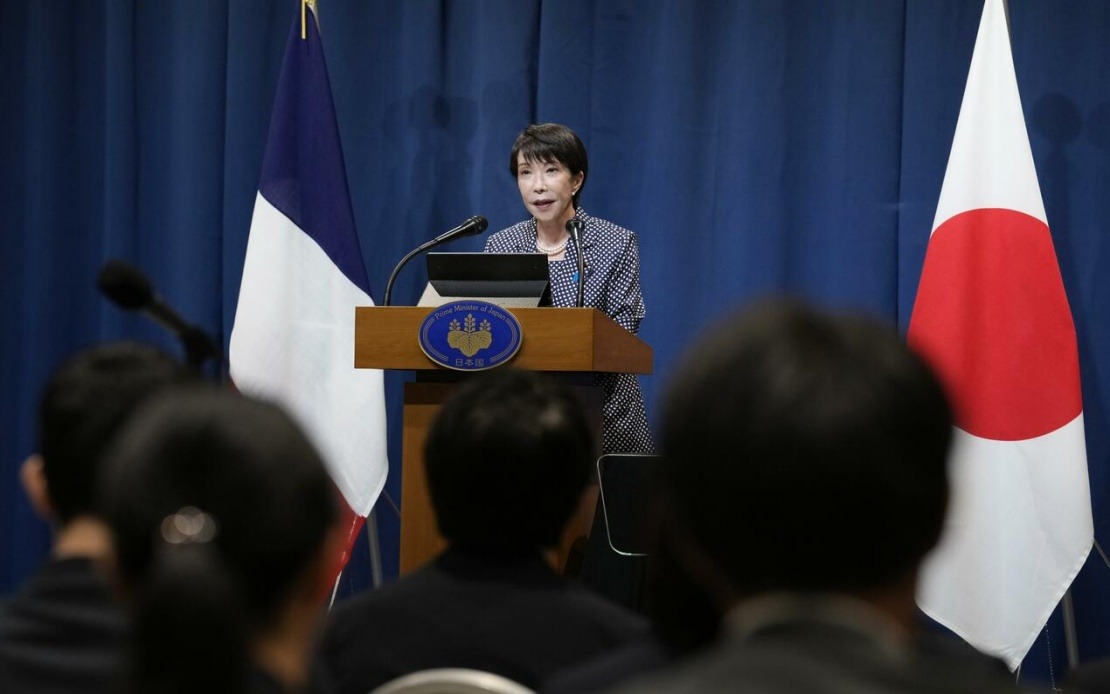
Japanese Prime Minister Sanae Takaichi's Cabinet has experienced a notable erosion in public support, with approval ratings slipping to 55.8 per cent according to a Kyodo News survey conducted over the weekend. This represents the lowest approval mark recorded since Takaichi took office last October, signalling growing dissatisfaction among Japanese voters with her administration's performance and policy directions.
The timing of this decline is significant. The survey was conducted in the immediate aftermath of a preliminary peace agreement between the United States and Iran that included provisions for Tehran to reopen the Strait of Hormuz, a critical shipping corridor through which substantial portions of global energy supplies transit. The development appeared to ease some immediate regional tensions, yet Japanese voters remained cautious about the government's posture regarding potential military involvement in the region.
When asked specifically about the possible deployment of Japan's Self-Defence Forces to secure maritime shipping through strategic waterways in West Asia, a clear majority expressed reservations. Some 54.7 per cent of survey respondents indicated they saw no necessity for such military involvement to ensure safe passage of commercial vessels, while a smaller minority of 36.6 per cent supported the concept. This response reflects the traditionally cautious Japanese public stance on military deployment abroad and suggests the government faces significant political risk should it pursue more assertive regional security measures.
The economic dimension of public discontent cannot be overlooked. Japanese households continue to bear the weight of persistently elevated prices across essential goods and services, creating ongoing financial strain for ordinary families. This consumer pressure has become a focal point of political contention, with voters increasingly focused on government solutions to rising costs of living rather than foreign policy considerations.
Food and beverage taxation emerged as a particularly salient issue in the survey results. The consumption tax on these categories currently stands at 8.0 per cent, creating regular financial pressure on household budgets. When presented with tax reduction proposals, 43.9 per cent of respondents indicated they would find a reduction to 1.0 per cent acceptable, particularly if such a measure could be implemented swiftly. An additional 22.6 per cent expressed preference for eliminating the tax entirely, aligning with pledges made by Japan's ruling coalition parties.
For Malaysian and Southeast Asian observers, the weakness of Takaichi's Cabinet holds broader implications. Japan remains a significant economic and security presence throughout the region, and fluctuating domestic political support constrains the government's ability to pursue consistent foreign policy and defence commitments. Should approval ratings continue declining, the administration may face increased domestic pressure to redirect resources from external commitments toward domestic economic relief measures.
The survey results also underscore a fundamental challenge confronting Japanese policymakers: balancing traditional security commitments and regional stability concerns against mounting domestic economic grievances. The public's clear preference for avoiding military deployment to West Asian waters, combined with their focus on consumption tax reform, suggests voters are prioritising bread-and-butter issues over external geopolitical considerations.
Takaichi assumed office following a period of significant change within Japan's political landscape. The early months of her administration appeared to enjoy reasonable public confidence, but the trajectory evident in this survey indicates that honeymoon period has definitively ended. The decline to 55.8 per cent approval represents a substantial cumulative loss since October, though the rating remains above critical thresholds that would typically trigger major political upheaval.
The specific configuration of opinion on economic policy deserves particular attention. Rather than presenting an overwhelming demand for zero taxation on food and beverages, the survey reveals a more nuanced public position. A plurality supports compromise measures that would deliver meaningful relief without potentially destabilising government finances, suggesting Japanese voters retain a degree of fiscal pragmatism even while expressing dissatisfaction with current conditions.
Looking forward, Takaichi's administration faces a critical period. If economic conditions deteriorate further or if regional tensions escalate unexpectedly, approval ratings could decline below psychologically important thresholds. Conversely, demonstrable progress on consumption tax reduction or other economic relief measures might stabilise or recover public confidence. The government's challenge will be threading this needle while maintaining credible commitments to security alliance partners and regional stability in an increasingly complex geopolitical environment.

%22%2F%3E%3C%2Fpattern%3E%3C%2Fdefs%3E%3Crect%20width%3D%22100%25%22%20height%3D%22100%25%22%20fill%3D%22url(%23ph2h5apg)%22%2F%3E%3Crect%20width%3D%22100%25%22%20height%3D%22100%25%22%20fill%3D%22url(%23ph2h5app)%22%2F%3E%3Ctext%20x%3D%2250%25%22%20y%3D%2250%25%22%20text-anchor%3D%22middle%22%20dominant-baseline%3D%22central%22%20fill%3D%22rgba(255%2C255%2C255%2C0.95)%22%20font-family%3D%22Georgia%2C%20'Times%20New%20Roman'%2C%20serif%22%20font-weight%3D%22700%22%20font-size%3D%22320%22%20letter-spacing%3D%22-0.02em%22%3EMUDA%3C%2Ftext%3E%3C%2Fsvg%3E)