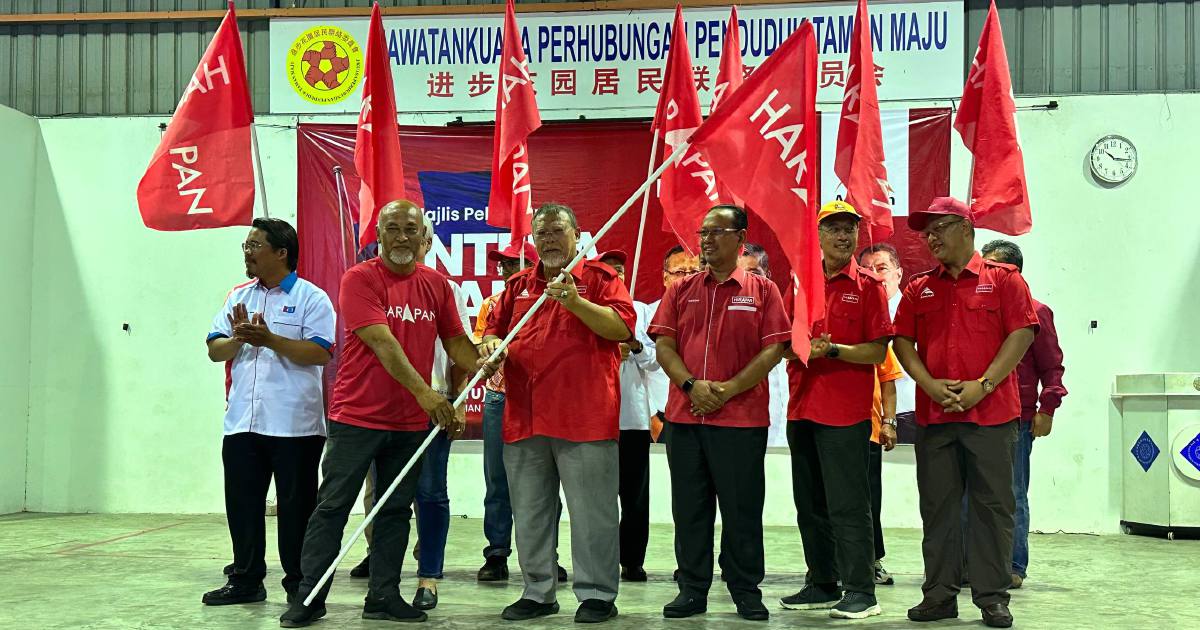
The Amanah Negara party in Johor has declared its intention to secure victory in a minimum of six state constituencies across the northern region during the forthcoming July 11 state election, signalling confidence in its electoral prospects as polling day approaches. The party has strategically positioned itself to contest 10 seats in the northern zone, a region that has traditionally been competitive territory for various political factions seeking representation in Johor's state assembly.
This target reflects Amanah's assessment of its ground strength and voter sentiment in constituencies spanning the northern districts of the state. The party's leadership in Batu Pahat, a key stronghold in the region, has been actively mobilising party machinery and supporters ahead of the election campaign. The confidence expressed by party officials suggests they have conducted extensive groundwork and believe their candidates possess the appeal and local connections necessary to convince voters in their respective constituencies.
The northern zone of Johor represents a microcosm of the state's broader political dynamics. While the region has seen various political alliances and realignments over recent electoral cycles, Amanah's presence there has grown more pronounced, particularly as part of wider coalition strategies within Malaysian opposition politics. The party's specific focus on six seats from its slate of ten reflects a pragmatic assessment—ambitious enough to demonstrate ambition, yet grounded in realistic expectations about the challenging nature of state-level elections.
For Malaysian political observers, Amanah's targeting strategy underscores the party's role as a significant player in Johor's multi-cornered electoral contest. Unlike the straightforward binary contests that once defined Malaysian elections, contemporary state polls involve numerous competing parties and coalitions, each calculating their most viable pathways to assembly representation. The six-seat benchmark, if achieved, would grant Amanah meaningful legislative influence and validate its strategic positioning within the broader opposition framework.
The July 11 election will determine which parties gain footing in Johor's assembly for the next five-year term. Johor remains one of Malaysia's most politically consequential states, given its size, economic importance, and historical role in national politics. Victory in six seats would position Amanah as a non-trivial force in subsequent coalition negotiations and legislative deliberations. Conversely, falling short of this target might prompt internal reassessment of the party's electoral strategy and candidate selection processes.
Amanah's candidacy selections across these ten constituencies have likely been made after consideration of various factors including candidate viability, historical performance in each division, demographic composition of voter bases, and existing voter sentiment surveys. The party has presumably concentrated resources on what it deems its most winnable seats, while maintaining a broader presence across the northern zone to build party recognition and organisational infrastructure for future electoral cycles.
The regional campaign will inevitably intersect with broader national political narratives. Amanah, as part of the opposition coalition framework, will need to articulate a coherent message that resonates with Johor voters while maintaining ideological consistency. Issues affecting the state—ranging from economic development and job creation to local governance and community services—will form the centrepiece of campaigning across all ten constituencies.
Competitors in the northern zone include both established political parties and emerging challengers, each pursuing their own vote-winning calculations. The ultimate outcome will hinge on voters' assessment of competing visions for Johor's future, candidate credibility at the grassroots level, and the effectiveness of each campaign's messaging. For Amanah specifically, translating its confident projections into actual victories will require sustained mobilisation, effective communication, and sustained engagement with constituents throughout the campaign period.
The Johor state election represents a critical juncture for Amanah's political trajectory within Malaysia's broader competitive landscape. Success would validate the party's strategic positioning and strengthen its claim to relevance in opposition politics, while setbacks would necessitate strategic recalibration. As campaign activities intensify across Johor's constituencies between now and polling day, the northern zone will remain a focal point for Amanah's resource allocation and leadership attention as the party pursues its six-seat objective.
%22%2F%3E%3C%2Fpattern%3E%3C%2Fdefs%3E%3Crect%20width%3D%22100%25%22%20height%3D%22100%25%22%20fill%3D%22url(%23ph1l5c2g)%22%2F%3E%3Crect%20width%3D%22100%25%22%20height%3D%22100%25%22%20fill%3D%22url(%23ph1l5c2p)%22%2F%3E%3Ctext%20x%3D%2250%25%22%20y%3D%2250%25%22%20text-anchor%3D%22middle%22%20dominant-baseline%3D%22central%22%20fill%3D%22rgba(255%2C255%2C255%2C0.95)%22%20font-family%3D%22Georgia%2C%20'Times%20New%20Roman'%2C%20serif%22%20font-weight%3D%22700%22%20font-size%3D%22226%22%20letter-spacing%3D%22-0.02em%22%3ERussia%3C%2Ftext%3E%3C%2Fsvg%3E)