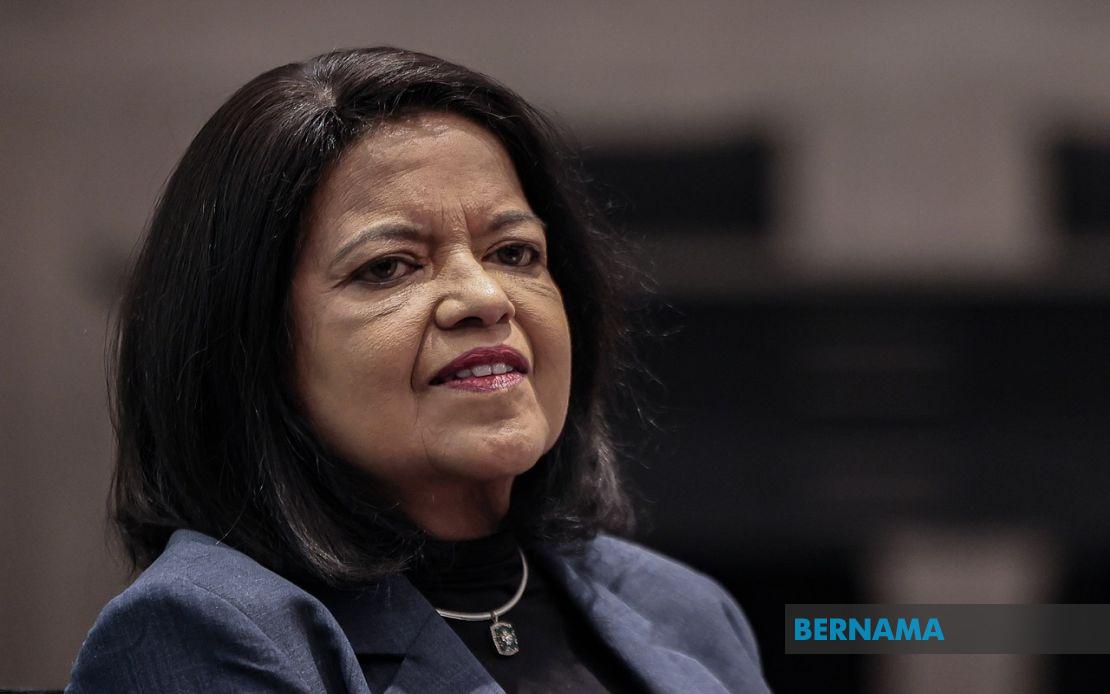
The Malaysian Media Council has identified the back-to-back Johor and Negeri Sembilan state elections as a critical proving ground for its freshly minted Rapid Response Election Initiative, a coordinated system designed to arrest the spread of fabricated news content during election campaigns. With voting set for July 11 in Johor and August 1 in Negeri Sembilan, the council will have two consecutive electoral contests to test, refine and operationalise its anti-disinformation protocol—a real-world laboratory that MMC chairperson Tan Sri Nallini Pathmanathan believes offers distinct advantages for the initiative's development and refinement.
The two-state trial addresses a mounting challenge facing Malaysian democracy: the weaponisation of synthetic media and deepfakes during electoral periods, when misinformation spreads most rapidly and when voter susceptibility to false claims peaks. Rather than attempting to police the truth of political manifestos or campaign allegations—a role the MMC explicitly rejects—the initiative concentrates narrowly on a single, verifiable category of deception: content falsely attributed to news organisations themselves. This includes fabricated graphics bearing media logos, doctored screenshots, forged news reports, and manipulated imagery designed to appear as if published by legitimate news outlets.
The operational architecture distributes responsibility across multiple stakeholders in a carefully calibrated division of labour. The MMC serves as coordinator and convener, marshalling the various parties without itself adjudicating disputes. Individual media organisations retain the authority to verify whether disputed content genuinely originated from their newsrooms, platforms or archives—a critical safeguard that preserves editorial independence and prevents any single body from wielding disproportionate power over information validation. This distributed model acknowledges that media organisations possess the technical capability and institutional knowledge to authenticate their own output faster than any external agency could.
The Election Commission functions as the canonical reference for election-procedure inquiries and electoral rules, available to clarify genuine questions about voting mechanics, candidate eligibility or administrative processes when falsehoods circulate around such matters. The Malaysian National News Agency, Bernama, assumes responsibility for disseminating verified corrections and authoritative information to the broader public, leveraging its established distribution networks and credibility. Content Forum Malaysia provides specialised expertise in digital platform dynamics, social media engagement patterns and media literacy, while the Department of Community Communications and the National Information Dissemination Centres handle grassroots distribution of verified facts into neighbourhoods and communities where misinformation often takes deepest root.
The Malaysian Communications and Multimedia Commission retains a supporting role available for situations requiring regulatory intervention, technical assistance from platform operators, or formal action involving social media companies and digital service providers. This tiered arrangement avoids concentrating gatekeeping power in any single institution while ensuring that the right tool is deployed for each type of problem. The framework recognises that combating disinformation demands a whole-of-system response rather than isolated action by any single organisation.
Nallini illustrated the mechanism's practical operation through a concrete example: imagine a graphic bearing a major news organisation's logo falsely claims that a particular candidate has withdrawn from the race. Within minutes, the concerned media outlet can verify that it never published such content, issue a correction, and communicate the facts through partner channels before the falsehood achieves viral saturation. Similarly, when misinformation about election procedures circulates—claims about voter registration deadlines, polling locations, or eligibility requirements—the Election Commission can rapidly issue clarifications that correct the record. This speed matters enormously, as studies consistently demonstrate that early, authoritative corrections significantly outperform belated interventions in limiting belief in false claims.
The initiative directly responds to the accelerating threat posed by artificial intelligence and machine-learning systems capable of generating synthetic content at industrial scale. Unlike traditional hoaxes that require painstaking manual creation, AI-generated deepfakes and fabricated news articles can be produced in seconds and distributed across multiple platforms and languages simultaneously. During election campaigns, when political actors face powerful incentives to undermine opponents and when voters face information overload, such synthetic content poses particular dangers to democratic integrity. The MMC's rapid-response architecture is explicitly designed to detect and neutralise this threat during its initial propagation phase, before it metastasises across social networks and hardens into entrenched false belief.
Complementing the verification mechanism, the council will launch a public awareness campaign centred on the bilingual slogan "Who Said It? What's The Source?" rendered in Malay as "Siapa kata? Sos mana?" This messaging strategy targets voter behaviour at the critical moment of information encounter, encouraging citizens to pause before accepting or sharing claims circulating online. Rather than instructing Malaysians to disengage from political discourse, the campaign explicitly affirms the legitimacy of reading, debating, sharing and participating in election-period conversation. Instead, it invites a moment of critical reflection—a simple mental checkpoint that prompts verification before amplification. This approach recognises that healthy democratic participation depends upon information quality, and that voters themselves constitute the first line of defence against misinformation's spread.
The initiative's timing reflects broader anxieties about election integrity across Southeast Asia. Multiple regional democracies have experienced coordinated disinformation campaigns during recent electoral contests, with foreign and domestic actors exploiting digital platforms to manipulate voter perceptions. Malaysia's MMC intervention acknowledges these regional trends while tailoring solutions to the local information ecosystem, media landscape and voter demographics. The framework avoids the pitfalls of heavy-handed government censorship or restricting legitimate political speech, instead building collaborative capacity among journalists, election administrators, platform operators and civil society to identify and correct false claims about media ownership of content.
For Malaysian readers, the trial's success or failure carries implications extending beyond the two state contests. If the Rapid Response Election Initiative demonstrates effectiveness in verifying attribution claims and limiting disinformation spread during Johor and Negeri Sembilan polls, the model could become a standing institutional feature of subsequent federal and state elections. Conversely, if significant gaps emerge—delays in verification, inadequate platform cooperation, or public resistance to fact-checking messages—the council will have real data to guide improvements. The sequential structure of the two polls offers a unique advantage: lessons learned during the first contest can be incorporated immediately into operations for the second, allowing incremental refinement under actual electoral conditions rather than abstract planning.
The presence of senior government communications officials at the announcement event—including the Communications Ministry secretary-general and deputy secretary-general—signals official support for the initiative while maintaining institutional separation between the MMC's verification operations and state authority. This distinction proves crucial for credibility; Malaysian voters are more likely to trust information verified through coordinated media action than through government pronouncements alone. The framework thus preserves public confidence in the verification process by anchoring it in journalistic and electoral institutions rather than executive power, even as government agencies provide supporting infrastructure and amplification capabilities.
%22%2F%3E%3C%2Fpattern%3E%3C%2Fdefs%3E%3Crect%20width%3D%22100%25%22%20height%3D%22100%25%22%20fill%3D%22url(%23ph6xupg)%22%2F%3E%3Crect%20width%3D%22100%25%22%20height%3D%22100%25%22%20fill%3D%22url(%23ph6xupp)%22%2F%3E%3Ctext%20x%3D%2250%25%22%20y%3D%2250%25%22%20text-anchor%3D%22middle%22%20dominant-baseline%3D%22central%22%20fill%3D%22rgba(255%2C255%2C255%2C0.95)%22%20font-family%3D%22Georgia%2C%20'Times%20New%20Roman'%2C%20serif%22%20font-weight%3D%22700%22%20font-size%3D%22170%22%20letter-spacing%3D%22-0.02em%22%3EMalaysia%3C%2Ftext%3E%3C%2Fsvg%3E)
%22%2F%3E%3C%2Fpattern%3E%3C%2Fdefs%3E%3Crect%20width%3D%22100%25%22%20height%3D%22100%25%22%20fill%3D%22url(%23ph6450g)%22%2F%3E%3Crect%20width%3D%22100%25%22%20height%3D%22100%25%22%20fill%3D%22url(%23ph6450p)%22%2F%3E%3Ctext%20x%3D%2250%25%22%20y%3D%2250%25%22%20text-anchor%3D%22middle%22%20dominant-baseline%3D%22central%22%20fill%3D%22rgba(255%2C255%2C255%2C0.95)%22%20font-family%3D%22Georgia%2C%20'Times%20New%20Roman'%2C%20serif%22%20font-weight%3D%22700%22%20font-size%3D%22136%22%20letter-spacing%3D%22-0.02em%22%3EGovernment%3C%2Ftext%3E%3C%2Fsvg%3E)
%22%2F%3E%3C%2Fpattern%3E%3C%2Fdefs%3E%3Crect%20width%3D%22100%25%22%20height%3D%22100%25%22%20fill%3D%22url(%23ph2ojpsg)%22%2F%3E%3Crect%20width%3D%22100%25%22%20height%3D%22100%25%22%20fill%3D%22url(%23ph2ojpsp)%22%2F%3E%3Ctext%20x%3D%2250%25%22%20y%3D%2250%25%22%20text-anchor%3D%22middle%22%20dominant-baseline%3D%22central%22%20fill%3D%22rgba(255%2C255%2C255%2C0.95)%22%20font-family%3D%22Georgia%2C%20'Times%20New%20Roman'%2C%20serif%22%20font-weight%3D%22700%22%20font-size%3D%22194%22%20letter-spacing%3D%22-0.02em%22%3EBercham%3C%2Ftext%3E%3C%2Fsvg%3E)