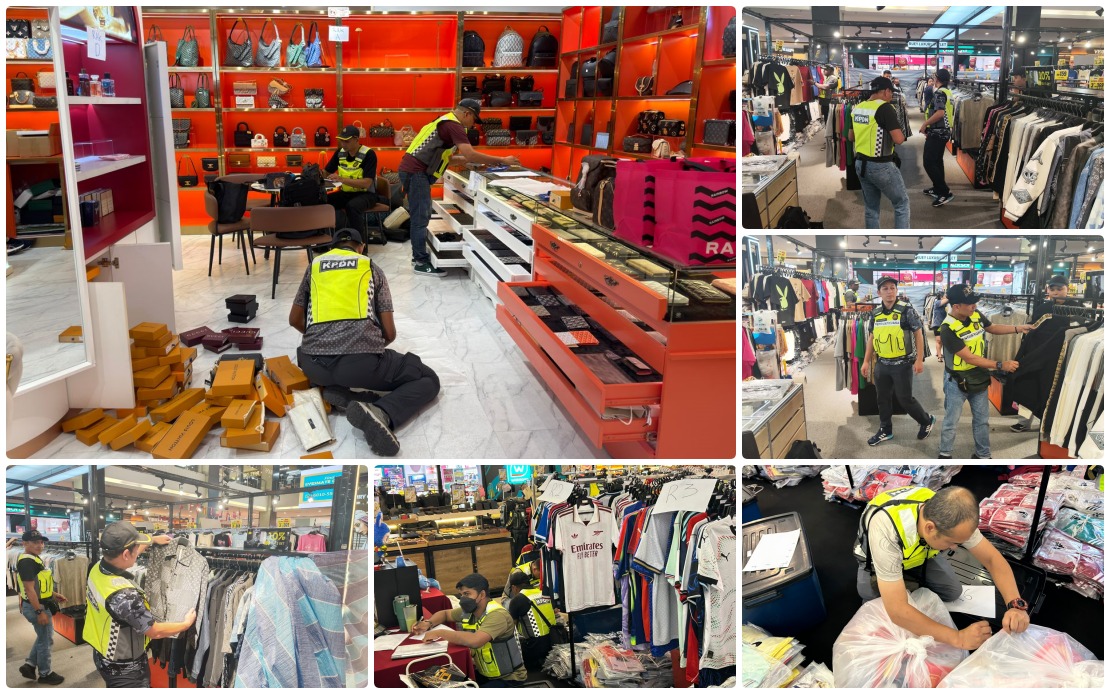
Malaysia's Ministry of Domestic Trade and Cost of Living (KPDN) has dismantled a significant counterfeit goods operation in Johor Bahru, recovering merchandise valued at RM600,000 across three separate locations during coordinated raids conducted on June 15. The enforcement action, which took place following a month of surveillance, targets what authorities believe is an organised distribution network supplying counterfeit items not only to major supermarkets but also to downstream retailers across the region.
According to Datuk Azman Adam, the enforcement director-general of KPDN, the operation uncovered premises displaying counterfeit versions of well-known international brand trademarks without authorisation from the legitimate trademark holders. The investigation zeroed in on traders suspected of operating on a larger scale than simple retail sales, suggesting they functioned as wholesale distributors channelling fake goods to a broader network of sellers. This multi-tiered distribution structure indicates a more sophisticated smuggling operation than opportunistic street-level counterfeiting, with significant implications for consumer protection and brand integrity across Malaysia's retail landscape.
The seized merchandise encompasses a diverse range of luxury and lifestyle products, including counterfeit clothing, handbags, wallets, belts, and fragrances. Authorities also confiscated business documents and records from the raided premises, suggesting the operation maintained formal operational structures rather than informal cash transactions. This level of documentation could prove invaluable in establishing the supply chain, identifying upstream sources of the counterfeit goods, and potentially tracing links to international smuggling networks that funnel fake merchandise into Southeast Asia.
Four individuals, comprising the business owners and premises caretakers, were detained for questioning regarding their roles in the operation. Their detention signals KPDN's intention to pursue thorough investigations that could establish culpability at multiple operational levels—from those managing daily business activities to the ultimate proprietors directing commercial strategy. The differentiation between various roles within the enterprise may prove significant in determining appropriate charges and sentencing recommendations under Malaysia's trademark legislation.
The enforcement action falls under Section 102(1)(c) of the Trademark Act 2019, which specifically addresses possession, custody, or control of goods bearing wrongfully applied trademarks for trading purposes. This statutory provision represents Malaysia's legislative framework for protecting intellectual property rights and safeguarding consumers from deceptive commercial practices. Individuals convicted of trademark infringement face progressively severe penalties, with first-time offenders liable to maximum fines of RM10,000 per item or three years imprisonment, while repeat offenders face penalties climbing to RM20,000 per item or five years incarceration. Corporate entities face even steeper financial consequences, with first-time fines reaching RM15,000 per item and escalating to RM30,000 for subsequent violations.
The financial magnitude of this seizure—RM600,000—underscores the considerable economic stakes involved in Malaysia's counterfeit goods trade. The valuation suggests a substantial commercial operation rather than petty retail infringement, indicating that counterfeit distribution has evolved into a sophisticated underground industry capable of generating significant revenue while undermining legitimate manufacturers and retailers. For consumers, such operations present genuine risks, as counterfeit products frequently lack quality assurance, safety testing, and manufacturing standards applicable to genuine branded items, particularly concerning in categories like fragrances and personal care products.
Johor Bahru's prominence as a seizure location is noteworthy given the state's geographic proximity to Singapore and its position as a major commercial and logistics hub. The port facilities, road networks, and established trade corridors make Johor an ideal distribution nexus for internationally trafficked counterfeit goods entering Malaysia from regional sources. This geographic reality suggests that Malaysian authorities must contend with ongoing transnational smuggling pressures, requiring sustained enforcement presence and intelligence-gathering operations targeting entry points and distribution hubs.
Datuk Azman Adam's public statement regarding KPDN's commitment to intensified enforcement operations signals a strategic pivot toward proactive rather than reactive counterfeit suppression. The month-long intelligence gathering preceding these raids represents deliberate investigative methodology designed to identify not isolated criminal actors but rather organised distribution networks capable of systematic trademark infringement. This approach acknowledges that effective intellectual property protection requires moving beyond street-level interceptions to target supply chain infrastructure and wholesale operations.
The broader implications for Malaysian consumers and legitimate retailers extend beyond individual criminal prosecutions. Counterfeit goods undercut pricing structures maintained by authorised distributors, distorting market competition and compelling legitimate retailers to absorb losses through reduced profit margins or customer defection to cheaper fake alternatives. Furthermore, widespread counterfeiting damages Malaysia's reputation as a jurisdiction committed to intellectual property protection, potentially discouraging international brand investment and retail expansion within the domestic market. When consumers encounter counterfeit merchandise in purportedly legitimate retail environments, confidence in all Malaysian retailers diminishes.
For multinational brands facing trademark infringement in Malaysia, government enforcement operations like this provide evidence of regulatory commitment to intellectual property protection. Such actions potentially strengthen Malaysia's position in ongoing trade negotiations and bilateral discussions regarding commercial practices and regulatory standards. However, the continued emergence of significant counterfeit operations suggests that current enforcement capacity, while demonstrating competence and resolve, requires sustained augmentation to adequately suppress transnational counterfeiting networks.
The KPDN's integrated approach—combining intelligence analysis, coordinated multi-location raids, suspect detention, and documentary evidence collection—represents contemporary best practice in enforcement operations. Moving forward, authorities must maintain comparable operational intensity across Malaysia's major commercial centres, particularly in states with significant import-export activity and established informal retail networks where counterfeit goods circulate. The RM600,000 seizure demonstrates that counterfeit suppression yields tangible results, yet the persistence of such operations indicates ongoing demand for fake branded goods among segments of the Malaysian consumer base.