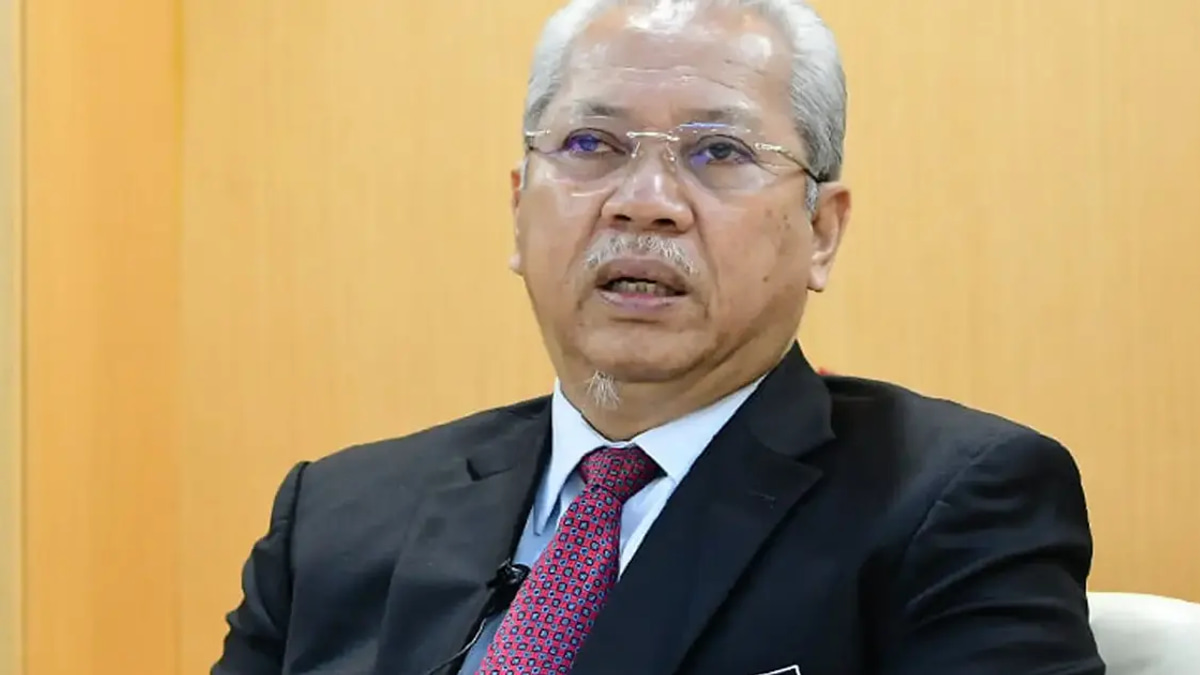
Prime Minister Datuk Seri Anwar Ibrahim has committed Malaysia and Turkmenistan to a fundamentally restructured bilateral relationship, moving beyond traditional diplomatic courtesies toward a partnership grounded in concrete strategic interests and tangible benefits for both populations. The undertaking emerged from substantive discussions at the Presidential Palace in Ashgabat on Friday, where Anwar met with Turkmenistan President Serdar Berdimuhamedov to chart a collaborative course spanning multiple economic and social domains.
The centerpiece of the two-day visit, which commenced on June 18, involved the simultaneous endorsement of four formal instruments designed to operationalise cooperation across priority sectors. An Air Services Agreement now establishes the regulatory framework for enhanced aviation connectivity between the nations, a development with particular significance for Malaysian businesses seeking Central Asian market access and Turkmen interests in Southeast Asian engagement. The accord removes barriers that previously constrained regular air routes and represents one of the more immediate, practical outcomes of the diplomatic engagement.
Beyond aviation, the two governments formalised institutional linkages through reciprocal memoranda of understanding between their respective foreign affairs academies. Malaysia's Institute of Diplomacy and Foreign Relations sealed an MoU with Turkmenistan's Institute of International Relations, creating structured channels for diplomatic training, research collaboration, and personnel exchange. This institutional pairing reflects recognition that sustained partnership requires not merely governmental alignment but deeper people-to-people and expert-level engagement that can withstand political transitions and evolving circumstances.
Energy cooperation emerged as a cardinal theme in the bilateral discussions, reflecting Turkmenistan's substantial hydrocarbon reserves and Malaysia's advanced downstream petrochemical capabilities and expertise in liquefied natural gas technology. The energy sector represents perhaps the most asymmetric opportunity, with Turkmenistan seeking Malaysian technical know-how and investment partnerships to enhance extraction and processing efficiency, whilst Malaysia confronts long-term energy security challenges that diversified sourcing could partially address. This nexus carries particular relevance given regional energy market volatility and growing competition for Central Asian resources.
The halal industry occupied unexpected prominence in the partnership framework, underscoring how Malaysia's established global leadership in halal certification, product development, and market infrastructure can facilitate Turkmen producers' entry into rapidly expanding global halal commerce valued at over USD 2 trillion annually. By institutionalising halal cooperation, both nations position themselves to capture expanding opportunities in predominantly Muslim-majority economies across Africa, South Asia, and Southeast Asia, where demand for certified halal products far outpaces supply. Malaysian expertise in standards-setting and traceability technology can substantially elevate Turkmenistan's competitive positioning in these markets.
Islamia banking and Islamic finance channels were similarly flagged as cooperation domains, signalling both nations' interest in mobilising Islamic financial instruments for infrastructure and developmental projects. This dimension carries macroeconomic weight, as Islamic finance structures can unlock capital flows otherwise unavailable through conventional banking channels and align investment incentives with socially responsible development principles increasingly demanded by global institutional investors.
The educational and scientific collaboration protocols represent investments in long-term human capital development and knowledge creation. The Academy of Sciences Malaysia and the Academy of Sciences of Turkmenistan formalised their partnership through a dedicated MoU, establishing mechanisms for joint research initiatives, scholarly exchange, and collaborative technology development. These institutional connections can yield innovations spanning materials science, renewable energy applications, and water technology—domains where Central Asian challenges align with Malaysian research strengths.
Tourism and cultural exchange programmes round out the enumerated cooperation pillars, facilitating mutual understanding whilst generating service sector revenues for both economies. Malaysia's tourism infrastructure and marketing expertise can assist Turkmenistan in developing its significant but under-utilised cultural and historical attractions, whilst Turkmen visitor numbers to Malaysia could expand as bilateral familiarity deepens and flight connections improve.
Anwar's delegation, which included Minister of Investment, Trade and Industry Datuk Seri Johari Abdul Ghani and Minister of Economy Akmal Nasrullah Mohd Nasir, conveyed Malaysia's commitment to operationalising these agreements through dedicated governmental resources and ministerial oversight. The composition itself signalled that this constituted not ceremonial diplomacy but rather a sustained governmental initiative backed by portfolios directly responsible for economic outcomes.
Crucially, both leaders stipulated that cooperation implementation must adhere to rigorous discipline, transparency, and effectiveness standards—language suggesting awareness that many bilateral agreements languish unfulfilled due to institutional incapacity, changing political priorities, or insufficient follow-up mechanisms. The explicit commitment to disciplined execution reflects lessons from previous failed partnership frameworks across the region and represents Anwar's apparent determination to differentiate Malaysia's diplomatic engagements through measurable deliverables and accountability frameworks.
For Malaysia, this inaugural prime ministerial visit to Turkmenistan since Anwar's appointment in November 2022 signals strategic recalibration toward Central Asia—a region historically peripheral to Malaysian diplomatic focus but increasingly relevant given Chinese economic initiatives through Belt and Road infrastructure projects and the broader geopolitical repositioning within Eurasia. By establishing structured engagement with Turkmenistan, Malaysia positions itself to benefit from Central Asian growth trajectories whilst contributing Malaysian developmental expertise and values to the region.
The partnership architecture also reflects broader regional patterns wherein Southeast Asian nations cultivate diversified international relationships to hedge against great-power concentration and maintain strategic autonomy. Turkmenistan's neutral foreign policy alignment and energy-rich positioning make it a strategically valuable partner for Malaysia's own independence maintenance and non-aligned trajectory. The visit therefore carries implications extending beyond bilateral relations into Malaysia's wider regional and global positioning within an increasingly multipolar international system.