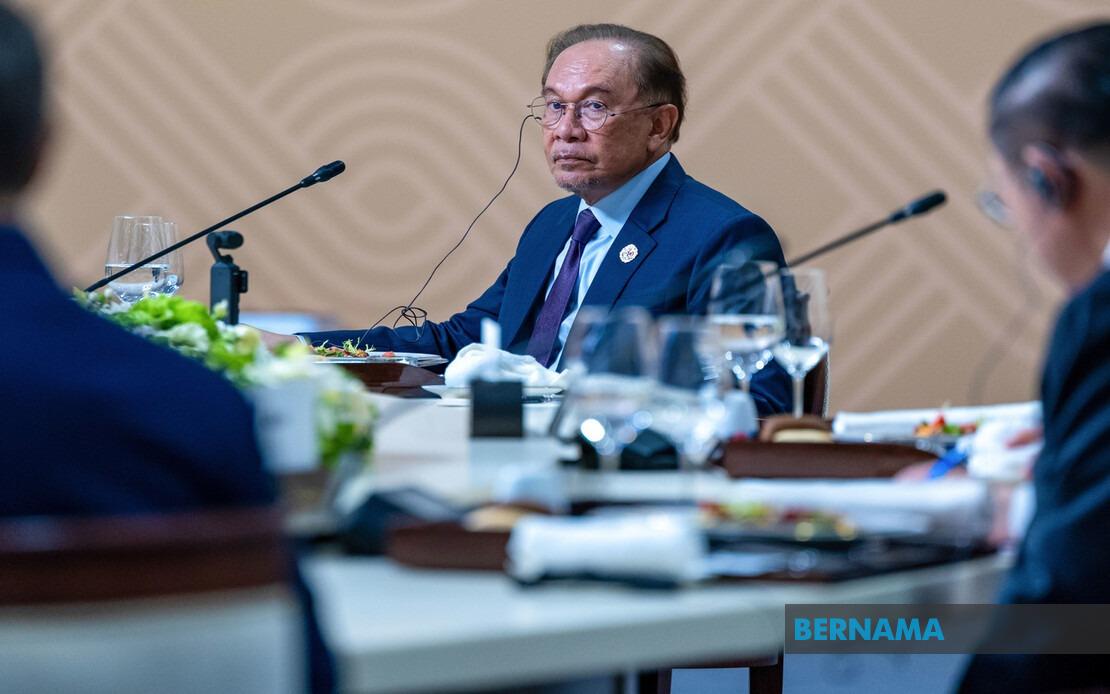
Malaysia is deliberately repositioning itself within an evolving global economic order characterised by intensifying strategic competition, rising protectionism, and growing fragmentation among major powers. Prime Minister Datuk Seri Anwar Ibrahim's recent four-day journey spanning Tashkent, Kazan, and Ashgabat exemplifies this recalibration, with each leg addressing distinct but complementary dimensions of a cohesive economic strategy designed to safeguard the nation's growth prospects and strategic flexibility in an increasingly uncertain world.
The timing of these visits reflects a critical juncture in international affairs. Trade barriers, sanctions regimes, and industrial policies have become routine instruments of statecraft, fundamentally altering how middle-income economies like Malaysia must navigate the global landscape. For a nation whose prosperity hinges on connectivity and openness, the challenge lies not simply in preserving access to traditional markets but in constructing a sufficiently diverse portfolio of partnerships to weather geopolitical shocks and maintain negotiating leverage across competing spheres of influence.
The unscheduled expansion of what began as a courtesy call in Tashkent into substantive working discussions with President Shavkat Mirziyoyev underscores the opportunistic nature of contemporary economic diplomacy. Earlier engagements initiated during a 2024 visit have matured into concrete proposals spanning multiple sectors, demonstrating how sustained governmental attention and personal rapport between leaders catalyse progress on complex multilateral arrangements. This iterative process, where diplomatic momentum builds through successive visits, illustrates how consistent engagement yields tangible economic dividends beyond ceremonial exchanges.
Malaysia's participation in the ASEAN-Russia Commemorative Summit in Kazan positioned the nation at the intersection of two significant strategic narratives. While Russia remains relatively minor in ASEAN's overall trade architecture compared to established partners like China, Japan, or the European Union, the bilateral relationship harbour substantial untapped potential across energy, agriculture, digital technology, advanced manufacturing, and food security. The newly adopted ASEAN-Russia Strategic Programme on Trade and Investment Cooperation 2026-2035 formalises mutual recognition that future competitiveness will increasingly depend on technological innovation and economic adaptability, areas where both parties possess complementary capabilities.
Parallel discussions with the Republic of Tatarstan reveal an often-underappreciated dimension of modern economic statecraft: subnational entities now function as critical nodes within international economic networks. Tatarstan, despite frequently being overshadowed by Moscow in external perceptions, has emerged as a dynamic industrial and technological hub. Conversations addressing biotechnology, halal industries, maritime capabilities, Islamic finance, and manufacturing cooperation indicate how Malaysia is cultivating relationships with regional innovation centres rather than confining engagement to national governments. This approach generates practical opportunities that transcend traditional bilateral frameworks and unlock market access that might otherwise remain inaccessible through conventional state-to-state channels.
The Ashgabat leg concentrated on energy partnerships, a sector where Malaysia possesses decades-long institutional relationships and proven expertise. Petronas's three-decade presence in Turkmenistan transcends the conventional foreign investor model; the company has catalysed infrastructure development, technological transfer, and human capital formation, with cumulative investment approaching USD12 billion. Recent agreements granting Petronas expanded stakes in some of the world's largest gas fields and new production-sharing arrangements represent far more than commercial opportunism. They exemplify how patient relationship-building and technological competence create pathways to long-term, structurally embedded partnerships that weather political fluctuations and market cycles.
Energy diversification carries particular strategic weight in the contemporary context. Recent global disruptions have demonstrated how rapidly supply shocks in one region cascade through international markets, transportation networks, and production costs worldwide. For energy-importing economies like Malaysia, cultivating reliable partnerships with multiple hydrocarbon suppliers mitigates vulnerability to geopolitical disruption and price volatility. Turkmenistan's vast gas reserves, combined with Petronas's operational expertise, create synergies that strengthen both parties' resilience while contributing to regional stability and energy security across Southeast Asia.
Critically, Malaysian economic diplomacy under Anwar's leadership has evolved beyond conventional metrics of trade volume and foreign direct investment. Contemporary statecraft operates simultaneously across multiple interconnected domains: food security intersects with technology policy; energy cooperation overlaps with industrial development; digitalisation creates innovation opportunities while raising governance and technological dependence concerns. The Tashkent, Kazan, and Ashgabat engagements all reflected this integrated approach, with discussions extending into education, research collaboration, halal ecosystems, and Islamic financial services. These sectors now constitute integral components of economic statecraft rather than peripheral initiatives, fundamentally altering how successful nations construct and sustain international partnerships.
Malaysia's diversification strategy does not diminish existing relationships with established partners. Rather, it reflects pragmatic recognition that resilience in a multipolar economic order increasingly depends on breadth rather than concentration. Countries successfully positioning themselves within multiple economic networks enjoy substantially greater flexibility and adaptability than those whose options remain narrowly focused. This principle proves particularly relevant as the global economy gradually migrates toward multipolar configurations characterised by competing centres of influence and reduced reliance on any single hegemon.
ASEAN's demonstrated ability to maintain strategic autonomy while engaging diverse external partners provides institutional scaffolding for Malaysia's bilateral initiatives. The bloc's traditional strength—its commitment to preserving open channels of engagement across competing spheres rather than forcing members into exclusive blocs—complements Malaysia's bilateral outreach. This approach avoids the false dichotomy of choosing between established partnerships and new relationships; instead, it acknowledges that contemporary prosperity requires simultaneous engagement with multiple partners across geographically and strategically diverse regions.
The personal dimension of these diplomatic efforts merits particular emphasis. Anwar's direct involvement and visible commitment to negotiations across three nations in four days signals Malaysia's seriousness regarding these partnerships to both counterparts and domestic constituencies. Soft power—the capacity to persuade through attractiveness rather than coercion—increasingly constitutes an essential component of effective economic statecraft. Leadership's personality, negotiating skill, and demonstrated interest serve as underutilised but powerful accelerants for converting exploratory discussions into binding commitments and long-term institutional relationships.
Looking forward, Malaysia's expanding economic diplomacy across Central Asia and Russia establishes networks that may prove invaluable as the global order continues evolving. Access to energy supplies, technological capabilities, agricultural products, and financial partnerships distributed across multiple regions reduces structural vulnerability and preserves strategic optionality. For a trading nation whose wealth fundamentally depends on connectivity and openness, cultivating relationships with secondary but strategically important powers ensures that Malaysia maintains leverage and resilience regardless of how relationships among major powers evolve. The Tashkent-Kazan-Ashgabat trajectory thus represents not merely commercial dealmaking but a sophisticated strategic repositioning designed to secure Malaysia's prosperity and autonomy within an increasingly contested global environment.
%22%2F%3E%3C%2Fpattern%3E%3C%2Fdefs%3E%3Crect%20width%3D%22100%25%22%20height%3D%22100%25%22%20fill%3D%22url(%23ph2fetbg)%22%2F%3E%3Crect%20width%3D%22100%25%22%20height%3D%22100%25%22%20fill%3D%22url(%23ph2fetbp)%22%2F%3E%3Ctext%20x%3D%2250%25%22%20y%3D%2250%25%22%20text-anchor%3D%22middle%22%20dominant-baseline%3D%22central%22%20fill%3D%22rgba(255%2C255%2C255%2C0.95)%22%20font-family%3D%22Georgia%2C%20'Times%20New%20Roman'%2C%20serif%22%20font-weight%3D%22700%22%20font-size%3D%22136%22%20letter-spacing%3D%22-0.02em%22%3ETerengganu%3C%2Ftext%3E%3C%2Fsvg%3E)

