The Prime Minister's Department (Religious Affairs) has introduced the Maal Hijrah Lecture Series, a strategic initiative designed to make the intellectual frameworks and insights of prominent Islamic scholars accessible to Malaysian society at large. Unveiled at an official ceremony in Putrajaya on June 18, the programme aims to democratise knowledge that has traditionally remained confined to university campuses and specialised academic environments, instead channelling these ideas into mainstream public discourse and grassroots communities across the nation.
According to Dr Zulkifli Hasan, Minister in the Prime Minister's Department (Religious Affairs), the underlying motivation for this initiative stems from a recognition that valuable Islamic thought should transcend the boundaries of closed scholarly circles. He emphasised that the intellectual legacies of recognised Maal Hijrah figures—both nationally and internationally acclaimed—represent a significant resource for the broader population. The minister articulated a vision where these scholars' perspectives on contemporary Islamic issues reach diverse demographic groups, socioeconomic strata, and geographic regions throughout Malaysia, fundamentally shifting how Islamic knowledge is transmitted and consumed within society.
The timing of the Maal Hijrah 1448H/2026 Lecture Series coincides with Malaysia's broader efforts to strengthen its positioning as a centre for Islamic thought and scholarship in Southeast Asia. By formalising this dissemination pathway, the government seeks to ensure that Malaysian Muslims benefit from indigenous intellectual resources while simultaneously positioning locally-based scholars on the international stage. This dual objective reflects an understanding that knowledge production and public engagement are equally important components of cultural and religious leadership in the modern context.
The initiative has already garnered substantial institutional support from Malaysia's premier Islamic educational establishments. Both Universiti Sains Islam Malaysia (USIM) and International Islamic University Malaysia (IIUM) have provided positive feedback and indicated willingness to participate in the series. These partnerships represent more than symbolic endorsements; they provide the infrastructure, student populations, and academic credibility necessary to translate the initiative from policy announcement into practical implementation. Dr Zulkifli indicated plans to expand collaborative frameworks beyond these two anchoring institutions, involving additional universities and research centres to create a comprehensive network for scholarly engagement.
The breadth of this institutional collaboration underscores a deliberate strategy to embed the lecture series within Malaysia's educational ecosystem rather than positioning it as a temporary or peripheral programme. By working with multiple universities across different regions, the Religious Affairs Ministry aims to ensure geographic distribution and accessibility, preventing the concentration of these intellectual resources in Klang Valley urban centres. This decentralisation approach acknowledges that Islamic scholarship should serve populations in East Malaysia, northern states, and rural areas with equal priority as urban academic communities.
Recognising the importance of cross-community dialogue, Dr Zulkifli articulated an aspiration that extends beyond Muslim audiences. He expressed hope that the intellectual contributions of Maal Hijrah figures would resonate with and be appreciated by non-Muslim Malaysians and international observers. This positioning reflects contemporary approaches to religious scholarship that view Islamic thought as contributing to broader conversations about ethics, governance, jurisprudence, and social philosophy—domains with universal relevance. By framing Islamic scholarship in terms of universal value rather than communal boundaries, the minister signals openness to interfaith intellectual engagement and positions Malaysian Islam as intellectually generous and cosmopolitan.
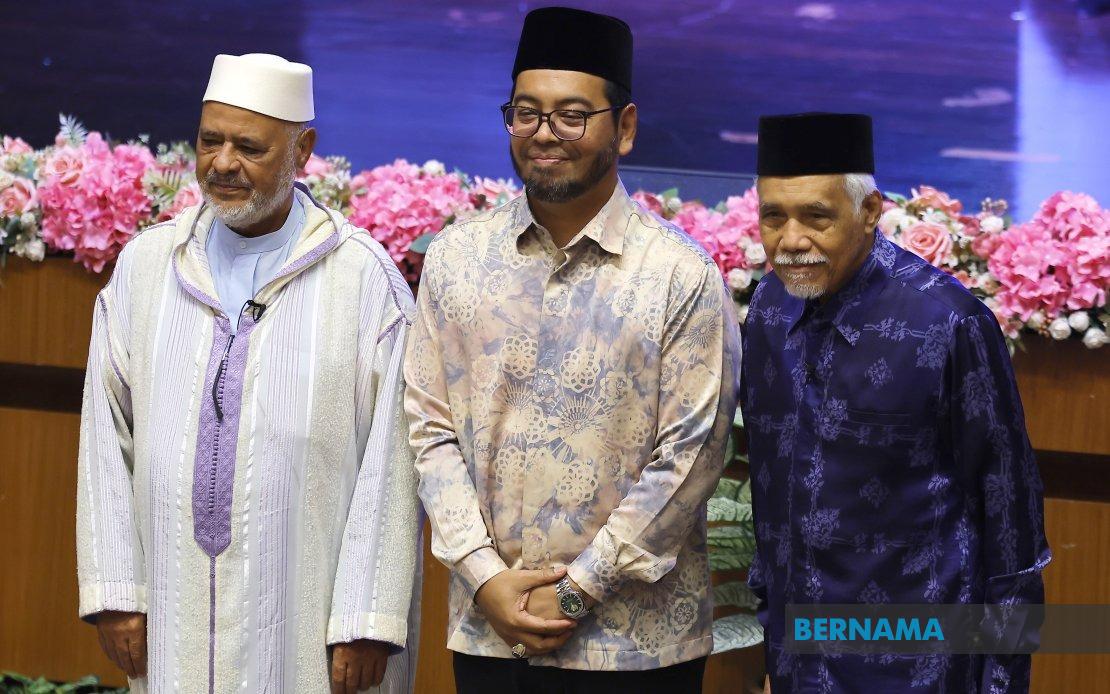
The inaugural lecture series honoured two distinguished scholars who received Maal Hijrah recognition. Emeritus Professor Osman Bakar, rector of IIUM, received the national Maal Hijrah figure award, while Prof Sheikh Dr Ahmad Al-Raysuni from Morocco received the international designation. These selections reflect Malaysia's commitment to recognising both homegrown intellectual leadership and international Islamic scholarship. Osman Bakar's recognition acknowledges his contributions to Islamic philosophy and science, while Ahmad Al-Raysuni's award recognises expertise in Islamic jurisprudence and contemporary Islamic thought, illustrating the programme's commitment to diverse scholarly disciplines within Islamic intellectual traditions.
The formal presentation of awards by Sultan Nazrin Shah, Sultan of Perak, at Masjid Putra during the national-level Maal Hijrah 1448H/2026 celebration elevated the symbolic importance of these recognitions. The accompanying cash prizes, trophies, and certificates of appreciation constitute more than ceremonial gestures; they represent institutional validation and resource allocation demonstrating serious governmental commitment to supporting Islamic scholarship. This formal state involvement signals that Islamic intellectual production is integral to national identity and governance priorities.
For Malaysian readers and Southeast Asian observers, this initiative carries several implications. First, it reflects ongoing efforts to strengthen Islamic institutional capacity within Malaysia's public sector and educational framework. Second, it demonstrates recognition that knowledge dissemination requires deliberate institutional investment and cannot occur through passive diffusion. Third, the emphasis on reaching beyond academic circles suggests governmental awareness that religious and intellectual authority in contemporary Malaysia depends partly on popular legitimacy and grassroots engagement rather than elite certification alone.
The Maal Hijrah Lecture Series also positions Malaysia within regional conversations about Islamic intellectual leadership. As Southeast Asia navigates questions about contemporary Islamic practice, governance, and intercommunal relations, Malaysian contributions to Islamic scholarship take on heightened significance. By systematically elevating and distributing insights from nationally and internationally recognised scholars, Malaysia strengthens its capacity to influence regional intellectual discourse and positioning as a moderate, intellectually vibrant Islamic nation.
The success of this initiative will depend partly on implementation quality and audience receptivity. Universities and institutions must design lecture formats and promotional strategies that genuinely attract diverse participants rather than recreating closed academic environments under different guises. Media coverage, community engagement, and genuine dialogue opportunities will be necessary for the series to achieve its stated objectives of mainstreaming Islamic scholarship beyond traditional academic circles.
Looking forward, the Maal Hijrah Lecture Series represents an institutional framework through which Malaysia can systematically develop and share Islamic intellectual resources. Whether expanded regionally or further deepened locally, this initiative reflects governmental recognition that contemporary Malaysia requires robust institutions for producing, validating, and disseminating Islamic knowledge while maintaining openness to broader societal engagement and international scholarly exchange.