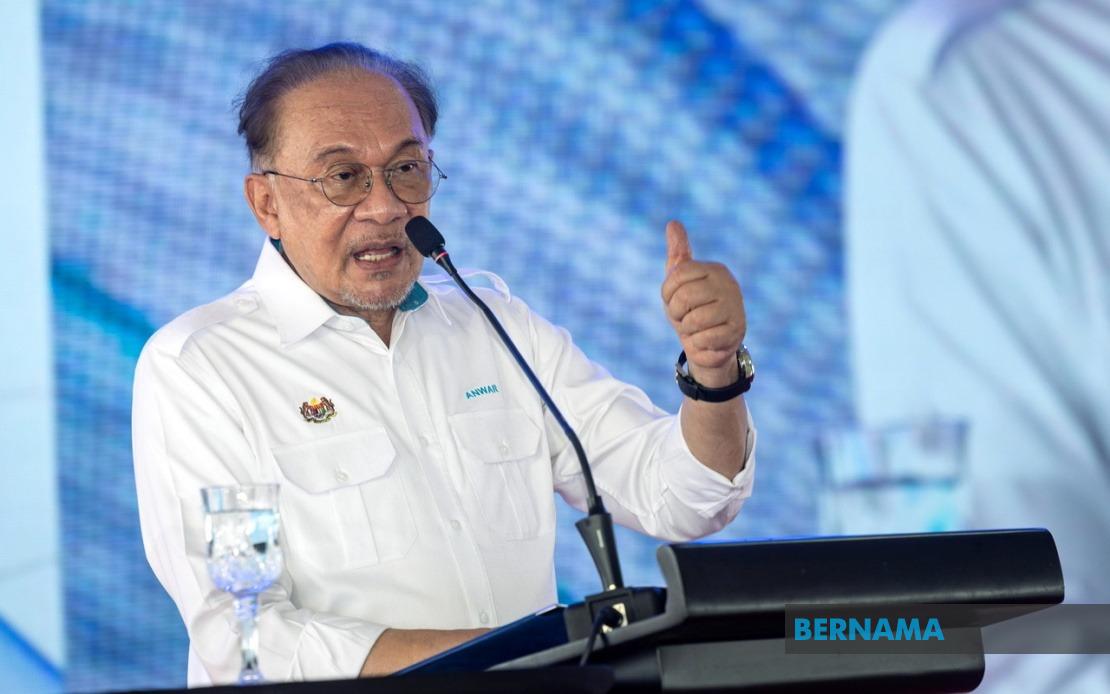
Prime Minister Datuk Seri Anwar Ibrahim has unveiled a significant strategic realignment in Malaysia's energy sector, securing long-term supply agreements with Russia and Turkmenistan that promise to stabilize the nation's fuel and power resources for the coming decades. Speaking at the Setia Fontaines Industrial Park groundbreaking ceremony in Kepala Batas, Anwar detailed how recent diplomatic missions to both countries have yielded commitments that could fundamentally reshape Malaysia's approach to energy independence and economic planning.
The cornerstone of this energy framework rests on an agreement with Russia that guarantees Malaysia access to oil, gas, and diesel supplies for a minimum of twenty years. According to Anwar, Russian President Vladimir Putin personally conveyed this commitment during discussions held in Kazan, underscoring the high-level nature of negotiations and reflecting the deepening bilateral relationship between Kuala Lumpur and Moscow. This assurance represents a tangible outcome of Malaysia's balanced foreign policy approach, which seeks to cultivate partnerships across multiple geopolitical blocs.
The Turkmenistan dimension of this energy strategy arguably carries even greater strategic weight. Anwar highlighted that his recent official visit to Turkmenistan resulted in the country granting Malaysia new access rights to its considerable oil and gas reserves, among the world's largest. This breakthrough follows the December 2024 visit by Turkmenistan President Serdar Berdimuhamedov to Malaysia, indicating sustained diplomatic momentum between the two nations. The cumulative effect of these negotiations positions Malaysia to address its medium and long-term energy requirements with significantly reduced vulnerability to market volatility or supply disruptions.
For Malaysian policymakers and business leaders, the implications of securing access to Turkmenistan's vast hydrocarbon reserves extend well beyond domestic consumption. Anwar explicitly flagged the opportunity to leverage this newfound energy access for export purposes, directing supplies toward energy-hungry economies including China, Japan, and South Korea. This export dimension transforms Malaysia from a passive consumer into an active participant in regional energy markets, potentially generating substantial revenue and strengthening economic ties with major Asia-Pacific economies. The strategy acknowledges that Malaysia's own energy needs, while significant, represent only a fraction of the available resources, making third-country sales economically rational and strategically prudent.
The broader context of these agreements reflects Malaysia's pragmatic foreign policy philosophy under Anwar's leadership. Rather than adopting rigid ideological stances that might alienate potential partners, the Prime Minister has consistently articulated the principle that international relationships should serve Malaysia's national interests comprehensively. In the energy realm, this translates to diversifying supply sources and expanding partnerships beyond traditional Western-oriented frameworks. By cultivating relationships with Russia and Turkmenistan simultaneously, Malaysia reduces its dependency on any single source and creates competitive dynamics that can theoretically improve terms and pricing.
From a geopolitical standpoint, Malaysia's energy diplomacy reflects broader regional trends. Southeast Asian nations have increasingly sought to balance relationships between major powers rather than adopt exclusive alignments. Energy security, being both economically essential and strategically critical, has become a natural arena for this balancing act. Malaysia's move complements similar initiatives undertaken by other ASEAN members seeking to secure long-term resource access while maintaining diplomatic flexibility. The precedent set by these agreements could influence energy negotiations across the region and signal to other nations that reliable partners can access favorable terms.
The timing of these announcements also warrants consideration within Malaysia's domestic economic context. The country continues to grapple with the transition toward a more diversified, less hydrocarbon-dependent economy while still requiring substantial energy inputs for industrial production, transportation, and residential consumption. By locking in multi-decade energy supply agreements at predictable terms, the government creates stability for long-term economic planning and industrial investment. Manufacturing sectors and energy-intensive industries can make capital allocation decisions with greater confidence when fuel availability and costs are secured through diplomatic agreements.
The practical implementation of these agreements will require substantial institutional and infrastructural development. Malaysia's energy sector must accommodate increased volumes from new sources, necessitating investments in port facilities, storage infrastructure, and distribution networks. Additionally, regulatory frameworks may require updating to accommodate the new supply arrangements and potential exports. These implementation challenges, while substantial, appear manageable given the strategic importance of the energy security objective and the apparent political commitment demonstrated by all parties.
Economically, the access to Turkmenistan's gas reserves carries particular significance given global energy market dynamics. Liquefied natural gas remains a crucial commodity for industrial economies, and securing reliable sources at favorable terms provides Malaysia with competitive advantages in energy-intensive sectors. The ability to export surplus energy to wealthy neighbors with strong demand profiles could generate substantial foreign exchange earnings and create employment across supply chain sectors including transportation, refining, and distribution.
Anwar's emphasis on leveraging international relations to achieve multiple national objectives simultaneously reflects a sophisticated understanding of contemporary statecraft. Energy security, job creation, and economic development are interconnected goals that cannot be achieved through purely domestic policy measures. The willingness to engage constructively with Russia and Turkmenistan, despite those countries' complicated international standings, demonstrates Malaysia's determination to prioritize national welfare over symbolic gestures or ideological purity. This pragmatism has characterized Anwar's tenure and continues to produce tangible outcomes for Malaysian citizens through enhanced energy stability and economic opportunity.
%22%2F%3E%3C%2Fpattern%3E%3C%2Fdefs%3E%3Crect%20width%3D%22100%25%22%20height%3D%22100%25%22%20fill%3D%22url(%23ph6xupg)%22%2F%3E%3Crect%20width%3D%22100%25%22%20height%3D%22100%25%22%20fill%3D%22url(%23ph6xupp)%22%2F%3E%3Ctext%20x%3D%2250%25%22%20y%3D%2250%25%22%20text-anchor%3D%22middle%22%20dominant-baseline%3D%22central%22%20fill%3D%22rgba(255%2C255%2C255%2C0.95)%22%20font-family%3D%22Georgia%2C%20'Times%20New%20Roman'%2C%20serif%22%20font-weight%3D%22700%22%20font-size%3D%22170%22%20letter-spacing%3D%22-0.02em%22%3EMalaysia%3C%2Ftext%3E%3C%2Fsvg%3E)
%22%2F%3E%3C%2Fpattern%3E%3C%2Fdefs%3E%3Crect%20width%3D%22100%25%22%20height%3D%22100%25%22%20fill%3D%22url(%23ph6450g)%22%2F%3E%3Crect%20width%3D%22100%25%22%20height%3D%22100%25%22%20fill%3D%22url(%23ph6450p)%22%2F%3E%3Ctext%20x%3D%2250%25%22%20y%3D%2250%25%22%20text-anchor%3D%22middle%22%20dominant-baseline%3D%22central%22%20fill%3D%22rgba(255%2C255%2C255%2C0.95)%22%20font-family%3D%22Georgia%2C%20'Times%20New%20Roman'%2C%20serif%22%20font-weight%3D%22700%22%20font-size%3D%22136%22%20letter-spacing%3D%22-0.02em%22%3EGovernment%3C%2Ftext%3E%3C%2Fsvg%3E)
%22%2F%3E%3C%2Fpattern%3E%3C%2Fdefs%3E%3Crect%20width%3D%22100%25%22%20height%3D%22100%25%22%20fill%3D%22url(%23ph2ojpsg)%22%2F%3E%3Crect%20width%3D%22100%25%22%20height%3D%22100%25%22%20fill%3D%22url(%23ph2ojpsp)%22%2F%3E%3Ctext%20x%3D%2250%25%22%20y%3D%2250%25%22%20text-anchor%3D%22middle%22%20dominant-baseline%3D%22central%22%20fill%3D%22rgba(255%2C255%2C255%2C0.95)%22%20font-family%3D%22Georgia%2C%20'Times%20New%20Roman'%2C%20serif%22%20font-weight%3D%22700%22%20font-size%3D%22194%22%20letter-spacing%3D%22-0.02em%22%3EBercham%3C%2Ftext%3E%3C%2Fsvg%3E)