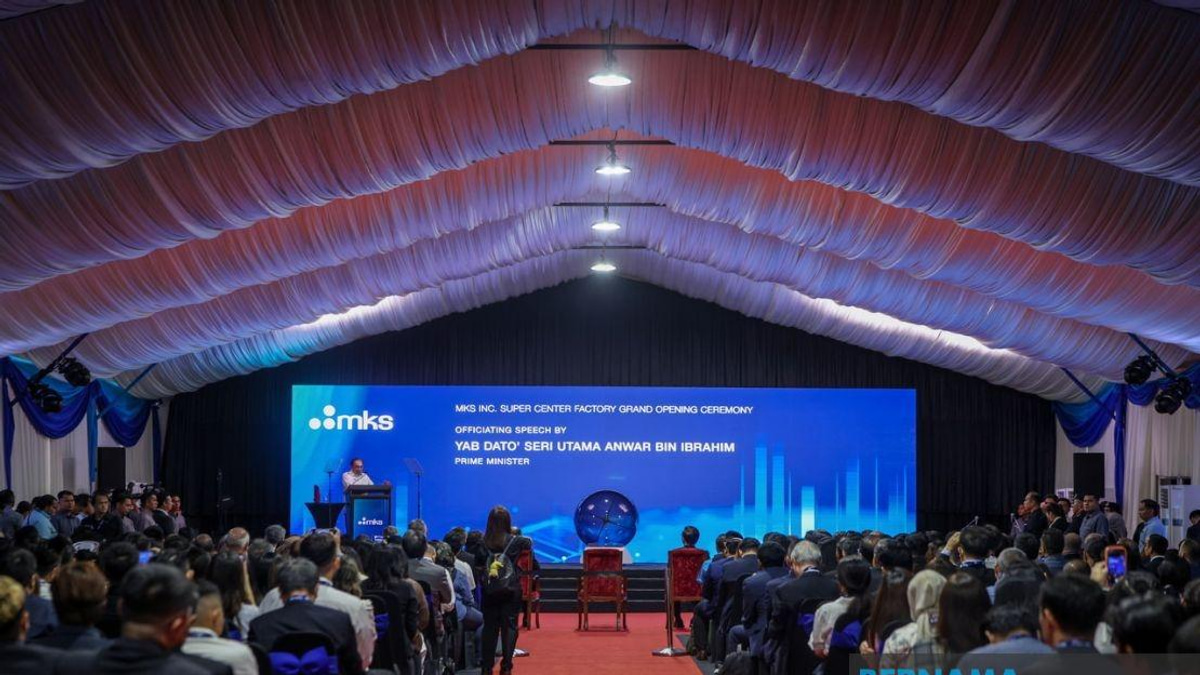
Prime Minister Datuk Seri Anwar Ibrahim has underscored Malaysia's strategic approach to international relations as a cornerstone of economic prosperity, arguing that the nation's commitment to neutrality and balanced ties with major world powers delivers tangible benefits for business and trade. Speaking in Batu Kawan, Anwar framed Malaysia's non-aligned diplomatic posture not merely as a historical principle but as an active economic strategy that positions the country as a reliable, stable destination for global capital seeking alternatives to geopolitically contested environments.
The Prime Minister's remarks reflect a deliberate messaging strategy to reassure multinational investors that Malaysia offers political stability and predictable governance despite regional tensions and great power competition. This positioning gains particular significance as countries across Southeast Asia face mounting pressure to choose sides in various economic and security disputes. By emphasising Malaysia's capacity to maintain constructive relationships across competing power blocs, Anwar signals that the nation is neither isolated nor forced into exclusive commitments that might constrain its economic options or deter investors concerned about political risk.
Malaysia's geopolitical positioning has long been central to its economic model. The nation serves as a crucial trade hub, with major ports and strategic location along vital shipping routes that connect East and West. Preserving good relations with the United States, China, India, Japan, and Middle Eastern powers allows Malaysia to benefit from supply chains and investment flows that might otherwise bypass countries perceived as politically aligned. This neutrality also enables Malaysian companies to operate comfortably across multiple markets without facing sanctions or commercial restrictions based on geopolitical rivalries.
Anwar's emphasis on investor confidence reflects the practical reality that multinational corporations increasingly conduct due diligence on political stability and foreign policy consistency before committing capital to emerging market locations. Multinational companies establishing regional hubs or manufacturing facilities require assurance that their investments will not be jeopardised by sudden shifts in government orientation or unpredictable foreign policy decisions. Malaysia's traditional stance of maintaining dialogue with all major powers provides the predictability that institutional investors and long-term business commitments demand.
The economic implications of this diplomatic approach extend beyond simply attracting foreign direct investment. Technology companies, financial services providers, and manufacturing firms benefit from a stable business environment where regulatory frameworks remain consistent regardless of international political currents. The ability to trade and conduct business without confronting punitive measures tied to geopolitical disputes creates competitive advantages compared to countries that have been drawn into exclusive alignments. This operational flexibility resonates particularly strongly with companies in sectors such as semiconductors, pharmaceuticals, and financial services that operate on global scales.
Malaysia's engagement with diverse global powers also facilitates access to technology transfer and knowledge partnerships. By maintaining relationships across different economic blocs, Malaysian enterprises gain exposure to innovations and practices developed in different parts of the world. Universities and research institutions can collaborate with counterparts internationally without political obstacles. This intellectual openness contributes to long-term human capital development and innovation capacity that foreign investors value when evaluating locations for advanced manufacturing or research activities.
The regional context makes Anwar's message particularly relevant for Malaysian audiences and neighbouring countries. Southeast Asia increasingly faces choices about how to navigate competition between major powers, particularly between the United States and China. Malaysia's experience demonstrates that non-alignment need not mean isolation or passive withdrawal from international affairs. Instead, active engagement with multiple centres of power can strengthen economic resilience and create opportunities that countries forced into exclusive blocs might miss. This perspective offers a potential model for other regional nations grappling with similar geopolitical pressures.
However, maintaining genuine neutrality amid intensifying great power competition presents genuine challenges. Selective engagement with different powers creates expectations and occasionally competing demands. Malaysia must carefully manage expectations from various international partners while demonstrating that its neutrality remains authentic rather than merely a pragmatic stance that shifts based on short-term incentives. The credibility of Malaysia's non-aligned position depends on consistent application of principles across different situations and partners.
The investment implications of Malaysia's diplomatic approach manifest in several concrete ways. The nation continues attracting semiconductor and electronics manufacturing despite regional supply chain disruptions, partly because global companies view it as politically stable. Financial institutions maintain significant operations in Kuala Lumpur because the regulatory environment permits flexible international engagement. Service sector companies appreciate the openness to working with partners across different geopolitical contexts. These tangible economic outcomes justify Anwar's framing of neutrality as an economic strategy rather than merely a foreign policy preference.
Looking forward, Malaysia's ability to leverage its non-aligned position depends on consistently reinforcing its image as a reliable, independent actor. Anwar's communications about this strategy serve to crystallise the message for both international investors and domestic audiences. As economic competition between major powers intensifies and investment decisions increasingly reflect geopolitical considerations, nations like Malaysia that successfully project political stability and balanced international engagement will likely capture disproportionate shares of mobile capital seeking safe harbour from rivalries elsewhere.

%22%2F%3E%3C%2Fpattern%3E%3C%2Fdefs%3E%3Crect%20width%3D%22100%25%22%20height%3D%22100%25%22%20fill%3D%22url(%23ph3dce6g)%22%2F%3E%3Crect%20width%3D%22100%25%22%20height%3D%22100%25%22%20fill%3D%22url(%23ph3dce6p)%22%2F%3E%3Ctext%20x%3D%2250%25%22%20y%3D%2250%25%22%20text-anchor%3D%22middle%22%20dominant-baseline%3D%22central%22%20fill%3D%22rgba(255%2C255%2C255%2C0.95)%22%20font-family%3D%22Georgia%2C%20'Times%20New%20Roman'%2C%20serif%22%20font-weight%3D%22700%22%20font-size%3D%22272%22%20letter-spacing%3D%22-0.02em%22%3EJamal%3C%2Ftext%3E%3C%2Fsvg%3E)