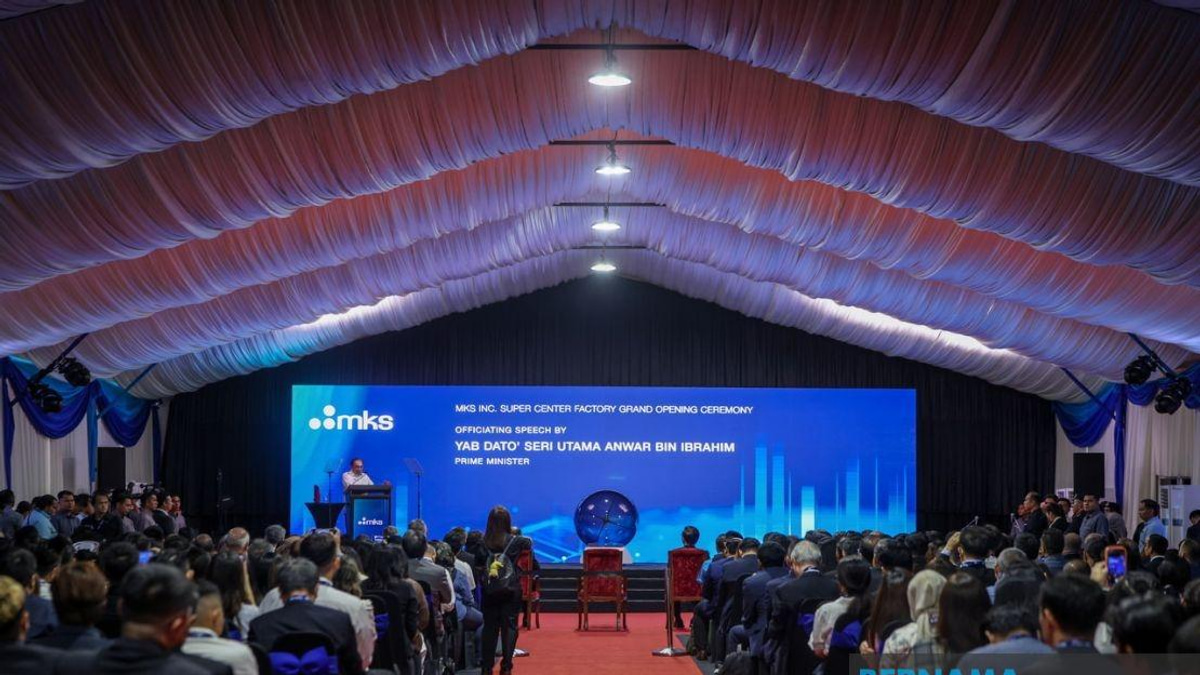
Prime Minister Datuk Seri Anwar Ibrahim has presented Petronas's newly acquired stake in one of the world's most significant natural gas reservoirs in Turkmenistan as evidence that international investors and energy producers maintain substantial confidence in Malaysia's capacity for political stability, national cohesion, and economic competitiveness. The government views this strategic partnership as a meaningful endorsement of the country's standing within the global energy sector and beyond.
The acquisition of exploration and production rights in Turkmenistan's major gas field represents a significant milestone for Petronas, Malaysia's national oil and gas corporation, as it expands its international portfolio beyond Southeast Asia and into the energy-rich Central Asian region. This move signals Petronas's ability to compete at the highest levels of global hydrocarbon development and underscores the company's technical expertise and financial capacity to undertake large-scale exploration ventures in challenging geopolitical environments.
From a strategic perspective, the Turkmenistan venture diversifies Malaysia's energy sector exposure and reduces the country's dependence on domestic reserves and regional partnerships. Natural gas plays a critical role in Malaysia's energy security framework and in the nation's capacity to support industrial growth and electricity generation. By securing stakes in international gas fields, Petronas strengthens the national energy supply chain and creates additional revenue streams that support government finances and fund infrastructure investment.
The transaction also carries symbolic weight in demonstrating Malaysia's diplomatic reach and the strength of bilateral relationships with Central Asian nations. Turkmenistan, a major producer of natural gas with substantial untapped reserves, has historically maintained selective partnerships with international energy firms. The decision to award Petronas a share of such a significant project suggests that Malaysian expertise, governance standards, and corporate conduct meet the rigorous expectations of resource-rich nations evaluating potential long-term partners.
International confidence in Malaysia's economic prospects has important implications for broader foreign direct investment flows into the country. Energy sector investments often signal market sentiment across multiple industries, as major capital allocation decisions rest on assessments of political continuity, regulatory predictability, and macroeconomic stability. The Turkmenistan deal may encourage additional multinational corporations in manufacturing, technology, and financial services to expand operations in Malaysia or commit fresh funding to existing ventures.
For Petronas specifically, the Turkmenistan stake enhances the corporation's profile as a major global energy player and positions it favourably for future participations in large-scale international projects. The expertise gained through operating in Central Asian conditions—including complex geologies, difficult extraction environments, and intricate international partnerships—builds institutional knowledge that strengthens Petronas's competitive advantage in global bidding processes.
The timing of this announcement carries additional significance given the economic transformation agenda being pursued by the current Malaysian administration. The government has emphasised the importance of attracting premium foreign investment, strengthening corporate governance, and positioning Malaysia as a high-value-added economy. International recognition of Malaysia's capabilities in energy sector management and corporate standards reinforces the administration's messaging about the country's suitability for major capital projects across multiple sectors.
Central Asia's hydrocarbon wealth remains a critical strategic asset as global energy markets undergo transition toward cleaner sources whilst maintaining substantial demand for natural gas as a transition fuel. Petronas's participation in the region's development offers Malaysia a voice in determining how these critical resources are extracted, processed, and distributed to energy markets in Europe, Asia, and elsewhere. This positioning strengthens Malaysia's diplomatic influence within ASEAN and in broader international forums dealing with energy security and climate transition.
The acquisition also underscores the enduring importance of natural gas in meeting global energy demands alongside renewable capacity expansion. Natural gas produces substantially less carbon dioxide than coal or crude oil when burned for electricity generation and industrial heat, making it a preferred transitional energy source for many countries moving toward net-zero emissions targets. By ensuring supply access to major gas reserves, Malaysia and Petronas contribute to global energy security whilst supporting international climate objectives.
From an economic perspective, the venture promises long-term revenue generation extending over the field's operational lifetime, potentially spanning decades. The cash flows generated from such international assets support Petronas's dividend payments to the Malaysian government, fund domestic exploration activities, and provide capital for corporate investment in emerging energy technologies and business segments. This financial contribution to the national budget supports broader government spending on education, health, and infrastructure.
The successful conclusion of the Turkmenistan partnership also reflects Petronas's institutional resilience and organisational capacity to navigate complex international negotiations involving governments, regulatory authorities, and competing commercial interests. This capability strengthens Malaysia's position in future energy sector discussions and demonstrates the technical prowess of Malaysian professionals working at senior levels within global energy companies.
Looking forward, the Turkmenistan engagement may serve as a springboard for expanded Malaysian involvement in Central Asian energy development. As regional countries continue exploring and developing hydrocarbon resources, Petronas stands positioned to bid for additional participations that would further enhance Malaysia's international standing whilst generating substantial wealth for national development objectives.
%22%2F%3E%3C%2Fpattern%3E%3C%2Fdefs%3E%3Crect%20width%3D%22100%25%22%20height%3D%22100%25%22%20fill%3D%22url(%23ph3dce6g)%22%2F%3E%3Crect%20width%3D%22100%25%22%20height%3D%22100%25%22%20fill%3D%22url(%23ph3dce6p)%22%2F%3E%3Ctext%20x%3D%2250%25%22%20y%3D%2250%25%22%20text-anchor%3D%22middle%22%20dominant-baseline%3D%22central%22%20fill%3D%22rgba(255%2C255%2C255%2C0.95)%22%20font-family%3D%22Georgia%2C%20'Times%20New%20Roman'%2C%20serif%22%20font-weight%3D%22700%22%20font-size%3D%22272%22%20letter-spacing%3D%22-0.02em%22%3EJamal%3C%2Ftext%3E%3C%2Fsvg%3E)