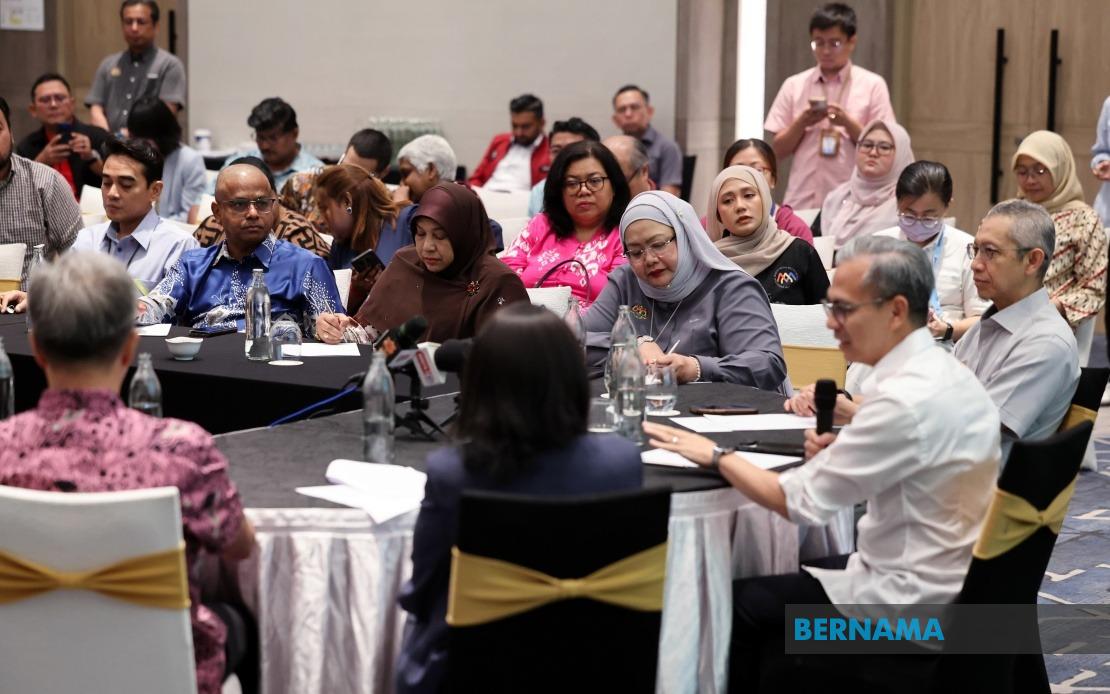
The opening day of the HAWANA 2026 Summit got underway at the PICCA@Arena Butterworth Convention Centre on June 20, as media professionals, invited guests, and strategic partners from Malaysia and across the ASEAN region began their arrival for what organisers describe as a pivotal gathering for the regional journalism community. The convention centre foyer has already become a hub of activity, with participants taking time to browse exhibition booths and view a specially curated photo gallery that documents moments from Malaysia's media landscape. The informal networking atmosphere has provided journalists and media leaders an opportunity to catch up with colleagues they may rarely encounter given the dispersed nature of their respective organisations across the country and the region.
The presence of delegates representing multiple ASEAN nations underscores the growing emphasis on cross-border media cooperation and the recognition that journalism challenges increasingly transcend national boundaries. By convening journalists from different countries under a unified platform, HAWANA 2026 signals Malaysia's commitment to positioning itself as a hub for meaningful dialogue on journalistic standards and practices within Southeast Asia. This regional dimension adds significant weight to the summit, as it enables participants to understand how colleagues in neighbouring countries address similar issues around press freedom, editorial independence, and the verification of information in an increasingly complex media environment.
The summit, formally titled the National Journalists' Day (HAWANA) 2026 Summit, has adopted the thematic focus of 'Media Integrity Strengthens Credibility', a title that resonates strongly with contemporary concerns about misinformation, the erosion of public trust in news institutions, and the need for journalists to uphold rigorous standards. Organisers anticipate that approximately 1,000 media practitioners will attend the full programme, making it one of the largest gatherings of journalism professionals in the region this year. The scale of the event reflects the priority Malaysia's government places on supporting the media sector and fostering dialogue about the role of journalism in democratic societies.
Prime Minister Datuk Seri Anwar Ibrahim is scheduled to officially open the summit, a gesture that highlights the government's symbolic backing for the event and the broader importance attached to media professionalism. The Prime Minister's participation sends a message to both the domestic media fraternity and international observers that Malaysia views a capable, ethical press corps as integral to the country's development and governance framework. Such high-level political engagement with journalism events is relatively uncommon globally, making this particular summit noteworthy for those tracking media-government relations in Southeast Asia.
The Ministry of Communications has organised the summit, with implementation responsibilities delegated to Bernama, the Malaysian National News Agency. This institutional structure ensures that the event benefits from Bernama's expertise in coordinating large-scale media events and its networks throughout the journalism sector. Bernama's role as the implementing agency also guarantees that the summit maintains a professional standard befitting such a significant gathering of media personnel from multiple nations and organisational backgrounds.
HAWANA itself has evolved over years to serve multiple functions within Malaysia's media ecosystem. Beyond its primary role as an annual recognition event honouring the contributions of individual journalists, the summit increasingly functions as a forum for addressing systemic challenges facing the news industry. The emphasis on media integrity—the accuracy and verification of information—speaks directly to one of the most pressing concerns occupying newsrooms across Southeast Asia. In an era where misinformation spreads rapidly through social media channels and where financial pressures on traditional news organisations continue mounting, a summit dedicated to reaffirming professional standards carries genuine practical significance.
The gathering reflects broader regional trends regarding the role of journalism in rapidly developing Southeast Asian societies. As countries like Malaysia pursue digital transformation and expand internet penetration, the nature of journalism itself is undergoing transformation. Professional journalists must now compete for audience attention against countless informal content creators, whilst simultaneously grappling with dwindling advertising revenues that traditionally sustained news operations. By bringing together experienced practitioners to discuss challenges around media integrity and credibility, HAWANA 2026 provides a venue where solutions and best practices can be shared across organisational and national boundaries.
For Malaysian media professionals attending, the presence of international delegates offers valuable opportunities for comparative learning. Journalists from other ASEAN nations bring different regulatory contexts, market structures, and professional traditions that can enrich discussions about how to maintain editorial standards under varying circumstances. Similarly, visitors from other Southeast Asian countries will observe how Malaysian news organisations navigate the particular institutional and political landscape within which they operate, potentially identifying lessons applicable to their own contexts.
The exhibition and photo gallery components of the summit serve educational and community-building functions alongside the main programming. These informal spaces allow practitioners to connect with technology vendors, training organisations, and fellow journalists in unstructured settings, often where the most productive informal conversations occur. The gallery documenting media moments adds a reflective dimension, encouraging participants to consider journalism's historical role in Malaysian society and contemplate its future trajectory.
Looking forward, the HAWANA 2026 Summit appears positioned to address substantive industry questions beyond ceremonial recognition. The explicit thematic focus on media integrity suggests organisers have structured the programme to generate practical outcomes—whether through panel discussions, working groups, or consensus statements—that might influence how Malaysian and regional news organisations approach verification, correction policies, and engagement with audiences. In an increasingly fragmented media landscape where trust in institutions remains fragile across much of Southeast Asia, such professional gatherings carry outsized importance as spaces where journalists can collectively affirm shared values and recommit to standards that distinguish professional journalism from other forms of public communication.
%22%2F%3E%3C%2Fpattern%3E%3C%2Fdefs%3E%3Crect%20width%3D%22100%25%22%20height%3D%22100%25%22%20fill%3D%22url(%23ph6xupg)%22%2F%3E%3Crect%20width%3D%22100%25%22%20height%3D%22100%25%22%20fill%3D%22url(%23ph6xupp)%22%2F%3E%3Ctext%20x%3D%2250%25%22%20y%3D%2250%25%22%20text-anchor%3D%22middle%22%20dominant-baseline%3D%22central%22%20fill%3D%22rgba(255%2C255%2C255%2C0.95)%22%20font-family%3D%22Georgia%2C%20'Times%20New%20Roman'%2C%20serif%22%20font-weight%3D%22700%22%20font-size%3D%22170%22%20letter-spacing%3D%22-0.02em%22%3EMalaysia%3C%2Ftext%3E%3C%2Fsvg%3E)
%22%2F%3E%3C%2Fpattern%3E%3C%2Fdefs%3E%3Crect%20width%3D%22100%25%22%20height%3D%22100%25%22%20fill%3D%22url(%23ph6450g)%22%2F%3E%3Crect%20width%3D%22100%25%22%20height%3D%22100%25%22%20fill%3D%22url(%23ph6450p)%22%2F%3E%3Ctext%20x%3D%2250%25%22%20y%3D%2250%25%22%20text-anchor%3D%22middle%22%20dominant-baseline%3D%22central%22%20fill%3D%22rgba(255%2C255%2C255%2C0.95)%22%20font-family%3D%22Georgia%2C%20'Times%20New%20Roman'%2C%20serif%22%20font-weight%3D%22700%22%20font-size%3D%22136%22%20letter-spacing%3D%22-0.02em%22%3EGovernment%3C%2Ftext%3E%3C%2Fsvg%3E)
%22%2F%3E%3C%2Fpattern%3E%3C%2Fdefs%3E%3Crect%20width%3D%22100%25%22%20height%3D%22100%25%22%20fill%3D%22url(%23ph2ojpsg)%22%2F%3E%3Crect%20width%3D%22100%25%22%20height%3D%22100%25%22%20fill%3D%22url(%23ph2ojpsp)%22%2F%3E%3Ctext%20x%3D%2250%25%22%20y%3D%2250%25%22%20text-anchor%3D%22middle%22%20dominant-baseline%3D%22central%22%20fill%3D%22rgba(255%2C255%2C255%2C0.95)%22%20font-family%3D%22Georgia%2C%20'Times%20New%20Roman'%2C%20serif%22%20font-weight%3D%22700%22%20font-size%3D%22194%22%20letter-spacing%3D%22-0.02em%22%3EBercham%3C%2Ftext%3E%3C%2Fsvg%3E)