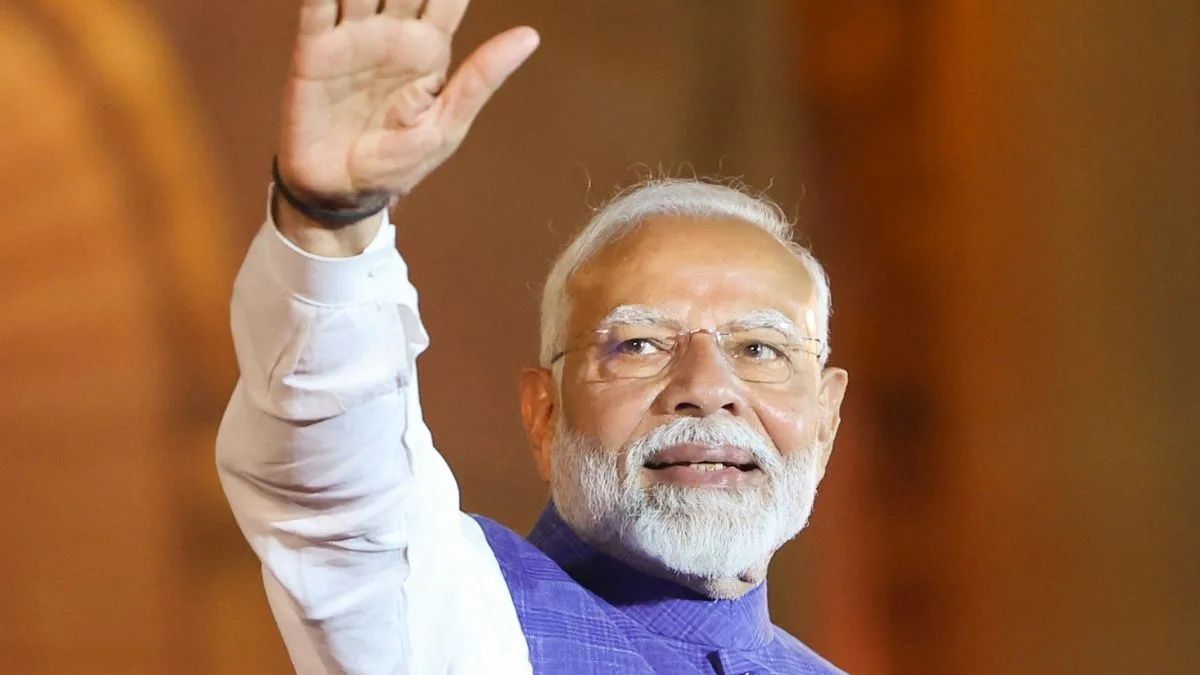
Prime Minister Narendra Modi will preside over India's 12th International Day of Yoga celebrations from Kolkata's iconic Red Road on Sunday, June 21, reinforcing the government's emphasis on personal wellness through his signature "Healthy Body, Healthy Mind" philosophy. The ceremony, commencing in the early morning, will feature mass demonstrations of the Common Yoga Protocol involving thousands of participants, high-ranking officials, and citizens gathered across the historic public space that has long symbolised India's civic engagement, military heritage, and environmental consciousness.
The Central government's selection of Kolkata as the primary venue carries substantial political significance, arriving shortly after the Bharatiya Janata Party secured a decisive victory in West Bengal's Assembly elections, displacing the Trinamool Congress from decades of state administration. Senior party figures have signalled that the state will command heightened focus from the Modi administration in coming years, with promises of accelerated development to reverse what they characterise as prolonged institutional neglect. This choice of location effectively positions the yoga celebration as both a health initiative and a symbolic assertion of the party's new political standing in Bengal.
Red Road itself carries profound symbolic weight as the chosen venue. Beyond serving as a major metropolitan gathering space, the location represents the intersection of India's military traditions, public assembly heritage, and ecological modernisation—dimensions that resonate with the broader messaging around holistic wellness that underpins this year's International Day of Yoga. The anticipated record participation reflects genuine grassroots enthusiasm, suggesting organisers expect unprecedented attendance reflecting both local interest and the event's growing national momentum.
The 12th International Day of Yoga operates under the thematic banner "Yoga for Healthy Ageing," a deliberate framing that addresses a critical demographic challenge facing India and the broader region. Union Minister of State for Ayush and Health Prataprao Jadhav articulated the conceptual foundation clearly: as global life expectancy extends, the genuine challenge lies in ensuring those additional years translate into active, independent, and fulfilling existence rather than diminished quality of life. Yoga presents itself as a time-tested, holistic mechanism for achieving this equilibrium, simultaneously strengthening physical capacity, nurturing psychological resilience, and enhancing overall life satisfaction across all age groups.
The Ministry of Ayush has orchestrated an expansive promotional architecture extending well beyond the primary Kolkata event. Approximately 2,500 organised celebrations span the globe, with participation coordinated across 211 Indian diplomatic missions, effectively positioning yoga as a cornerstone of India's soft power projection internationally. This distributed approach emphasises yoga's universal accessibility and philosophical relevance, transcending geographical and cultural boundaries while simultaneously advancing India's cultural diplomacy agenda.
A particularly noteworthy metric demonstrates the movement's unprecedented scale. The Yoga Sangam Portal has registered 600,000 organisations—institutional bodies ranging from schools and hospitals to community centres and corporate offices—committed to conducting simultaneous yoga sessions aligned with the Prime Minister's participation. This registration threshold reflects genuine institutional mobilisation rather than superficial enthusiasm, suggesting yoga has achieved recognition as a legitimate wellness priority across India's organisational landscape, from public institutions to private enterprises.
The Ministry of Culture's parallel initiative targeting 100 iconic locations throughout India represents an intentional fusion of wellness promotion with cultural preservation. This approach recognises that yoga carries profound spiritual and philosophical dimensions rooted in India's civilisational heritage, positioning the wellness practice not merely as exercise methodology but as embodiment of accumulated traditional knowledge. By anchoring celebrations at culturally significant sites, the government effectively narrates yoga as continuous with India's broader civilisational narrative rather than as imported wellness trend.
Kolkata's preparatory programming underscores the event's comprehensive planning scope. The "Daud Se Dhyan 2026—From Movement to Stillness" initiative, organised under the Swachhata Se Swagat Programme, deliberately interwove health promotion with civic cleanliness and community responsibility. This integration suggests organisers conceptualise yoga not in isolation but as component of comprehensive wellness ecosystem encompassing environmental stewardship and social responsibility.
The West Bengal government's directive mandating public employee participation across offices, residential complexes, and designated venues ensures broad administrative engagement and visible institutional commitment. This top-down mobilisation strategy, while expanding participation numbers, also demonstrates how yoga celebrations have evolved into mechanisms for administrative coordination and visible governance demonstration—aspects that hold particular relevance for Malaysian and Southeast Asian observers tracking how regional governments leverage wellness initiatives for public administration objectives.
For readers in Southeast Asia, including Malaysia, this celebration illustrates yoga's evolution from spiritual practice to state-backed wellness apparatus with significant political dimensions. India's coordinated, large-scale mobilisation reflects recognition that wellness programming generates multiple simultaneous benefits: legitimate public health advancement, diplomatic soft power projection, and domestic political messaging. Malaysia and regional neighbours increasingly contemplate analogous strategies, positioning traditional wellness practices as mechanisms for simultaneously addressing health challenges, projecting cultural influence, and strengthening institutional legitimacy—dynamics that merit careful examination as yoga and related practices gain increasing prominence across Southeast Asian public health and cultural policy frameworks.
The 600,000-organisation participation threshold particularly merits regional attention, demonstrating how large-scale collective action can be mobilised around health-focused initiatives when institutional structures align with government objectives. This model potentially offers templates applicable across Asia's diverse contexts, though implementation success depends substantially on existing institutional capacity, genuine grassroots enthusiasm, and authentic integration of wellness initiatives with authentic cultural values rather than purely instrumentalist deployment.

%22%2F%3E%3C%2Fpattern%3E%3C%2Fdefs%3E%3Crect%20width%3D%22100%25%22%20height%3D%22100%25%22%20fill%3D%22url(%23phusd7g)%22%2F%3E%3Crect%20width%3D%22100%25%22%20height%3D%22100%25%22%20fill%3D%22url(%23phusd7p)%22%2F%3E%3Ctext%20x%3D%2250%25%22%20y%3D%2250%25%22%20text-anchor%3D%22middle%22%20dominant-baseline%3D%22central%22%20fill%3D%22rgba(255%2C255%2C255%2C0.95)%22%20font-family%3D%22Georgia%2C%20'Times%20New%20Roman'%2C%20serif%22%20font-weight%3D%22700%22%20font-size%3D%22226%22%20letter-spacing%3D%22-0.02em%22%3EPenang%3C%2Ftext%3E%3C%2Fsvg%3E)