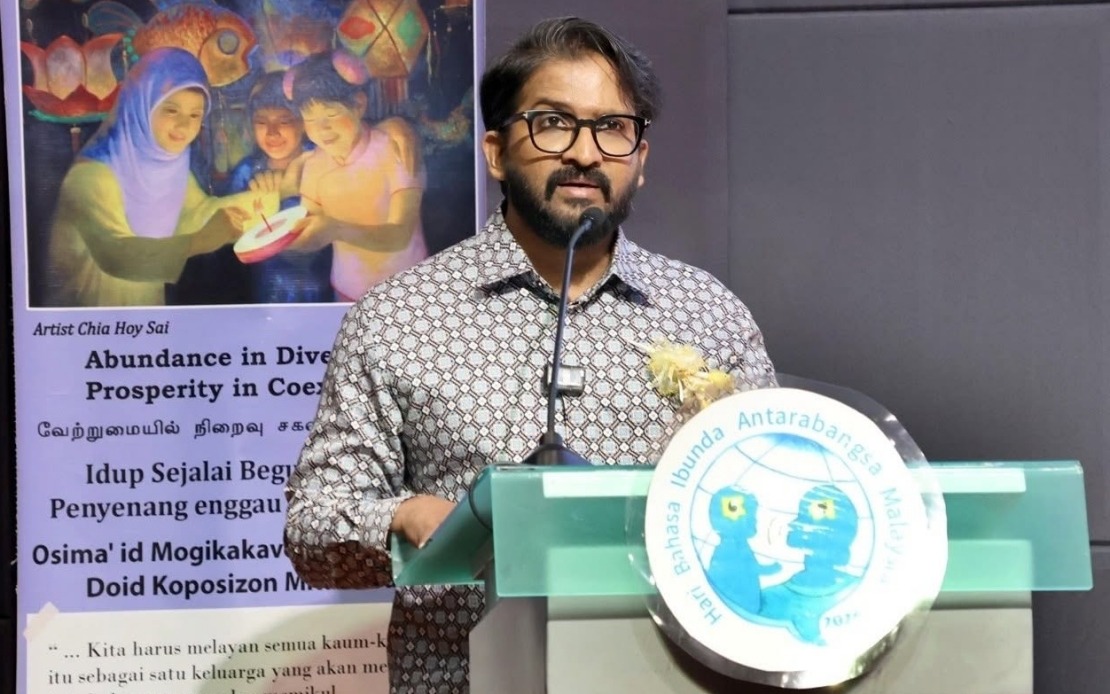
Deputy National Unity Minister R. Yuneswaran has made a compelling case for prioritizing mother-tongue education as a tool for social cohesion, arguing that linguistic proficiency in one's heritage language can substantially mitigate the inflammatory discourse surrounding race, religion and royalty that dominates Malaysian social media platforms. Speaking through a Facebook post on June 21, Yuneswaran positioned language competency not merely as a practical communication skill but as a foundational element in building mutual understanding across Malaysia's diverse communities.
The 3R phenomenon—contentious discussions and disputes involving race, religion and royalty—has become an increasingly visible source of social fragmentation in the digital sphere. Yuneswaran diagnosed the root cause of such recurring tensions as stemming fundamentally from insufficient knowledge of one another's historical narratives, linguistic systems and cultural worldviews. This analysis suggests that surface-level tolerance is insufficient; rather, deeper engagement with how different communities communicate and express values is necessary to prevent misunderstandings from spiralling into conflict.
Central to Yuneswaran's argument is the assertion that language functions as far more than a vehicle for conveying information. Instead, he framed linguistic systems as repositories of identity, cultural memory and community values that have accumulated over generations. When individuals lose fluency in their mother tongues, they simultaneously diminish their connection to these embedded meanings and the frameworks through which their own communities understand the world. This loss creates a void that can be filled by superficial or distorted interpretations of other cultures, breeding the incomprehension that fuels 3R controversies.
Malaysia's linguistic landscape is extraordinarily rich, encompassing approximately 130 languages reflecting the country's intricate ethnic and cultural tapestry. Rather than viewing this multiplicity as a potential source of fragmentation, Yuneswaran urged Malaysians to recognize linguistic diversity as a distinctive national asset. This reframing is significant because it challenges the zero-sum narrative often invoked in debates about language policy—the assumption that strengthening one language necessarily weakens another or threatens national cohesion. Instead, Yuneswaran proposed that celebrating and sustaining linguistic diversity actually fortifies the nation.
A particularly important clarification in Yuneswaran's intervention concerns the relationship between mother-tongue proficiency and competency in the national language and other tongues. Drawing on his personal experience navigating both Chinese and national school educational streams, he emphasized that proficiency in one's heritage language does not impede—and indeed may enhance—the ability to master Bahasa Malaysia and additional languages. This point directly addresses anxieties that sometimes emerge in education policy discussions, where stakeholders worry that resources devoted to mother-tongue instruction might compromise students' grasp of the national language.
The minister's positioning of this issue within Malaysia's development framework further underscores its seriousness. He noted that the National Unity Ministry has been tasked under the 13th Malaysia Plan with fortifying nation-building efforts centred on understanding, respect and genuine curiosity about one another. Language development thus becomes not a peripheral cultural concern but a core element of the government's broader development strategy. This institutional embedding suggests that mother-tongue proficiency is being elevated from a personal or community matter to a national policy priority.
Yuneswaran's intervention also carries significance for how Malaysia approaches digital citizenship and online discourse. With social media amplifying voices and accelerating the spread of divisive content, the challenge of managing 3R tensions has become both more visible and more urgent. By proposing linguistic and cultural understanding as preventative measures, he suggested that building social resilience against divisive narratives requires investments in education and cultural engagement rather than reactive content moderation alone. This represents a preventative rather than merely punitive approach to online social cohesion.
The practical implications of Yuneswaran's argument extend to curriculum design and educational policy across Malaysian schools. If mother-tongue proficiency genuinely contributes to reduced interethnic and intercommunal tensions, then education authorities might benefit from reviewing how such instruction is currently resourced and positioned within the broader educational system. Schools serving multiethnic communities might also consider initiatives that expose students to the linguistic and cultural frameworks of their peers, creating spaces where linguistic diversity becomes a lived reality rather than an abstract concept.
Moreover, Yuneswaran's emphasis on understanding cultural heritage through language acquisition speaks to broader questions about identity formation among young Malaysians. In an increasingly globalized world where English and Mandarin often dominate educational and professional spheres, mother-tongue languages risk marginalization, particularly among younger generations. Yet Yuneswaran's framing suggests that this erosion carries social costs beyond mere cultural loss—it potentially diminishes the empathetic capacity necessary for interethnic understanding and increases vulnerability to divisive narratives that exploit cultural ignorance.
The minister's statement also implicitly critiques the quality of public discourse surrounding 3R issues on social media. Rather than attributing inflammatory speech primarily to malicious intent or coordinated disinformation campaigns, Yuneswaran identified genuine comprehension gaps as a underlying driver. This diagnosis is important because it suggests that solutions involve education and engagement rather than merely suppression or algorithmic filtering of problematic content. Building linguistic competency becomes a form of preventative digital citizenship.
For regional observers, Yuneswaran's intervention offers a model for thinking about linguistic diversity and social cohesion in plural Southeast Asian societies. Many nations in the region grapple with analogous tensions around language policy, minority rights and national integration. Malaysia's experiment with sustaining mother-tongue education whilst maintaining a national language framework provides instructive lessons for how countries can pursue cultural pluralism without sacrificing national unity.
Looking forward, the effectiveness of Yuneswaran's advocacy will depend on whether the National Unity Ministry and the education sector translate these principles into concrete institutional support. This might include adequate funding for mother-tongue instruction, teacher training, curriculum development and initiatives that facilitate cross-cultural linguistic exchange. Without such follow-through, the eloquent articulation of language's role in social cohesion risks remaining aspirational rather than transformative. Nonetheless, his statement has clearly elevated mother-tongue proficiency from a peripheral cultural concern to a central element of Malaysia's approach to managing diversity and building national unity.
%22%2F%3E%3C%2Fpattern%3E%3C%2Fdefs%3E%3Crect%20width%3D%22100%25%22%20height%3D%22100%25%22%20fill%3D%22url(%23ph2h5apg)%22%2F%3E%3Crect%20width%3D%22100%25%22%20height%3D%22100%25%22%20fill%3D%22url(%23ph2h5app)%22%2F%3E%3Ctext%20x%3D%2250%25%22%20y%3D%2250%25%22%20text-anchor%3D%22middle%22%20dominant-baseline%3D%22central%22%20fill%3D%22rgba(255%2C255%2C255%2C0.95)%22%20font-family%3D%22Georgia%2C%20'Times%20New%20Roman'%2C%20serif%22%20font-weight%3D%22700%22%20font-size%3D%22320%22%20letter-spacing%3D%22-0.02em%22%3EMUDA%3C%2Ftext%3E%3C%2Fsvg%3E)