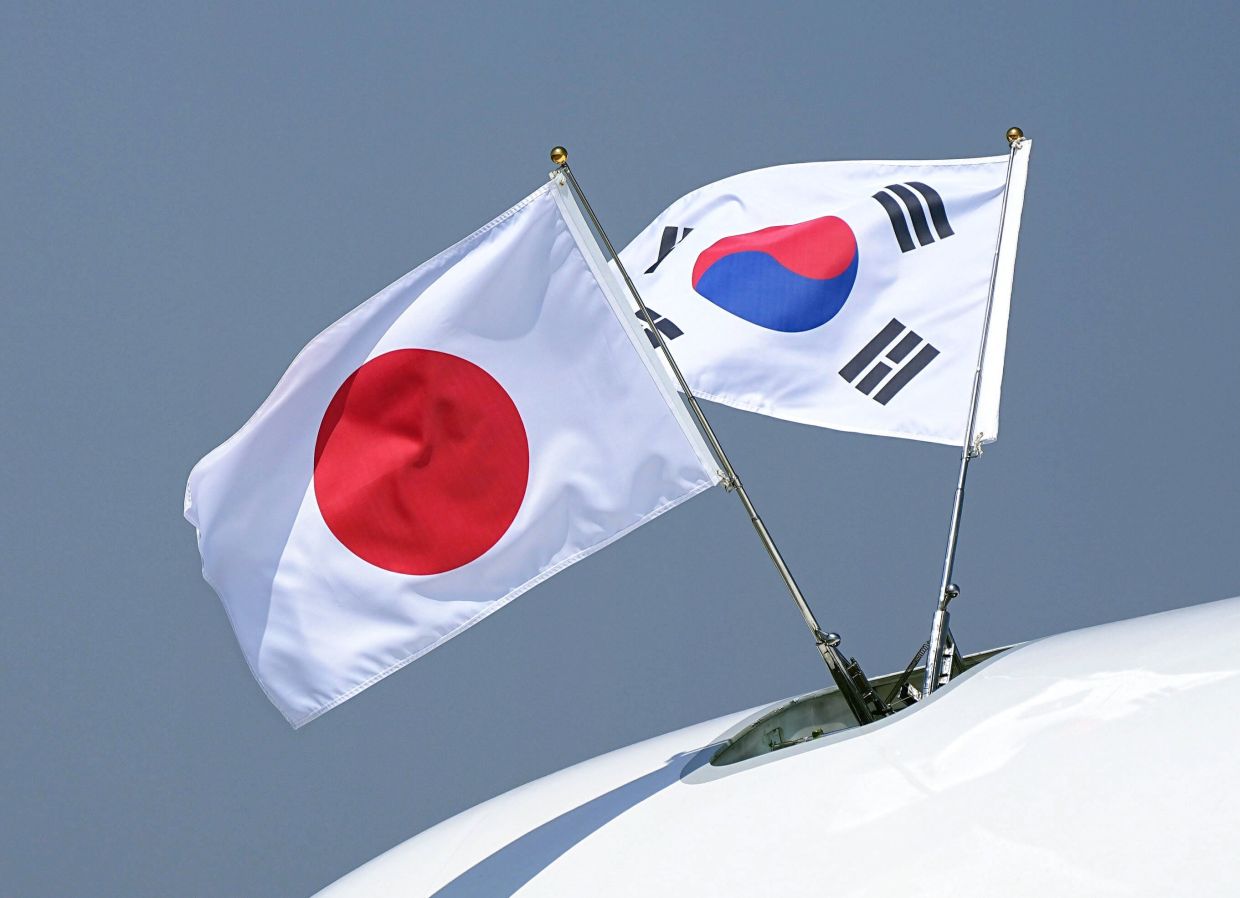
The facade of nuclear restraint among Japan and South Korea masks a precarious equilibrium that could unravel swiftly should either nation alter its weapons programme, according to research released Thursday by the Washington-based Centre for Strategic and International Studies. The finding underscores a critical vulnerability in the regional security architecture of Northeast Asia: shared strategic anxiety creates psychological conditions where one country's nuclear breakthrough could instantly reshape calculations in its neighbour, potentially more disruptively than even a significant reduction in American military presence.
Conducted by CSIS president of geopolitics Victor Cha and senior Japan specialist Kristi Govella, the survey canvassed a cross-section of strategic decision-makers including serving and retired government officials, lawmakers, academic researchers, policy institute analysts and business leaders. Fieldwork concluded in late October, capturing sentiment at a moment when both nations face mounting security pressures from North Korea's expanding arsenal and shifting American strategic priorities. The respondents represent the constituencies that would actually shape nuclear policy—not the broader public, whose views diverge considerably from elite opinion.
Currently, opposition to nuclear weapons development runs deep among these influential circles. Approximately 75 per cent of South Korean strategic elites explicitly reject or remain equivocal about their nation acquiring nuclear weapons, while nearly 80 per cent of Japanese counterparts harbour similar reservations. These figures appear reassuring until juxtaposed against the alarming volatility lurking beneath. The research uncovered a latent cascade mechanism: should South Korea or Japan pursue weapons, enthusiasm in the neighbouring country could spike dramatically, creating a regional arms race dynamic that transcends the gradual policy evolution analysts might otherwise expect.
The divergence between elite and public opinion in South Korea proves particularly instructive. A 2024 survey by the Chey Institute and Gallup found that over 72 per cent of ordinary South Koreans endorse their nation possessing nuclear weapons—a striking 40-plus percentage point gap from elite opinion. This chasm matters because it suggests public demand exists but remains constrained by institutional gatekeeping and diplomatic commitments that elites maintain. Should those constraints weaken, either through political leadership change or external security shocks, public pressure could overwhelm cautious technocrats. Japan presents a different picture; public and elite opinion align more closely, with roughly 80 per cent of Japanese citizens also opposing nuclear acquisition, though Beijing's allegations that Tokyo secretly pursues nuclear capabilities complicate this narrative.
Underlying these statistics sit distinct security preoccupations. South Korean proponents of nuclear weapons articulate their concerns almost exclusively around deterrence of North Korea—the immediate, tangible threat just kilometres away across the Demilitarised Zone. Japanese supporters, by contrast, fixate on longer-term anxieties about American commitment to extended deterrence, reflecting generational fears that Washington might eventually abandon its alliance obligations and withdraw from the region. These divergent threat perceptions suggest that any nuclear policy shift would arise from different triggers: a North Korean provocation might catalyse South Korean recalculation, whilst reduced American security guarantees would unsettle Japan.
The timing of this research proves significant given concurrent diplomatic momentum. The United States recently conducted bilateral nuclear cooperation consultations in Seoul and extended deterrence dialogue in Tokyo, attempting to reassure both nations through institutional mechanisms precisely calibrated to forestall independent weapons development. Washington has simultaneously pressed Beijing to join multilateral arms control negotiations—a request consistently refused by China, which maintains that it will not participate in agreements binding it alongside the United States and Russia. This diplomatic theatre suggests Washington recognises the fragility that CSIS has now documented empirically.
Meanwhile, American nuclear strategy itself is shifting in ways that could reverberate through Asian capitals. Brandon Williams, the Department of Energy's under secretary for nuclear security, announced Thursday that the United States plans to dramatically accelerate nuclear weapons production to address perceived Chinese advances. The agency intends to invest 600 million US dollars in artificial intelligence to compress the timeline for developing and deploying new weapons systems from the current decade-plus span to something considerably faster. This acceleration, framed as responding to Chinese capabilities, sends a signal to allies that American nuclear modernisation proceeds at accelerated pace—potentially reassuring some whilst making others wonder whether Washington's confidence in its deterrent suffices to guarantee theirs.
Within Washington's strategic community, moreover, debate has intensified over nuclear hypersonic weapons. Some defence analysts argue that equipping such systems exclusively with conventional warheads unnecessarily constrains American response options. Proponents contend that including nuclear variants in the hypersonic arsenal would make American intentions less predictable to adversaries and strengthen alliance reassurance—the theory being that more credible, more diversified American nuclear capabilities would convince Japan and South Korea that independent weapons programmes are unnecessary. Ironically, this logic assumes that demonstrating greater nuclear sophistication will discourage proliferation, yet the CSIS survey suggests the mechanism works oppositely: if allies perceive American commitment as waning, nuclear sophistication alone may prove insufficient.
The CSIS findings illuminate a strategic paradox facing American policymakers. Enhanced US nuclear capabilities intended to reassure allies can simultaneously create conditions under which they pursue their own arsenals if that reassurance proves unconvincing or temporary. The survey's core insight—that policy change in one nation could trigger cascading responses in another—suggests Northeast Asian nuclear stability depends less on absolute force structure and more on perceptions of commitment and permanence. North Korea's continued development, Beijing's opacity about its own arsenal expansion, and questions about whether Washington will maintain Cold War-era force levels all feed into the psychological conditions that could transform latent elite support into active policy shifts.
For Southeast Asia and the broader Indo-Pacific, the implications extend beyond Northeast Asia. A Japanese or South Korean nuclear weapons programme would likely catalyse strategic recalculations across the region, potentially encouraging other countries to reassess their own non-proliferation commitments. The regional security architecture, built substantially on American extended deterrence guarantees and the assumption that Japan and South Korea would remain non-nuclear, could face fundamental structural strain. The CSIS survey thus serves as an early warning system: the current consensus against nuclear weapons in Tokyo and Seoul remains genuine but contingent, dependent on conditions and commitments that cannot be taken as permanent. Managing that contingency, rather than assuming its stability, has become the critical challenge for regional security planners.

%22%2F%3E%3C%2Fpattern%3E%3C%2Fdefs%3E%3Crect%20width%3D%22100%25%22%20height%3D%22100%25%22%20fill%3D%22url(%23ph2h5apg)%22%2F%3E%3Crect%20width%3D%22100%25%22%20height%3D%22100%25%22%20fill%3D%22url(%23ph2h5app)%22%2F%3E%3Ctext%20x%3D%2250%25%22%20y%3D%2250%25%22%20text-anchor%3D%22middle%22%20dominant-baseline%3D%22central%22%20fill%3D%22rgba(255%2C255%2C255%2C0.95)%22%20font-family%3D%22Georgia%2C%20'Times%20New%20Roman'%2C%20serif%22%20font-weight%3D%22700%22%20font-size%3D%22320%22%20letter-spacing%3D%22-0.02em%22%3EMUDA%3C%2Ftext%3E%3C%2Fsvg%3E)