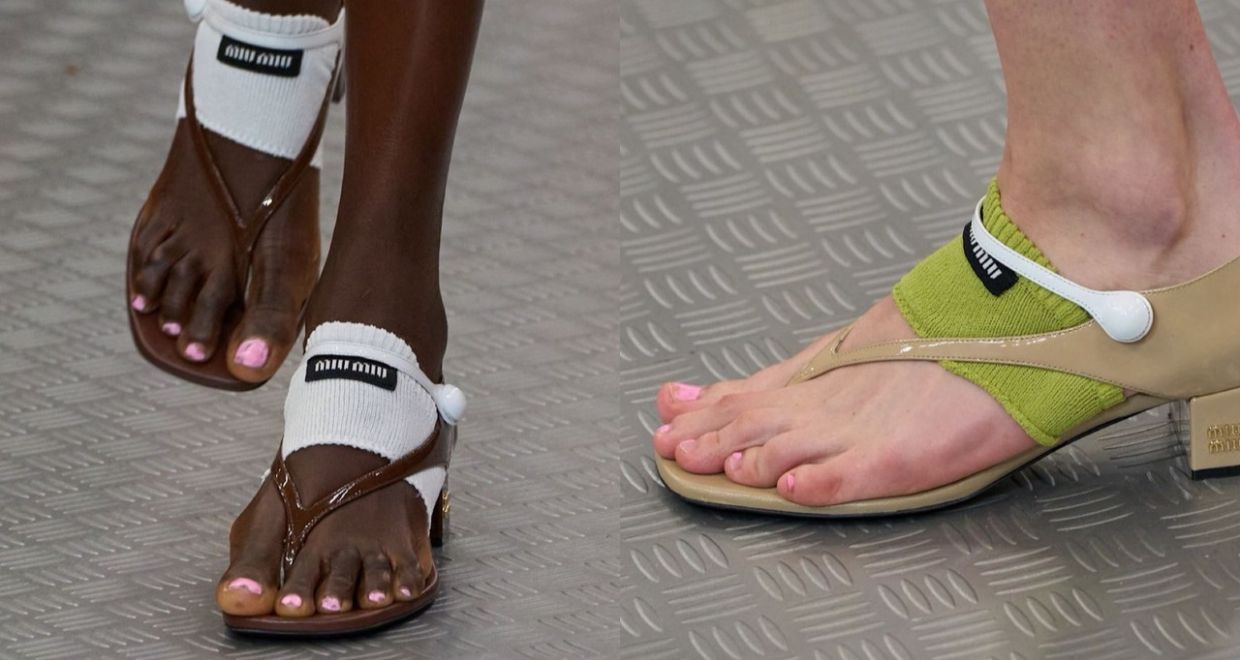
Fashion retailers across Asia are reporting an unexpected breakthrough in warm-weather dressing: open-toe socks. These hybrid garments—which expose the toes while wrapping around the top and arch of the foot—are rapidly gaining traction among consumers seeking a middle ground between completely bare feet and traditional full-coverage socks. What might initially appear as a styling contradiction is instead proving to be a practical and fashionable solution for navigating the discomfort of tropical climates and extended warm seasons.
The trend's momentum is undeniable when viewed through retail data. Online fashion retailers tracking seasonal demand have documented extraordinary growth patterns. Transaction values for socks specifically designed to pair with flip-flops surged 1,664 percent between mid-May and mid-June, while search interest climbed 3,227 percent during the same window. These figures suggest the trend extends beyond social media novelty into genuine consumer purchasing behaviour. Similarly, broader summer footwear categories—including mules, slides, and flip-flops—experienced an 80 percent sales increase year-over-year during late May and early June, indicating a wider seasonal shift in shopping preferences driven partly by unseasonable heat waves sweeping across the region.
The trend's legitimacy within fashion circles traces directly to luxury house Miu Miu, whose 2025 Spring/Summer collection featured open-toe socks as a deliberate design statement rather than an oversight. By positioning these socks as intentional styling pieces on the runway, the label effectively reframed them from practical undergarment to visible accessory. This luxury endorsement created immediate ripple effects throughout retail and social media spaces. High-profile celebrities subsequently amplified the trend; actor Cha Jung-won's social media post pairing sky-blue flip-flops with beige knit leg warmers demonstrated how the concept could be integrated into everyday contemporary outfits, lending the trend credibility beyond avant-garde fashion circles.
What distinguishes modern open-toe socks from their winter equivalents is a fundamental difference in construction and purpose. Rather than prioritising insulation and warmth, contemporary summer versions emphasize breathability and visual appeal. Manufacturers employ sheer fabrics, mesh panels, and loosely woven materials that allow air circulation while preventing moisture buildup against the skin. This engineering transformation converts an inherently warm garment into a lightweight accessory suitable for tropical environments. The shift represents a deeper trend in fashion: the decoupling of functional clothing from its original climate purpose, allowing seasonal mixing and unconventional layering without sacrificing comfort.
The practical benefits extend beyond mere aesthetics. Open-toe socks address a genuine comfort problem that many warm-climate residents experience: the friction and chafing caused by flip-flop straps rubbing directly against skin during extended wear. By covering the top surface of the foot, these socks create a protective barrier that reduces irritation while maintaining the breathability and ease of flip-flop or sandal footwear. During monsoon seasons common throughout Southeast Asia, the same socks can be worn with rain boots, preventing the skin maceration and discomfort that prolonged moisture exposure causes. This dual-season functionality increases the garment's practical value proposition beyond summer, making it a reasonable wardrobe investment.
Styling open-toe socks requires understanding fundamental design principles that prevent the look from appearing accidental or poorly executed. Fashion professionals recommend beginning with neutral foundation colours: grey, black, and white provide accessible entry points for consumers hesitant about adopting the trend. Grey socks paired with black flip-flops or ballerina flats coordinate naturally with denim, Bermuda shorts, and satin skirts, creating polished outfits that feel intentional rather than experimental. The pairing works because these neutral socks function as subtle detail enhancements rather than dominant visual elements. For consumers seeking bolder statements, jewel tones and bright colours such as yellow, pink, and sky blue become powerful tools for introducing accent colours to otherwise neutral summer wardrobes.
Deliberate mismatching between sock and shoe colours represents an advanced styling technique within this emerging aesthetic. Rather than creating visual chaos, intentionally contrasting combinations read as deliberate fashion choices that suggest styling confidence and trend awareness. This principle reflects broader contemporary fashion movements toward playful, deliberately unconventional combinations that reject the matching uniformity of previous decades. The technique works particularly well when surrounding elements remain restrained; because the socks and footwear already command visual attention, the remainder of the outfit should stay minimal and familiar. Simple t-shirts paired with shorts or basic shirts with skirts provide appropriate balance, allowing the socks and shoes to serve as the outfit's primary focal points without overwhelming the overall silhouette.
Pattern integration further expands styling possibilities for open-toe socks. Designs featuring visible dots, florals, or geometric patterns pair especially effectively with solid-coloured footwear and simple clothing, creating layered visual interest that feels contemporary rather than chaotic. These patterned options allow the socks themselves to function as statement pieces that anchor otherwise understated summer looks. The aesthetic principle remains consistent: when visible sock patterns become the outfit's primary decorative element, other components should recede into the background, allowing the shoes and hosiery to communicate the outfit's narrative.
Retailers and fashion authorities emphasize that open-toe socks represent a fundamental recalibration of how summer footwear gets approached and styled. Rather than viewing socks as practical necessities that remain hidden beneath clothing, contemporary fashion elevates them to visible accessory status worthy of intentional selection and coordination. This shift democratizes fashion creativity by transforming an inexpensive, accessible garment into a tool for personal expression and seasonal refreshment. For Malaysian and Southeast Asian consumers navigating humid climates while remaining invested in contemporary fashion, open-toe socks offer practical comfort combined with genuine style elevation—a combination that explains their rapid ascent from runway novelty to mainstream trend.

%22%2F%3E%3C%2Fpattern%3E%3C%2Fdefs%3E%3Crect%20width%3D%22100%25%22%20height%3D%22100%25%22%20fill%3D%22url(%23ph2h5apg)%22%2F%3E%3Crect%20width%3D%22100%25%22%20height%3D%22100%25%22%20fill%3D%22url(%23ph2h5app)%22%2F%3E%3Ctext%20x%3D%2250%25%22%20y%3D%2250%25%22%20text-anchor%3D%22middle%22%20dominant-baseline%3D%22central%22%20fill%3D%22rgba(255%2C255%2C255%2C0.95)%22%20font-family%3D%22Georgia%2C%20'Times%20New%20Roman'%2C%20serif%22%20font-weight%3D%22700%22%20font-size%3D%22320%22%20letter-spacing%3D%22-0.02em%22%3EMUDA%3C%2Ftext%3E%3C%2Fsvg%3E)