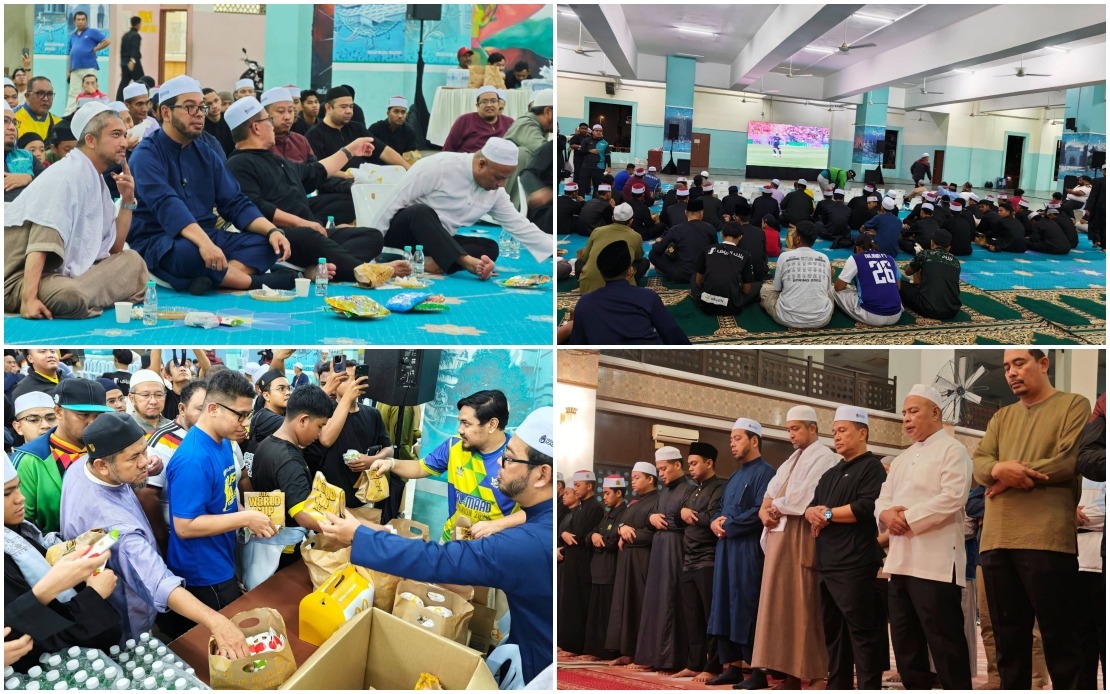
A mosque in Kuala Lumpur's Wangsa Maju area became the unexpected venue for a novel fusion of Islamic devotion and global sports enthusiasm on June 21, when over 300 worshippers, predominantly youths, gathered before dawn to participate in Qiyamullail prayers before settling in to watch a World Cup match. The event at Masjid Usamah bin Zaid reflected an emerging trend in Malaysian Islamic outreach that seeks to engage young people through their existing interests rather than positioning religious and secular entertainment as opposing forces. The initiative represents a pragmatic acknowledgement of how contemporary youth navigate cultural engagement, particularly in multicultural Malaysia where sports viewership commands passionate attention across all demographics.
Dr Zulkifli Hassan, the Minister in the Prime Minister's Department overseeing Religious Affairs, characterised the programme as evidence that young people's enthusiasm for football could be meaningfully channelled alongside spiritual enrichment. His observation addresses a longstanding tension in conservative Muslim circles regarding recreational activities, suggesting that integration rather than prohibition may prove more effective in maintaining youth connection to Islamic practice. This approach aligns with broader discussions within Malaysian Islamic institutions about contextualising religious engagement within the realities of modern youth culture, where global sporting events hold genuine cultural significance.
The screening itself featured a 2026 World Cup Group E encounter between Germany and Ivory Coast, a match that ultimately saw Germany secure a 2-1 victory. The selection of this particular fixture likely reflected scheduling convenience given the event's spontaneous nature and the global distribution of World Cup matches across different time zones and broadcast schedules. For Malaysian viewers accustomed to tracking European football closely, the Germany-Ivory Coast matchup offered the kind of competitive dynamic that sustains audience engagement beyond the opening minutes.
During the interval, the organisers introduced a layer of local sporting wisdom by inviting Shahril Arsat, a revered figure in Malaysian football history, alongside Khushairi Aizad, who brings experience from Selangor FA's competitive structures. Both individuals provided tactical commentary examining the two teams' strategic approaches and stylistic differences, transforming what could have been passive consumption into an educational experience. This arrangement demonstrates how institutions can leverage local sporting personalities to create value-added programming that extends beyond simple match broadcasting, particularly appealing to youth audiences seeking deeper engagement with sporting analysis.
The event's organisational scope revealed significant coordination across Malaysia's Islamic institutional landscape. The Federal Territories Islamic Religious Council's chief executive Datuk Nizam Yahya and the Malaysian Islamic Development Department's deputy director-general Datuk Ajib Ismail appeared alongside Dr Zulkifli and the Federal Territories Mufti in a collectively symbolic gesture of institutional support, notably participating in the preparation and service of roti canai breakfast. This visible engagement by senior religious bureaucrats signals that such youth-oriented programming enjoys official sanction and reflects deliberate policy orientation rather than grassroots initiative operating at institutional margins.
The collaborative framework underlying the event spanned an extensive ecosystem of Malaysian Islamic organisations and government agencies, including the Federal Territories Mufti Department, the Malaysian Islamic Development Department, the Federal Territories Islamic Religious Council, the Islamic Religious Department, the Malaysian Islamic Dakwah Foundation, the Malaysian Islamic Economic Development Foundation, and youth-oriented bodies like the Islamic Youth Movement of Malaysia. This organisational density suggests that facilitating youth engagement through sports represents an increasingly mainstream strategy within Malaysia's Islamic institutional architecture rather than an experimental outlier.
The broader context for such programming reflects demographic realities in Malaysia where young people constitute a substantial proportion of the population and where football commands cross-cutting appeal unmatched by most other cultural touchstones. The challenge of maintaining youth engagement with religious institutions has prompted various Southeast Asian Islamic organisations to experiment with integration strategies that acknowledge rather than suppress popular interests. Malaysia's relatively pluralistic approach within the Muslim-majority framework creates space for such experimentation that might face greater institutional resistance in more doctrinally rigid contexts.
The early morning timing of the Qiyamullail component—with participants assembling at 4am—underscores the devotional seriousness underlying the event despite its contemporary entertainment component. Qiyamullail represents supererogatory night prayers of particular spiritual significance, and the decision to anchor the programme in this practice rather than treating prayer as incidental framing demonstrates that the spiritual dimension retained substantive weight. The juxtaposition of demanding early-morning devotion with the anticipated entertainment of a major sporting fixture created a structured experience that balanced immediate gratification with longer-term spiritual cultivation.
For Malaysian Islamic institutions navigating the complexities of youth ministry in an increasingly digitally connected and globally oriented society, such programming offers a model for cultural engagement that neither capitulates to commodified entertainment nor maintains adversarial distance. The event suggests that Malaysian religious leadership recognises demographic shifts requiring responsive programming rather than static adherence to traditional formats. Whether this represents the vanguard of broader institutional adaptation or remains a localised innovation will become clearer as similar initiatives either proliferate or remain isolated experiments.
The inclusion of food service—with senior officials preparing traditional Malaysian fare—added a communal dimension that extended the gathering beyond screen-based consumption. Sharing food remains potent ritual practice within Islamic tradition and Malaysian culture more broadly, and its deliberate incorporation alongside prayer and sports viewing created a multivalent experience addressing spiritual, social, and physical dimensions of community participation. This holistic approach may explain why such events generate substantial youth attendance in environments where purely devotional programming sometimes struggles to compete with digital alternatives and entertainment options.
%22%2F%3E%3C%2Fpattern%3E%3C%2Fdefs%3E%3Crect%20width%3D%22100%25%22%20height%3D%22100%25%22%20fill%3D%22url(%23ph1l5c2g)%22%2F%3E%3Crect%20width%3D%22100%25%22%20height%3D%22100%25%22%20fill%3D%22url(%23ph1l5c2p)%22%2F%3E%3Ctext%20x%3D%2250%25%22%20y%3D%2250%25%22%20text-anchor%3D%22middle%22%20dominant-baseline%3D%22central%22%20fill%3D%22rgba(255%2C255%2C255%2C0.95)%22%20font-family%3D%22Georgia%2C%20'Times%20New%20Roman'%2C%20serif%22%20font-weight%3D%22700%22%20font-size%3D%22226%22%20letter-spacing%3D%22-0.02em%22%3ERussia%3C%2Ftext%3E%3C%2Fsvg%3E)