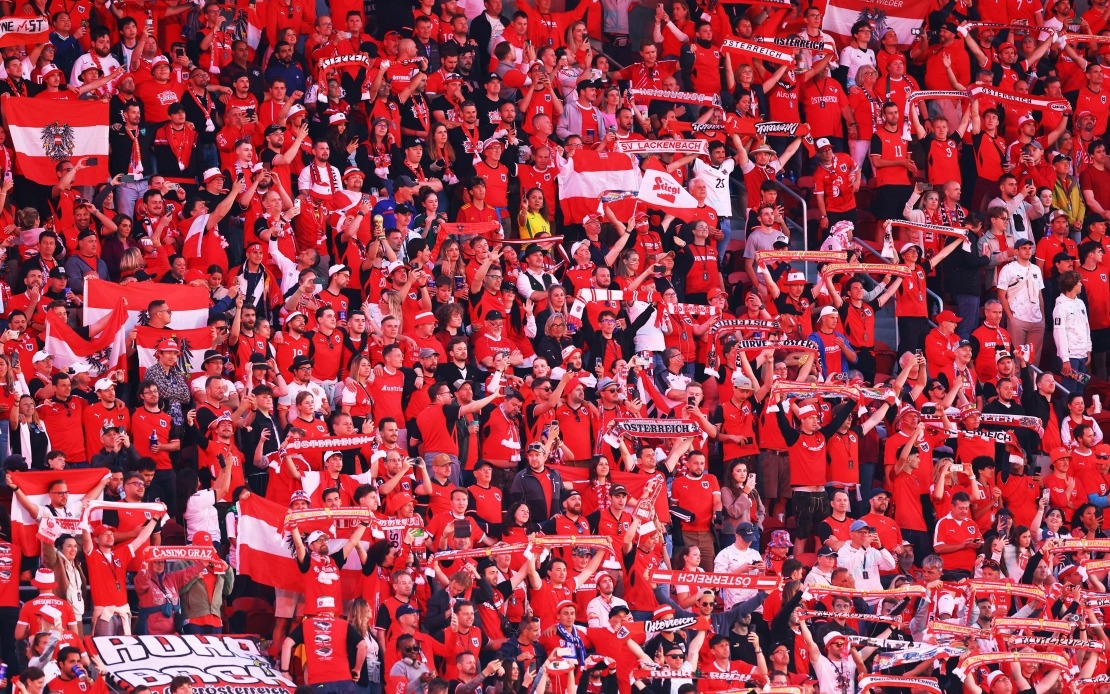
The opening fortnight of the FIFA World Cup in North America has exceeded initial attendance expectations, with the sport's governing body confirming that 1,028,429 fans packed stadiums for the first 16 matches through Monday. The figure represents a significant endorsement of the tournament's commercial model and represents a strong start for what organisers had promoted as the world's most inclusive World Cup. FIFA's data indicates stadiums operated at 99.34 percent capacity during this period, suggesting robust public interest transcended the early scepticism that surrounded ticket distribution and pricing strategies.
Yet the aggregate figure masks underlying concerns that emerged in the days preceding the announcement. Several high-profile fixtures exhibited conspicuously vacant sections, most notably South Korea's encounter with the Czech Republic in Guadalajara and Qatar's match against Switzerland held in California's Bay Area. These instances fuelled pre-tournament worries that elevated ticket prices would dampen spectator turnout, particularly for matches perceived as less commercially attractive or involving less established national sides. The visible empty seats in prominent venues contradicted FIFA's contention that demand remained uniformly strong across all fixtures.
FIFA president Gianni Infantino sought to amplify the positive narrative by sharing a photograph on Instagram alongside Aaron Bren, identified as the tournament's one millionth attendee. The symbolic moment provided a media opportunity to emphasise fan engagement and grassroots enthusiasm for the competition. Infantino's accompanying message expressed gratitude to supporters and characterised their participation as instrumental in realising the tournament's inclusive vision. The gesture, whilst primarily promotional, underscored FIFA's investment in portraying the event as successfully accessible to the broader public rather than confined to elite or affluent demographics.
Parallel to celebrating attendance milestones, Football Supporters Europe has flagged serious operational deficiencies affecting spectator safety and experience. The continent's foremost supporters' advocacy organisation, represented by executive director Ronan Evain, raised alarm at the absence of traditional fan segregation protocols typically mandated at major tournaments. Evain articulated concerns to BBC Sport that the contemporary ticketing framework, with its emphasis on secondary market sales and digital resale mechanisms, has fundamentally compromised FIFA's capacity to track ticket holder identity and location within stadiums.
The structural vulnerability identified by supporters' representatives stems from FIFA's deliberate expansion of resale channels to maximise revenue and broaden commercial appeal. By encouraging ticket purchasers to resell allocations through authorised platforms, the governing body forfeited traditional oversight mechanisms that enable organisers to maintain geographical separation of rival supporters. This deliberate trade-off between commercial optimisation and safety infrastructure represents a consequential policy choice that privileges revenue maximisation over match-day security protocols.
The risks articulated by Football Supporters Europe extend beyond abstract safety considerations to concrete match-day scenarios. When fans from competing nations intermingle within general admission sections, the probability of spontaneous confrontation escalates markedly. Evain specifically emphasised that FIFA's incomplete knowledge regarding ticket distribution patterns creates conditions where supporters from opposing camps could find themselves in proximity, generating friction that dedicated segregation zones traditionally mitigated. The absence of intelligence regarding fan locations throughout stadiums fundamentally undermines steward deployment and emergency response capabilities.
FIFA has defended its approach by highlighting the protected allocation mechanisms reserved for the most committed supporters. The organisation notes that participating member associations maintain ringfenced 'participant member association' ticket blocks, theoretically ensuring that each nation's core supporter base occupies designated stadium sections. However, this partial mitigation addresses only a subset of the total spectator population. General admission tickets distributed through commercial channels remain subject to the secondary market dynamics that supporters' groups identified as problematic.
For Southeast Asian observers, the World Cup's operational model carries relevance beyond immediate sporting interest. Malaysian and regional football supporters frequently attend continental tournaments where crowd management and segregation protocols prove essential for maintaining order and preventing incidents that damage football's reputation. The North American tournament's apparent deprioritisation of traditional safety frameworks suggests a broader trend within FIFA's strategic direction, one that subordinates established fan protection mechanisms to contemporary commercial imperatives. Should these practices persist, they may establish precedents that regional organisers encounter when hosting future international fixtures.
The tension between FIFA's attendance proclamations and documented instances of empty stadiums also warrants scrutiny from a marketing perspective. The 99.34 percent capacity figure, whilst impressive in aggregate, likely obscures significant variance across individual matches. Premium fixtures involving established football powers probably achieved substantially higher occupancy than encounters featuring less prominent national sides. This variance suggests that pricing strategies successfully captured revenue from marquee matches whilst potentially pricing out segments of the casual audience for less prominent fixtures, a pattern that supporters of equitable access to major sporting events have consistently critiqued.
The World Cup's opening phase thus presents a paradoxical picture: commercially successful in gross attendance terms yet operationally compromised regarding spectator management and safety protocols. FIFA's emphasis on the one million milestone reflects genuine public enthusiasm for the tournament, but cannot entirely displace concerns regarding the mechanisms through which participation was facilitated and regulated. Moving forward, the tournament's latter stages will reveal whether the attendance trajectory remains sustainable and whether the segregation deficiencies identified by supporters' advocates generate discernible safety incidents that compel operational adjustments.