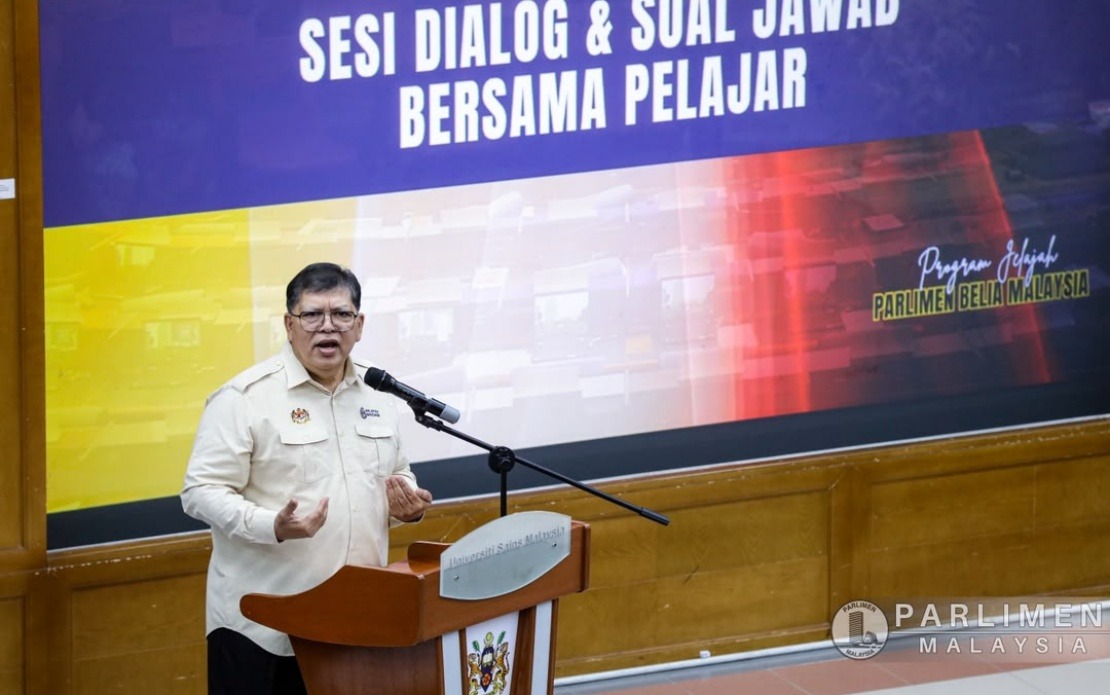
Parliament's role extends far beyond the legislative chamber itself. According to Dewan Rakyat Speaker Tan Sri Johari Abdul, the institution must function as a beacon of democratic practice and a model institution that commands public respect and trust—particularly as the Malaysian Youth Parliament prepares to commence operations on September 11. The timing of this emphasis is deliberate, as a new generation of young leaders will soon be observing how parliamentary business is conducted, and their understanding of democratic processes will be shaped by what they witness.
Johari underscored that the chamber serves purposes beyond mere policy debate among elected representatives. Parliament stands as the nation's preeminent legislative body and establishes the benchmark against which citizens, particularly younger generations, measure the health and character of Malaysia's democratic system. The stakes are therefore considerable: the conduct and culture within the Dewan Rakyat will directly influence how future leaders conceptualise democratic engagement and parliamentary responsibility.
For youth participants in the Malaysian Youth Parliament, exposure to exemplary parliamentary practice becomes a critical educational component. Johari stressed that these young leaders require not just access to parliamentary structures but genuine role models who demonstrate dignified conduct, procedural order, and integrity in their legislative work. Beyond procedural adherence, he emphasised the importance of cultivating a debate culture rooted in factual discourse, mutual respect, and a genuine orientation toward solving problems that affect ordinary Malaysians.
The Speaker issued a direct appeal to sitting Members of Parliament, framing the challenge in contemporary terms. Every utterance and gesture within the chamber now reaches a vastly expanded audience through social media platforms and live broadcast coverage—a reality that transforms parliamentary conduct from a closed institutional practice into a public performance viewed by millions. MPs must therefore recognise themselves as educators, whether consciously or not, whose behaviour communicates powerful lessons about how democracy functions in Malaysia.
The Malaysian Youth Parliament itself represents an innovative institutional experiment designed to nurture civic engagement among young citizens. The initiative adopts a scaled version of Parliament's structure, encompassing 222 seats that mirror the parliamentary constituency distribution across the country. Within this framework, participants establish youth-based parties through organisations registered with Parliament Malaysia, creating a non-partisan environment deliberately insulated from actual party politics. This separation serves a crucial purpose: it allows young people to develop legislative and debating skills without the ideological pressures and factional conflicts of Malaysia's competitive political landscape.
The programme has grown substantially since Parliament Malaysia assumed full responsibility in October 2023, inheriting the initiative from the Ministry of Youth and Sports after eight years of operation. Currently, more than ten such youth parties operate within the PBMy framework, testament to the scheme's appeal among young Malaysians. The expansion reflects both organisational maturity and genuine youth interest in understanding parliamentary processes and developing leadership capacities.
Recognition of the initiative's significance is reflected in recruitment targets and procedural details. Parliament Malaysia is mounting nationwide outreach efforts aimed at enlisting 300,000 young Malaysians aged 18 to 30, a demographic cohort that encompasses many first-time voters and emerging community leaders. The recruitment and electoral calendar has been carefully structured to maintain momentum through successive milestones: nomination day on July 8, candidate announcements on July 11, a 27-day campaign period spanning July 12 to August 7, and online voting scheduled for August 8 and 9 utilising the dedicated e-PBMy system.
The inaugural sitting on September 11 will formally inaugurate both the Youth Assembly and appoint its members to their two-year terms. Subsequent operational rhythm has been designed for sustainability: three sittings annually, each lasting two days, provides sufficient parliamentary experience without overwhelming participants' educational or professional commitments. This cadence balances the desire to maintain active legislative engagement with recognition that youth members typically shoulder competing responsibilities.
For Malaysian observers and Southeast Asian commentators tracking democratic development in the region, the Youth Parliament initiative carries broader significance. Investing in structured exposure to parliamentary processes among young citizens represents a preventive measure against democratic fatigue and disengagement—vulnerabilities that have undermined democratic institutions across the region. By providing authentic legislative experience and facilitating direct observation of parliamentary conduct, Malaysia creates pathways for youth to develop ownership stakes in democratic governance rather than remaining distant spectators.
Johari's emphasis on setting a positive example carries implicit acknowledgment that parliamentary behaviour has consequences extending beyond immediate legislative outcomes. When MPs demonstrate courtesy, factual rigour, and problem-oriented debate, they normalise these practices as democratic standards. Conversely, conduct marked by personal attacks, rhetorical grandstanding, or disdain for procedural norms models deficient democratic practice that young observers internalise. The Speaker's message amounts to an assertion that every parliamentary session constitutes a pedagogical moment with generational implications.
The geographic breadth of participation—encompassing all 222 parliamentary constituencies—ensures that the Youth Parliament becomes a genuinely national initiative rather than an urban-centred phenomenon. This dispersal matters significantly for regional representation and for cultivating leadership capacity across diverse Malaysian communities. Young people from Sabah and Sarawak, from metropolitan centres and smaller towns, encounter the same parliamentary structures and observe the same demonstrations of democratic practice, creating shared frameworks for understanding governance.
Registration and participation information are accessible through the dedicated portal at https://pbmy.parlimen.gov.my/my/, reflecting the scheme's commitment to digital accessibility and transparency. As recruitment efforts intensify through August, the quality of parliamentary conduct within the Dewan Rakyat itself becomes, in effect, a recruitment tool—demonstrating to potential youth participants that democratic engagement constitutes a worthwhile and dignified endeavour worthy of their time and commitment.
The convergence of these elements—structural innovation, dedicated outreach, clear procedural frameworks, and institutional leadership accountability—suggests Malaysia is approaching youth democratic engagement with considerable seriousness. Whether the initiative achieves its aspirations will depend substantially on whether the Dewan Rakyat itself lives up to Johari's challenge to exemplify the dignified, integrity-driven democratic practice he advocates.
%22%2F%3E%3C%2Fpattern%3E%3C%2Fdefs%3E%3Crect%20width%3D%22100%25%22%20height%3D%22100%25%22%20fill%3D%22url(%23ph6xupg)%22%2F%3E%3Crect%20width%3D%22100%25%22%20height%3D%22100%25%22%20fill%3D%22url(%23ph6xupp)%22%2F%3E%3Ctext%20x%3D%2250%25%22%20y%3D%2250%25%22%20text-anchor%3D%22middle%22%20dominant-baseline%3D%22central%22%20fill%3D%22rgba(255%2C255%2C255%2C0.95)%22%20font-family%3D%22Georgia%2C%20'Times%20New%20Roman'%2C%20serif%22%20font-weight%3D%22700%22%20font-size%3D%22170%22%20letter-spacing%3D%22-0.02em%22%3EMalaysia%3C%2Ftext%3E%3C%2Fsvg%3E)
%22%2F%3E%3C%2Fpattern%3E%3C%2Fdefs%3E%3Crect%20width%3D%22100%25%22%20height%3D%22100%25%22%20fill%3D%22url(%23ph6450g)%22%2F%3E%3Crect%20width%3D%22100%25%22%20height%3D%22100%25%22%20fill%3D%22url(%23ph6450p)%22%2F%3E%3Ctext%20x%3D%2250%25%22%20y%3D%2250%25%22%20text-anchor%3D%22middle%22%20dominant-baseline%3D%22central%22%20fill%3D%22rgba(255%2C255%2C255%2C0.95)%22%20font-family%3D%22Georgia%2C%20'Times%20New%20Roman'%2C%20serif%22%20font-weight%3D%22700%22%20font-size%3D%22136%22%20letter-spacing%3D%22-0.02em%22%3EGovernment%3C%2Ftext%3E%3C%2Fsvg%3E)
%22%2F%3E%3C%2Fpattern%3E%3C%2Fdefs%3E%3Crect%20width%3D%22100%25%22%20height%3D%22100%25%22%20fill%3D%22url(%23ph2ojpsg)%22%2F%3E%3Crect%20width%3D%22100%25%22%20height%3D%22100%25%22%20fill%3D%22url(%23ph2ojpsp)%22%2F%3E%3Ctext%20x%3D%2250%25%22%20y%3D%2250%25%22%20text-anchor%3D%22middle%22%20dominant-baseline%3D%22central%22%20fill%3D%22rgba(255%2C255%2C255%2C0.95)%22%20font-family%3D%22Georgia%2C%20'Times%20New%20Roman'%2C%20serif%22%20font-weight%3D%22700%22%20font-size%3D%22194%22%20letter-spacing%3D%22-0.02em%22%3EBercham%3C%2Ftext%3E%3C%2Fsvg%3E)