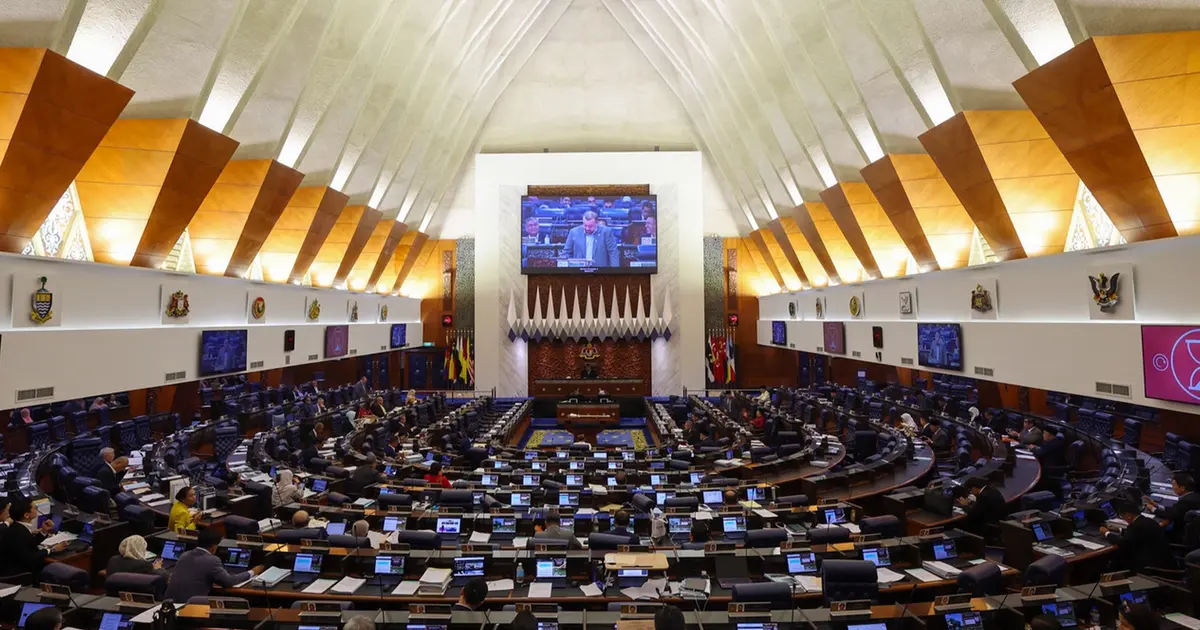
Parliament will return to session from Monday with four major legislative items on the agenda, including another attempt to pass the controversial prime ministerial term-limit bill that stumbled during the previous sitting. The proposal to impose a maximum 10-year tenure on Malaysia's chief executive represents one of the government's attempts to strengthen institutional checks and balances, though it continues to face substantial hurdles in securing the necessary supermajority backing.
The prime minister's tenure bill constitutes the centrepiece of this parliamentary sitting, reflecting ongoing efforts within government circles to institutionalise leadership transitions. When first presented in the previous Dewan Rakyat session, the legislation fell short of the two-thirds majority threshold required under Malaysia's constitutional framework to proceed. This shortfall indicates the measure remains politically contentious, with legislators across the spectrum holding divergent views on whether such a restriction would strengthen or weaken executive stability within the Malaysian system.
The 10-year ceiling, if enacted, would reshape the trajectory of Malaysian politics by establishing a hard boundary on prime ministerial service. Under the current constitutional arrangement, Malaysia's prime minister serves at the pleasure of the Agong and parliament, with theoretical tenure limited only by electoral cycles and parliamentary confidence. A legislated term limit would represent a significant departure from this model, potentially preventing long-serving executives from accumulating the institutional power associated with extended tenure, whilst simultaneously creating predictable transition periods.
The resubmission of this bill underscores government determination to advance constitutional reform despite initial parliamentary resistance. Rather than abandoning the initiative, the administration appears committed to building broader consensus or deploying additional legislative strategy to overcome the two-thirds requirement. This persistence suggests that cabinet members view prime ministerial term limitation as integral to their broader governance agenda, particularly given contemporary regional discussions about strengthening democratic institutions and preventing executive over-centralisation.
Parallel to the term-limit debate, parliament's four-bill agenda addresses multiple policy domains requiring supermajority approval. Legislative items of such constitutional significance typically generate considerable parliamentary discussion, and the inclusion of three additional major bills suggests the government intends this sitting to advance several priority reform initiatives simultaneously. The coordinated presentation strategy may reflect an effort to build legislative momentum across related governance issues.
For Malaysian policymakers and observers, the term-limit question connects to broader debates about institutional design in Westminster-derived parliamentary systems. Jurisdictions including Australia and several European democracies have grappled with comparable questions about optimal executive tenure, balancing experience and stability against preventing concentrated power. Malaysia's approach offers an opportunity to learn from international experience whilst adapting solutions to local constitutional and political contexts.
The two-thirds majority requirement itself warrants consideration, as it effectively grants opposition members veto power over constitutional amendments. This structural protection exists intentionally to ensure that significant constitutional changes command supermajority consensus rather than narrow partisan majorities. The failure to achieve this threshold during the previous sitting suggests that securing genuine cross-party agreement on executive term limitation remains challenging within Malaysia's current political configuration.
Regional observers will watch this legislative effort with interest, as Southeast Asian democracies increasingly grapple with questions about institutional strengthening and democratic renewal. Thailand, Indonesia, and the Philippines have all pursued constitutional reforms relating to executive power, and Malaysia's approach to term limitations could contribute useful comparative material regarding democratic institutional design in the region.
Successful passage of the term-limit bill would represent a significant constitutional development, establishing Malaysia as one of the few Commonwealth democracies with legislated restrictions on prime ministerial tenure. The precedent created could influence discussions around other executive power questions, potentially generating momentum for additional constitutional reforms addressing separation of powers and institutional checks.
The political dynamics surrounding this bill merit careful analysis, particularly regarding which coalitions might support or oppose the measure. Support patterns could reveal evolving positions on executive accountability and institutional reform across Malaysia's political spectrum, potentially indicating whether consensus exists around broader governance modernisation initiatives.
As parliament prepares to reconvene, stakeholders including civil society organisations, constitutional law experts, and political analysts will likely scrutinise the legislative proceedings closely. The outcome will signal whether Malaysian legislators can achieve the supermajority consensus necessary for major constitutional change, or whether the term-limit initiative will require further modification or strategic recalibration to secure passage.
%22%2F%3E%3C%2Fpattern%3E%3C%2Fdefs%3E%3Crect%20width%3D%22100%25%22%20height%3D%22100%25%22%20fill%3D%22url(%23ph3dce6g)%22%2F%3E%3Crect%20width%3D%22100%25%22%20height%3D%22100%25%22%20fill%3D%22url(%23ph3dce6p)%22%2F%3E%3Ctext%20x%3D%2250%25%22%20y%3D%2250%25%22%20text-anchor%3D%22middle%22%20dominant-baseline%3D%22central%22%20fill%3D%22rgba(255%2C255%2C255%2C0.95)%22%20font-family%3D%22Georgia%2C%20'Times%20New%20Roman'%2C%20serif%22%20font-weight%3D%22700%22%20font-size%3D%22272%22%20letter-spacing%3D%22-0.02em%22%3EJamal%3C%2Ftext%3E%3C%2Fsvg%3E)