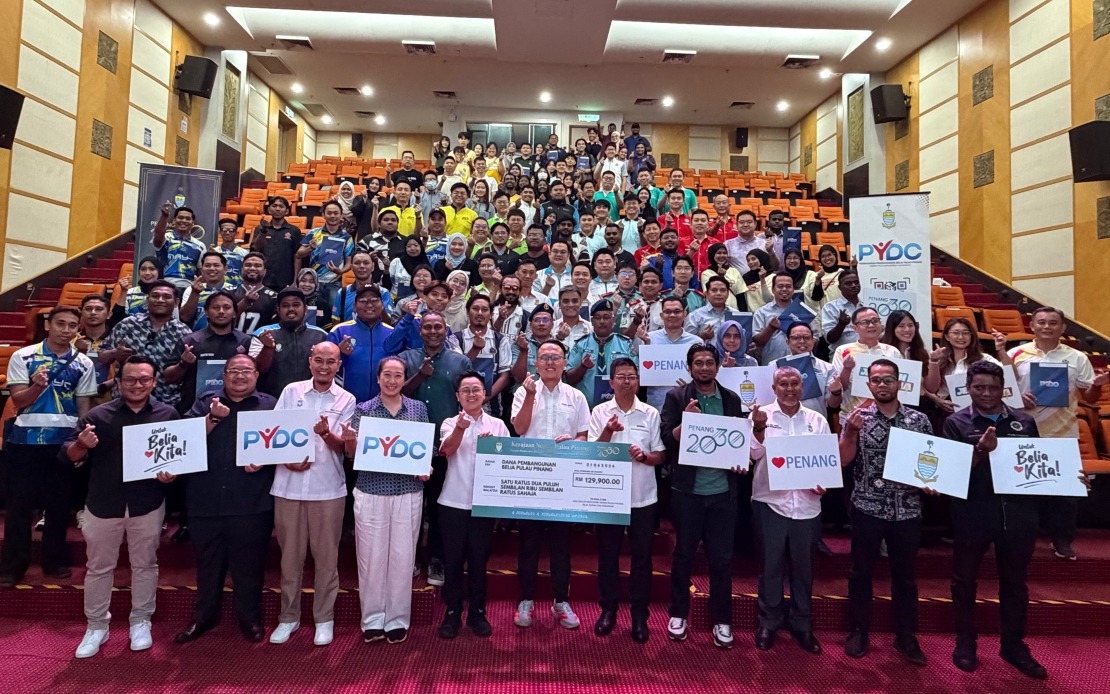
Penang's government has committed RM129,900 to support youth development initiatives across the state, with the funds directed toward 68 distinct programmes organised by 48 different associations. The allocation represents a strategic investment in the youth sector, as part of a broader RM200,000 youth development package approved during a recent State Executive Council Meeting. Daniel Gooi Zi Sen, chairman of the Penang Youth, Sports and Health Committee, announced the initiative, positioning it as more than a straightforward grant mechanism but rather a deliberate endorsement of youth-led innovation and community engagement.
The funds are intended to address multiple dimensions of youth development, spanning practical skills acquisition, employment readiness, civic participation through volunteerism, and the cultivation of leadership capabilities. This multifaceted approach reflects a recognition that young people require diverse forms of support to navigate an increasingly complex economic and social landscape. By distributing resources across such a wide range of organisations, the scheme enables grassroots youth groups and established associations alike to implement their own visions while maintaining alignment with broader state development objectives.
Gooi's framing of the initiative emphasises the principle of trust, suggesting that the allocation represents more than financial transfer but rather a confidence in youth associations to execute their concepts effectively. This messaging carries particular significance in the Malaysian context, where youth engagement and empowerment remain priority areas within both state and federal policy agendas. The decision to support such a substantial number of programmes simultaneously demonstrates a commitment to distributing opportunity across different communities and interest groups rather than concentrating resources within a handful of flagship projects.
Recipient organisations face clear expectations regarding implementation standards. Gooi stressed the imperative of integrity, transparency and efficient resource management as fundamental prerequisites for effective programme delivery. These stipulations align with broader governance standards across Malaysian public institutions and reflect growing scrutiny of how development funds are deployed. By establishing these benchmarks, the state government signals that accountability measures will accompany financial support, protecting both public resources and the credibility of participating youth organisations.
The evaluation framework employed will extend beyond simple activity completion metrics. Rather than measuring success merely through the execution of planned events or training sessions, the state expects organisations to demonstrate sustained positive outcomes for participants and broader societal benefit. This perspective acknowledges that quality youth programming generates value not only during the programme period but through lasting behavioural change, skills acquisition and civic engagement that individuals carry forward. Such an approach demands more rigorous monitoring and assessment than conventional activity-based reporting.
For youth organisations in Penang, this allocation represents a meaningful opportunity to operationalise their development agendas with government endorsement and financial backing. The RM129,900 pool, whilst modest in absolute terms, can enable diverse initiatives ranging from technical skills workshops to leadership camps, community service projects and mentorship programmes. The diversity of supported programmes suggests flexibility in what the state considers valuable youth development, accommodating both conventional and innovative approaches to engaging younger populations.
This initiative occurs within a broader Southeast Asian context where youth unemployment, skills gaps and civic disengagement present persistent challenges. Penang's approach of channelling resources through community associations rather than purely top-down government programmes reflects an understanding that sustainable youth development often emerges from locally-rooted efforts. By enabling these organisations to lead programming while providing financial resources, the state positions itself as an enabler rather than sole provider of youth services.
The emphasis on volunteerism within the programme portfolio merits particular attention. Cultivating volunteer participation among young people builds social capital, strengthens community bonds and fosters a sense of collective responsibility. In Malaysian society, where demographic change and urbanisation have sometimes attenuated traditional community structures, deliberate efforts to nurture volunteerism among youth represent an investment in social cohesion and civic health.
The marketability component acknowledges the employment anxieties facing young Malaysians. By supporting programmes that enhance job readiness and economic competitiveness, the state directly addresses a practical concern shaping youth perspectives and life trajectories. Skills development initiatives can bridge gaps between educational achievement and workplace requirements, potentially reducing youth unemployment and underemployment rates in Penang.
Implementing such a scheme requires effective coordination between the state government and recipient organisations. Clear communication regarding expectations, timelines, financial procedures and reporting requirements will be essential for ensuring smooth execution. The credibility of the initiative ultimately rests upon both the quality of programmes delivered and the integrity with which resources are managed across all participating bodies.
As Malaysia continues efforts to develop its youth population and enhance social resilience, initiatives like Penang's Youth Development Fund allocation contribute to a broader ecosystem of support. By demonstrating tangible commitment to youth-led programming and community-based development approaches, state governments help shape policy precedent and institutional practice around youth engagement. The outcomes of these 68 programmes will likely influence future policy directions and funding decisions not only within Penang but potentially across other Malaysian states considering comparable investment in youth development infrastructure.
%22%2F%3E%3C%2Fpattern%3E%3C%2Fdefs%3E%3Crect%20width%3D%22100%25%22%20height%3D%22100%25%22%20fill%3D%22url(%23ph1nkgig)%22%2F%3E%3Crect%20width%3D%22100%25%22%20height%3D%22100%25%22%20fill%3D%22url(%23ph1nkgip)%22%2F%3E%3Ctext%20x%3D%2250%25%22%20y%3D%2250%25%22%20text-anchor%3D%22middle%22%20dominant-baseline%3D%22central%22%20fill%3D%22rgba(255%2C255%2C255%2C0.95)%22%20font-family%3D%22Georgia%2C%20'Times%20New%20Roman'%2C%20serif%22%20font-weight%3D%22700%22%20font-size%3D%22136%22%20letter-spacing%3D%22-0.02em%22%3ENetherlan%E2%80%A6%3C%2Ftext%3E%3C%2Fsvg%3E)
%22%2F%3E%3C%2Fpattern%3E%3C%2Fdefs%3E%3Crect%20width%3D%22100%25%22%20height%3D%22100%25%22%20fill%3D%22url(%23ph1epzlg)%22%2F%3E%3Crect%20width%3D%22100%25%22%20height%3D%22100%25%22%20fill%3D%22url(%23ph1epzlp)%22%2F%3E%3Ctext%20x%3D%2250%25%22%20y%3D%2250%25%22%20text-anchor%3D%22middle%22%20dominant-baseline%3D%22central%22%20fill%3D%22rgba(255%2C255%2C255%2C0.95)%22%20font-family%3D%22Georgia%2C%20'Times%20New%20Roman'%2C%20serif%22%20font-weight%3D%22700%22%20font-size%3D%22320%22%20letter-spacing%3D%22-0.02em%22%3EIran%3C%2Ftext%3E%3C%2Fsvg%3E)
%22%2F%3E%3C%2Fpattern%3E%3C%2Fdefs%3E%3Crect%20width%3D%22100%25%22%20height%3D%22100%25%22%20fill%3D%22url(%23ph3f29jg)%22%2F%3E%3Crect%20width%3D%22100%25%22%20height%3D%22100%25%22%20fill%3D%22url(%23ph3f29jp)%22%2F%3E%3Ctext%20x%3D%2250%25%22%20y%3D%2250%25%22%20text-anchor%3D%22middle%22%20dominant-baseline%3D%22central%22%20fill%3D%22rgba(255%2C255%2C255%2C0.95)%22%20font-family%3D%22Georgia%2C%20'Times%20New%20Roman'%2C%20serif%22%20font-weight%3D%22700%22%20font-size%3D%22272%22%20letter-spacing%3D%22-0.02em%22%3ETrump%3C%2Ftext%3E%3C%2Fsvg%3E)