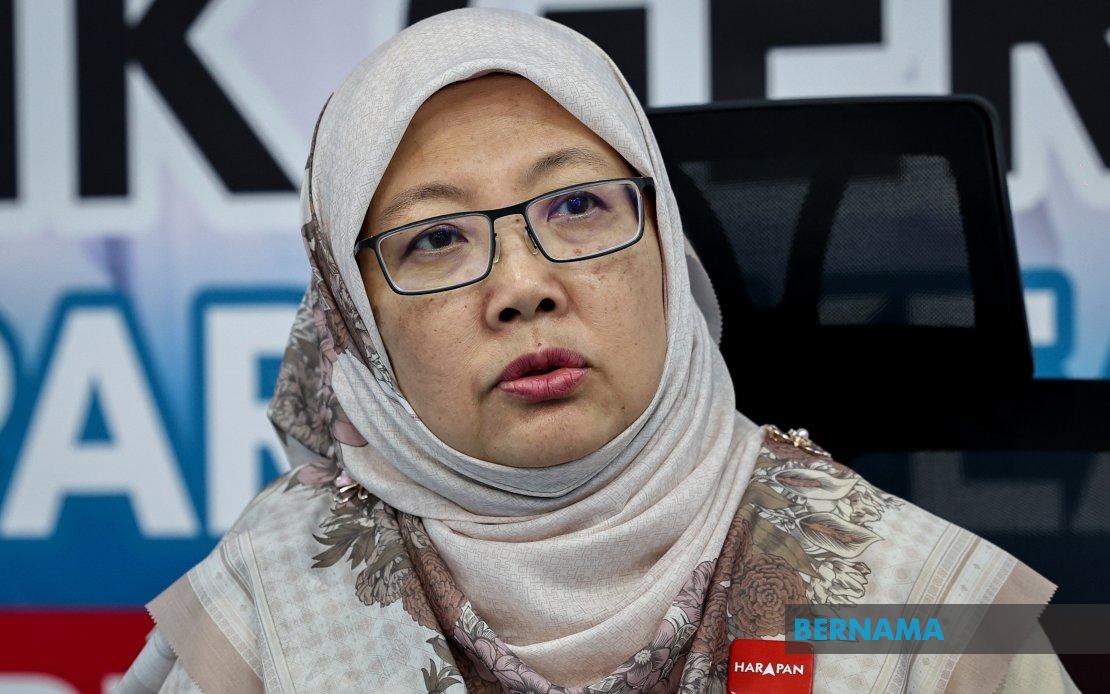
Pakatan Harapan has moved to defuse mounting pressure over the contentious issue of the Menteri Besar appointment in Johor, formally pledging that if granted the mandate to govern the state, the coalition will defer entirely to the Sultan of Johor's constitutional prerogative. The commitment, articulated by Johor PKR chairman Datuk Seri Dr Zaliha Mustafa, represents an attempt by the opposition alliance to sidestep a debate that has increasingly dominated campaign discourse and instead pivot attention towards substantive policy platforms aimed at addressing voter concerns.
Dr Zaliha's statement arrives in direct response to earlier remarks from incumbent Johor Menteri Besar Datuk Onn Hafiz Ghazi, who had publicly called on PH to announce a Menteri Besar candidate should the coalition secure victory in the forthcoming state election. The call reflected persistent pressure on PH to clarify succession arrangements, a demand that has become a recurring theme in Johor politics and a potential vulnerability for the opposition as it seeks to rebuild credibility in a state where it has faced electoral setbacks. By declining to name a candidate and instead emphasising constitutional propriety, PH has chosen a defensive rather than assertive posture on this issue.
The coalition's reaffirmation of the Johor State Constitution 1895 is not merely ceremonial posturing. The 1895 constitution remains one of Malaysia's oldest and most historically significant state instruments, enshrining the Sultan's role as the apex authority in state governance. For PH, explicitly acknowledging this legal framework serves dual purposes: it provides constitutional cover for any future appointment decisions and signals respect for Johor's traditional power structures, which remain deeply embedded in the state's political consciousness. This constitutional grounding allows PH to argue it is not evading the appointment question but rather upholding established legal norms.
However, the opposition's reluctance to name a candidate has triggered speculation about internal divisions within the coalition. Critics argue that PH's silence on this matter reflects uncertainty about which faction or personality within the alliance should claim the top job, particularly given the complex relationship between PKR, DAP, and Amanah in Johor politics. By framing the appointment as the Sultan's exclusive domain, PH may be attempting to obviate the need to arbitrate these internal tensions before an election that remains uncertain in outcome.
Dr Zaliha's assertion that PH possesses numerous qualified leaders capable of administering the state was intended to address concerns about leadership capacity. However, it effectively dodges the substantive question of which leader would actually assume the position. The statement leaves open the possibility that the Sultan could appoint someone from within PH's ranks, someone external to the coalition but aligned with its policies, or potentially negotiate terms with other parties should no single coalition secure a clear majority. This flexibility is both a strength and a weakness—it preserves strategic options but also invites accusations of political opportunism.
The coalition's strategic pivot towards policy rather than personalities reflects a broader calculation that Johor voters are fatigued by personalised political drama and remain focused on bread-and-butter issues. Dr Zaliha emphasised PH's intention to engage voters on concrete matters: raising living standards, generating quality employment opportunities, and accelerating economic development. This approach attempts to reframe the election narrative away from institutional power-sharing arrangements and towards tangible deliverables that affect daily life. For a state with significant urban and industrial economies, voter appetite for economic messaging may indeed be substantial.
Yet the deflection also carries political risks. By declining to front a candidate, PH surrenders the opportunity to build personal brand recognition and voter connection around a specific leader. Voters in Malaysia have historically responded to individual personalities, and the refusal to name a potential Menteri Besar may be interpreted as lack of conviction or clarity of purpose. Conversely, the move may appeal to voters wary of personality-driven politics and seeking institutional stability and policy substance over individual ambition.
The issue of Menteri Besar selection mechanisms has become increasingly contentious across Malaysian states as constitutional roles intersect with democratic expectations. Voters often expect significant say in determining their chief minister, yet constitutional frameworks typically vest this authority with hereditary rulers. PH's position essentially privileges the constitutional interpretation over democratic expectations, which may resonate with constitutionalists and those who value institutional restraint but could alienate voters seeking greater democratic agency in selecting their chief executive.
For Malaysian and Southeast Asian observers, this episode illuminates persistent tensions between monarchical and democratic governance frameworks that characterise Malaysia's constitutional structure. Unlike Westminster democracies where executive power flows directly from electoral mandates, Malaysian states retain substantive sultanic authority that operates in parallel with, rather than subordinate to, electoral outcomes. PH's deference reflects institutional realities but also highlights how traditional power structures continue to shape contemporary politics in ways that distinguish Malaysian governance from purely democratic models.
The coalition's approach may ultimately prove pragmatic. Should PH secure victory, the Sultan's appointment mechanism provides political cover for any subsequent choice, allowing the coalition to claim it respects constitutional authority whilst maintaining influence over who occupies the position. Alternatively, if PH falls short of a majority, the same constitutional framework permits the Sultan considerable discretion in formation negotiations. In this sense, PH's apparent passivity on the Menteri Besar question may conceal sophisticated constitutional strategy rather than genuine deference.


