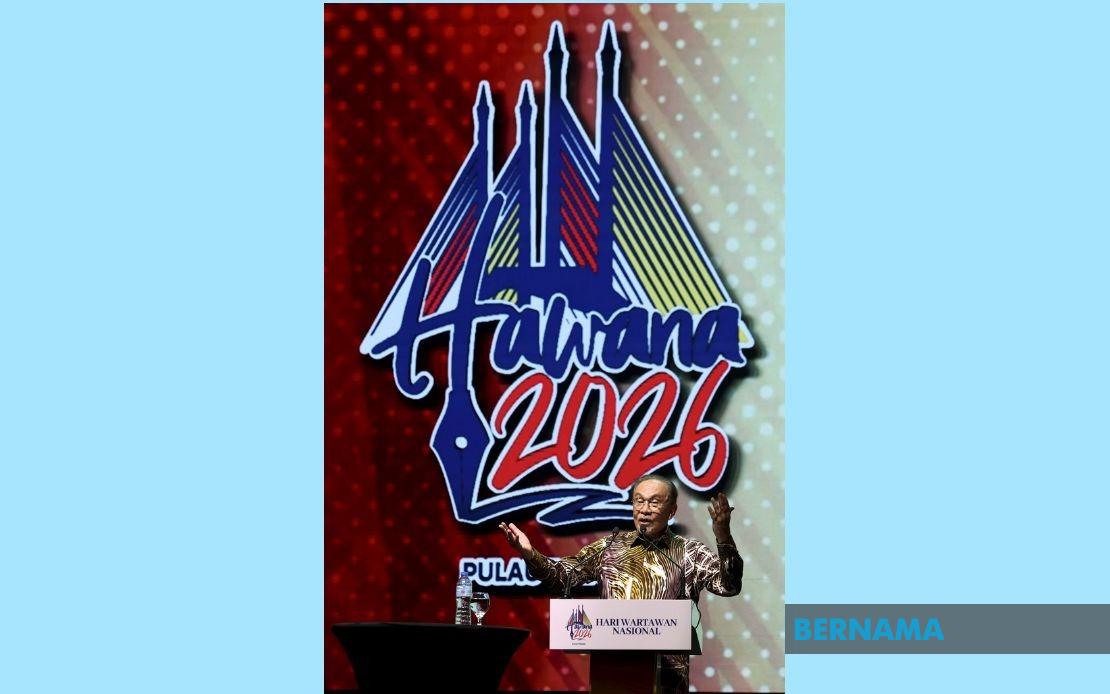
Prime Minister Datuk Seri Anwar Ibrahim has committed an extra RM1 million to Tabung Kasih@HAWANA, the government's flagship welfare initiative for journalists and media workers nationwide. The announcement came during his address at the National Journalists' Day (HAWANA) 2026 main event in Butterworth on June 20, underscoring the administration's ongoing pledge to support those working in Malaysia's news industry during times of personal hardship.
The additional funding brings cumulative disbursements from the assistance fund to over RM3 million in total, distributed among hundreds of beneficiaries since its establishment. According to figures presented by Anwar, who doubles as Finance Minister, some 773 media practitioners have already accessed RM2.26 million in aid through the scheme. The fresh allocation signals the government's commitment to expanding the reach and impact of the programme as it enters its fourth year of operation.
Tabung Kasih@HAWANA was formally established in 2023 and functions as a comprehensive safety net for journalists facing financial emergencies. Beyond simple monetary grants, the fund covers a broad spectrum of welfare needs including medical treatment, family support during crises, and other pressing requirements that media workers encounter. This multi-faceted approach recognises that financial distress in the journalism profession often stems from varied circumstances, from unexpected health emergencies to loss of income during career transitions.
The HAWANA 2026 event itself served as a significant gathering for Malaysia's media community, drawing more than 1,000 journalists and media professionals from within the country and internationally. The conference, held at PICCA Convention Centre@Butterworth Arena and organised around the theme 'Media Integrity Strengthens Credibility', attracted delegates from neighbouring countries including Timor-Leste, Cambodia, and Laos. This regional participation reflects the growing importance of media standards and professional integrity across Southeast Asia.
Penang Chief Minister Chow Kon Yeow and Communications Minister Datuk Fahmi Fadzil were among senior government officials attending the ceremony, signalling high-level support for the event and its underlying message about the value placed on responsible journalism. The presence of such figures underscores how media welfare has become embedded within broader government policy discussions about information quality and public trust in news organisations.
For Malaysian media practitioners, the expansion of Tabung Kasih@HAWANA holds particular significance given the economic pressures facing the journalism sector regionally. Many newsrooms have experienced restructuring and reduced headcounts in recent years as publications adapt to digital disruption and changing advertising revenue patterns. In this environment, access to emergency financial assistance provides crucial stability for journalists navigating career uncertainty or personal emergencies that could otherwise derail their professional lives.
The fund's evolution also reflects official recognition that media workers occupy a distinct position within the economy. Unlike other professions with established superannuation or welfare schemes, journalism has historically lacked comprehensive safety mechanisms. By positioning Tabung Kasih@HAWANA as core social protection infrastructure, the government acknowledges that investing in journalist welfare indirectly strengthens the broader media ecosystem upon which democratic institutions depend.
Representatives from Malaysia's major news organisations attended the announcement, including leadership from the Malaysian National News Agency (Bernama). Senior figures such as Bernama chairman Datuk Seri Wong Chun Wai and chief executive officer Datin Paduka Nur-ul Afida Kamaludin were present, indicating industry-wide engagement with the welfare agenda. Their participation suggests that media companies themselves view the fund as complementary to their own employee support systems rather than as a replacement for corporate responsibility.
The timing of the announcement during HAWANA 2026 is strategically significant. By framing welfare support within a celebration of journalism itself, the government connects financial assistance to broader themes of professional identity and sectoral pride. The conference's focus on media integrity and credibility serves as a counterweight to ongoing debates about misinformation and press freedom, positioning journalist welfare as integral to producing the quality journalism societies require.
For regional observers, Malaysia's approach to media practitioner support offers a model worth monitoring. As countries across Southeast Asia grapple with similar challenges around news industry sustainability and journalistic standards, examining how formal government support structures interact with independent media practice remains instructive. The relative maturity of Tabung Kasih@HAWANA—now four years in operation with hundreds of beneficiaries—provides evidence about both the demand for such assistance and the administrative mechanisms required to deliver it effectively.
Looking ahead, the RM1 million supplementary allocation suggests the government intends to maintain momentum around the welfare initiative. Whether this becomes a recurring annual boost or represents ad-hoc supplementation will influence the fund's long-term predictability and planning capacity. Media organisations and individual journalists will likely monitor whether subsequent announcements maintain this level of support or reflect changing budgetary priorities in coming years.
%22%2F%3E%3C%2Fpattern%3E%3C%2Fdefs%3E%3Crect%20width%3D%22100%25%22%20height%3D%22100%25%22%20fill%3D%22url(%23ph6xupg)%22%2F%3E%3Crect%20width%3D%22100%25%22%20height%3D%22100%25%22%20fill%3D%22url(%23ph6xupp)%22%2F%3E%3Ctext%20x%3D%2250%25%22%20y%3D%2250%25%22%20text-anchor%3D%22middle%22%20dominant-baseline%3D%22central%22%20fill%3D%22rgba(255%2C255%2C255%2C0.95)%22%20font-family%3D%22Georgia%2C%20'Times%20New%20Roman'%2C%20serif%22%20font-weight%3D%22700%22%20font-size%3D%22170%22%20letter-spacing%3D%22-0.02em%22%3EMalaysia%3C%2Ftext%3E%3C%2Fsvg%3E)
%22%2F%3E%3C%2Fpattern%3E%3C%2Fdefs%3E%3Crect%20width%3D%22100%25%22%20height%3D%22100%25%22%20fill%3D%22url(%23ph6450g)%22%2F%3E%3Crect%20width%3D%22100%25%22%20height%3D%22100%25%22%20fill%3D%22url(%23ph6450p)%22%2F%3E%3Ctext%20x%3D%2250%25%22%20y%3D%2250%25%22%20text-anchor%3D%22middle%22%20dominant-baseline%3D%22central%22%20fill%3D%22rgba(255%2C255%2C255%2C0.95)%22%20font-family%3D%22Georgia%2C%20'Times%20New%20Roman'%2C%20serif%22%20font-weight%3D%22700%22%20font-size%3D%22136%22%20letter-spacing%3D%22-0.02em%22%3EGovernment%3C%2Ftext%3E%3C%2Fsvg%3E)
%22%2F%3E%3C%2Fpattern%3E%3C%2Fdefs%3E%3Crect%20width%3D%22100%25%22%20height%3D%22100%25%22%20fill%3D%22url(%23ph2ojpsg)%22%2F%3E%3Crect%20width%3D%22100%25%22%20height%3D%22100%25%22%20fill%3D%22url(%23ph2ojpsp)%22%2F%3E%3Ctext%20x%3D%2250%25%22%20y%3D%2250%25%22%20text-anchor%3D%22middle%22%20dominant-baseline%3D%22central%22%20fill%3D%22rgba(255%2C255%2C255%2C0.95)%22%20font-family%3D%22Georgia%2C%20'Times%20New%20Roman'%2C%20serif%22%20font-weight%3D%22700%22%20font-size%3D%22194%22%20letter-spacing%3D%22-0.02em%22%3EBercham%3C%2Ftext%3E%3C%2Fsvg%3E)