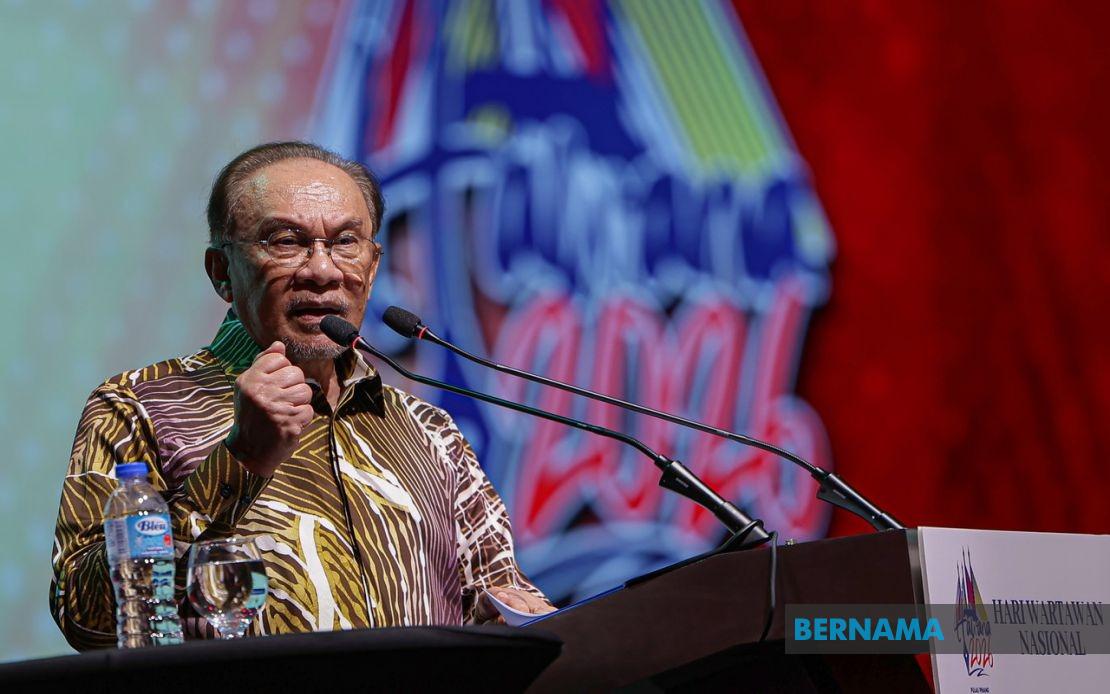
Prime Minister Datuk Seri Anwar Ibrahim has thrown his weight behind the appointment of former Federal Court judge Tan Sri Nallini Pathmanathan as the new chairman of the Malaysian Media Council, viewing her elevation as a strategic move to rebuild institutional credibility at a time when trust in media oversight remains fragile. Speaking at the National Journalists' Day (HAWANA) 2026 celebration in Butterworth on June 20, Anwar indicated that Nallini's distinguished judicial pedigree and reputation for integrity would serve as a powerful counterweight to scepticism about the council's independence and effectiveness.
The Prime Minister's public endorsement carries considerable symbolic weight in Malaysia's political ecosystem, signalling that the government sees media regulation as more than a mere administrative function. By emphasising Nallini's impeccable credentials and track record on the bench, Anwar framed her appointment not as a routine bureaucratic shuffle but as a deliberate effort to position the Malaysian Media Council as an institution worthy of journalist and public confidence alike. This messaging appears designed to address longstanding concerns about whether self-regulatory bodies in Malaysia can operate free from political interference or commercial pressure.
Nallini's appointment received unanimous backing from the Malaysian Media Council board during a meeting held on May 26, suggesting broad internal consensus on her suitability for the role. Her background in the Federal Court—Malaysia's highest judicial authority—distinguishes her from previous appointees and potentially elevates the council's standing within both legal and media circles. The timing of her appointment also coincides with the council's formal establishment under the Malaysian Media Council Act 2025, a legislative framework designed to clarify the body's powers, responsibilities and relationship to government.
The Malaysian Media Council operates as a self-regulatory mechanism rather than a statutory enforcement agency, tasking itself with raising journalistic standards, fielding public complaints against media outlets, promoting ethical conduct and protecting media freedom as a democratic safeguard. This model depends heavily on the voluntary cooperation of news organisations and the perceived impartiality of those administering it. Nallini's judicial experience suggests she understands the intricate balance required to maintain institutional legitimacy without descending into either toothlessness or authoritarian overreach.
Anwar's remarks were made in the company of other senior government officials, including Penang Chief Minister Chow Kon Yeow and Communications Minister Datuk Fahmi Fadzil, underscoring the cross-party and cross-level support mobilised around Nallini's leadership. The presence of Communications Ministry officials—secretary-general Datuk Abdul Halim Hamzah and deputy secretary-general Datuk Bahria Mohd Tamil—alongside Bernama leadership demonstrated coordinated government engagement with the media sector's institutional architecture. This gathering conveyed a message that media regulation would remain a priority for the administration.
For Malaysia's journalism sector, Nallini's appointment arrives at a pivotal moment. The regional environment sees increasing polarisation, the rise of misinformation across digital platforms, and ongoing tension between government regulation and press freedom. The Malaysian Media Council must navigate these pressures while maintaining credibility with journalists themselves, many of whom remain suspicious of state-adjacent institutions. Nallini's judicial background offers some reassurance that governance decisions will be grounded in principle rather than expediency, though her effectiveness will ultimately depend on her willingness to hold powerful interests—including government bodies and major media conglomerates—accountable when necessary.
The Malaysian Media Council Act 2025 represents a relatively new legal framework governing media self-regulation in the country. Unlike statutory regulators in some nations, the MMC functions as an industry body, meaning its authority derives from the consent and participation of news organisations themselves. This model places considerable responsibility on the chairperson to broker consensus among sometimes competing interests while maintaining ethical consistency. Nallini's experience managing complex judicial matters and differing legal arguments may position her well for this diplomatic challenge.
Anwar's explicit congratulations to Nallini and his characterisation of her appointment as improving the council's public image suggest the government recognises reputational fragility in media institutions. In Southeast Asia broadly, trust in both mainstream media and regulatory bodies has been eroding, driven by concerns about editorial independence, corporate concentration of ownership and perceived collusion between media and political actors. Malaysia faces similar dynamics, with audience surveys showing declining confidence in traditional news outlets. A media council led by a respected judicial figure may help counterbalance these trends, at least among segments of the public that associate the judiciary with impartiality.
The responsibilities assigned to the Malaysian Media Council—managing complaints, setting standards, promoting ethical journalism and protecting freedom—interconnect in ways that will test Nallini's leadership. Standards enforcement can feel oppressive if pursued dogmatically; conversely, lax standards maintenance undermines the council's purpose. She must also navigate the tension between media freedom and public interest protection, a balance that differs across cultures and political contexts. Her judicial training in constitutional interpretation and precedent may provide valuable tools for developing principled policies that apply consistently across diverse cases.
For Malaysian readers and the broader Southeast Asian media landscape, Nallini's leadership at the Malaysian Media Council holds implications for how regional journalism standards evolve. The council's decisions and posture will influence whether Malaysian media organisations embrace greater transparency and ethical accountability, or whether they view regulation primarily as a constraint to be minimised. Her appointment signals that Malaysia intends to pursue credible self-regulation rather than devolving all oversight to government bodies, a distinction that matters for press freedom advocates monitoring the region.
%22%2F%3E%3C%2Fpattern%3E%3C%2Fdefs%3E%3Crect%20width%3D%22100%25%22%20height%3D%22100%25%22%20fill%3D%22url(%23ph6xupg)%22%2F%3E%3Crect%20width%3D%22100%25%22%20height%3D%22100%25%22%20fill%3D%22url(%23ph6xupp)%22%2F%3E%3Ctext%20x%3D%2250%25%22%20y%3D%2250%25%22%20text-anchor%3D%22middle%22%20dominant-baseline%3D%22central%22%20fill%3D%22rgba(255%2C255%2C255%2C0.95)%22%20font-family%3D%22Georgia%2C%20'Times%20New%20Roman'%2C%20serif%22%20font-weight%3D%22700%22%20font-size%3D%22170%22%20letter-spacing%3D%22-0.02em%22%3EMalaysia%3C%2Ftext%3E%3C%2Fsvg%3E)
%22%2F%3E%3C%2Fpattern%3E%3C%2Fdefs%3E%3Crect%20width%3D%22100%25%22%20height%3D%22100%25%22%20fill%3D%22url(%23ph6450g)%22%2F%3E%3Crect%20width%3D%22100%25%22%20height%3D%22100%25%22%20fill%3D%22url(%23ph6450p)%22%2F%3E%3Ctext%20x%3D%2250%25%22%20y%3D%2250%25%22%20text-anchor%3D%22middle%22%20dominant-baseline%3D%22central%22%20fill%3D%22rgba(255%2C255%2C255%2C0.95)%22%20font-family%3D%22Georgia%2C%20'Times%20New%20Roman'%2C%20serif%22%20font-weight%3D%22700%22%20font-size%3D%22136%22%20letter-spacing%3D%22-0.02em%22%3EGovernment%3C%2Ftext%3E%3C%2Fsvg%3E)
%22%2F%3E%3C%2Fpattern%3E%3C%2Fdefs%3E%3Crect%20width%3D%22100%25%22%20height%3D%22100%25%22%20fill%3D%22url(%23ph2ojpsg)%22%2F%3E%3Crect%20width%3D%22100%25%22%20height%3D%22100%25%22%20fill%3D%22url(%23ph2ojpsp)%22%2F%3E%3Ctext%20x%3D%2250%25%22%20y%3D%2250%25%22%20text-anchor%3D%22middle%22%20dominant-baseline%3D%22central%22%20fill%3D%22rgba(255%2C255%2C255%2C0.95)%22%20font-family%3D%22Georgia%2C%20'Times%20New%20Roman'%2C%20serif%22%20font-weight%3D%22700%22%20font-size%3D%22194%22%20letter-spacing%3D%22-0.02em%22%3EBercham%3C%2Ftext%3E%3C%2Fsvg%3E)