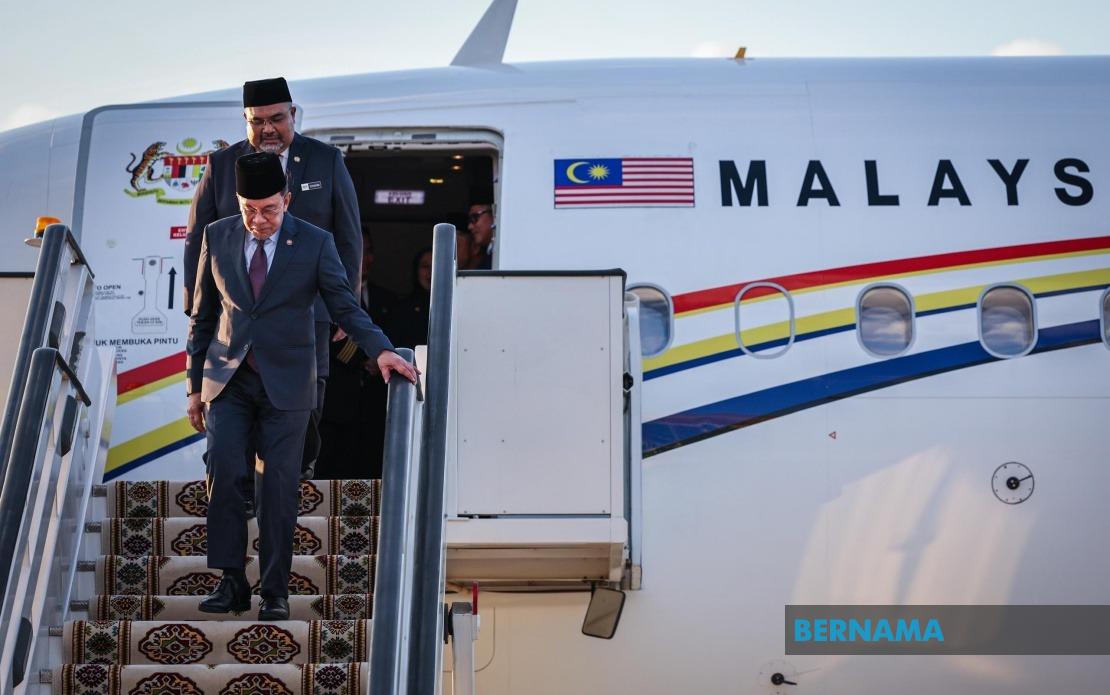
Prime Minister Datuk Seri Anwar Ibrahim has landed in Ashgabat, Turkmenistan's capital, marking the beginning of a two-day official visit that reflects Malaysia's deepening strategic interest in Central Asia. The aircraft carrying the premier touched down at Ashgabat International Airport at 8 pm local time on June 18, concluding the previous leg of his regional tour in Kazan, Republic of Tatarstan. This journey represents a deliberate effort to strengthen diplomatic and economic ties with nations beyond Malaysia's traditional Southeast Asian orbit, positioning the country as an engaged player in broader Asian geopolitics.
The delegation accompanying Anwar underscores the multifaceted nature of this engagement. Joining the prime minister were Minister of Investment, Trade and Industry Datuk Seri Johari Abdul Ghani and Minister of Economy Akmal Nasrullah Mohd Nasir, signalling that the visit carries substantial commercial and investment dimensions alongside diplomatic protocol. Supporting officials from both the Prime Minister's Office and Foreign Ministry rounded out the contingent, ensuring comprehensive coordination across government departments. Upon arrival, Anwar was formally received by Malaysia's Ambassador to Turkmenistan Mohd Suhaimi Ahmad Tajuddin, while the Turkmen side was represented by Deputy Chairman of the Cabinet of Ministers for Oil and Gas Guvanch Agajanov, indicating that Turkmenistan too views energy and resource matters as central to bilateral discussions.
The visit arrives as reciprocation for Turkmenistan President Serdar Berdimuhamedov's official journey to Malaysia in December 2024, establishing a pattern of high-level diplomatic exchange that benefits both nations. For Malaysia, this marks its fifth prime ministerial visit to Turkmenistan, though it remains Anwar's inaugural trip to the Central Asian nation. The historical context matters: such protocol visits typically signal either renewed commitment or strategic pivot, and in this instance, the timing suggests Malaysia is actively cultivating relationships in a region increasingly important to global energy markets and emerging supply chains.
The schedule for June 19 demonstrates the structured formality with which both governments approach this engagement. Anwar will be received at a welcoming ceremony hosted by Berdimuhamedov at the Presidential Palace, followed by bilateral talks and the signing of a joint statement. These negotiations will likely address trade expansion, investment frameworks, and possibly energy cooperation—areas where Petronas has maintained a substantial presence. The ceremonial inclusion of Friday prayers at the Turkmenbashi Ruhy Mosque reflects Malaysia's respect for Turkmenistan's Islamic heritage and the shared cultural values that underpin diplomatic relationships across Muslim-majority nations.
Turkmenistan holds particular significance for Malaysia's energy security considerations. Petronas, the national oil company, has accumulated investments worth RM52.73 billion in the country since 1996, making Turkmenistan one of the corporation's most substantial overseas commitments. This long-standing presence extends beyond mere financial metrics; it represents decades of operational expertise, infrastructure development, and human capital investment that create interdependencies difficult to untangle. Anwar's visit provides opportunity to discuss expansion of these operations, regulatory environments, and long-term energy supply agreements that align with Malaysia's transition toward diversified fuel sources.
Commercial metrics reveal that Malaysia-Turkmenistan trade, while modest in absolute terms, has shown encouraging momentum. In 2025, total bilateral trade reached RM75.80 million, with Malaysian exports valued at RM75.50 million—a nine percent increase year-on-year. Within Central Asia, Turkmenistan ranks as Malaysia's fourth-largest trading partner, a position that reflects both the region's economic weight and untapped potential. The export-heavy profile of Malaysia's trade suggests opportunities to deepen imports from Turkmenistan, particularly natural gas and petroleum products that could feed Malaysia's refineries and petrochemical sectors.
The Malaysia-Turkmenistan Forum, scheduled for the evening of June 19 at the Chamber of Commerce and Industry of Turkmenistan, represents the business community dimension of this visit. Such forums typically bring together entrepreneurs, investors, and government officials to explore sectoral opportunities, identify regulatory barriers, and forge commercial partnerships. For Malaysian businesses seeking to diversify into Central Asian markets, this convening offers a rare platform to engage directly with Turkmen counterparts and understand local commercial practices.
Anwar's concurrent role as Finance Minister adds weight to economic negotiations. His presence in these bilateral discussions signals that Malaysia's economic apparatus—not merely diplomatic channels—is mobilised behind this engagement. Financial frameworks, credit facilities, and investment incentives often require ministerial-level approval, making the premier's participation essential for substantive progress on commercial matters that extend beyond symbolic gestures. This dual positioning reflects the integration of foreign policy with economic statecraft that increasingly characterises Malaysian diplomacy under the current administration.
From a Malaysian perspective, this visit serves multiple strategic purposes. It diversifies Malaysia's international partnerships at a time of regional geopolitical flux, demonstrates the country's commitment to non-aligned foreign policy, and creates opportunities for Malaysian companies to access Central Asian markets and energy resources. For Turkmenistan, Malaysia represents a Southeast Asian gateway and a stable democratic partner with whom to strengthen commercial ties. The mutual benefit underpinning such visits ensures they move beyond ceremonial exercise toward substantive collaboration.
The broader context of Malaysian prime ministerial travels across Asia reflects an administration keen to project Malaysia as an influential player across multiple continents. By engaging Central Asian nations directly rather than through multilateral forums or intermediaries, Anwar signals that Malaysia takes these relationships seriously and possesses the diplomatic capacity to manage complex bilateral agendas. As energy security, supply chain resilience, and geopolitical alignment become increasingly critical to regional stability, visits such as this to resource-rich nations acquire heightened significance for Malaysian policymakers and business leaders.