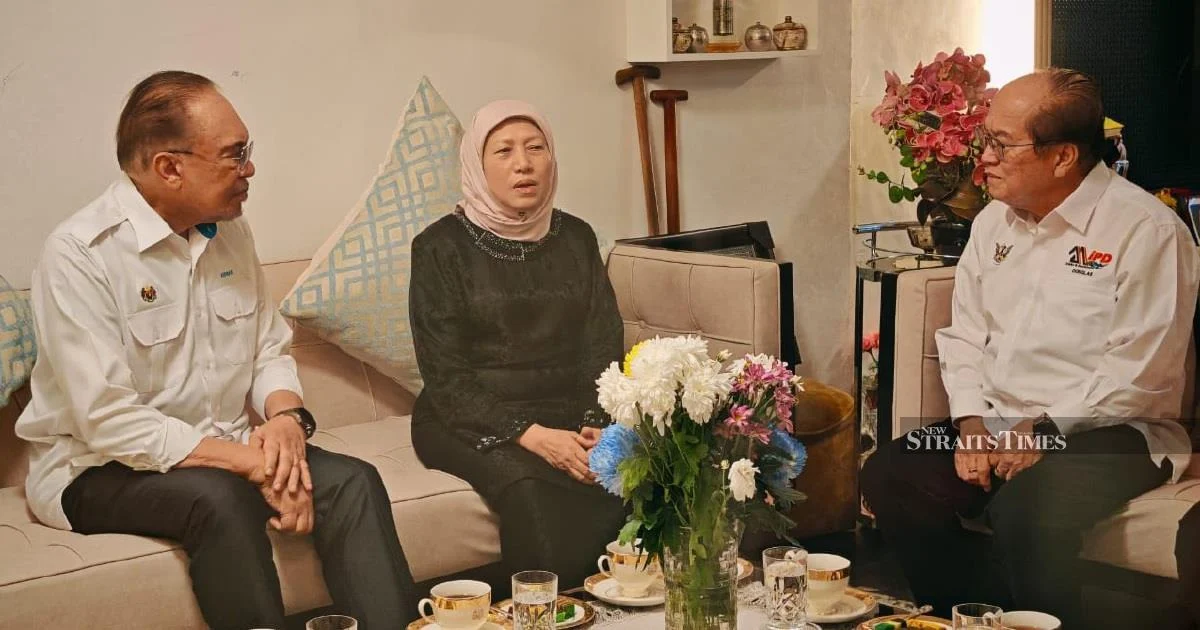
Prime Minister Datuk Seri Anwar Ibrahim travelled to Kuching to pay his respects to Women, Family and Community Development Minister Datuk Seri Nancy Shukri, whose husband Datuk Kamil Misuari has recently passed away. The gesture underscores the close bonds within Malaysia's political leadership and the tradition of senior government figures publicly acknowledging personal losses affecting cabinet members.
The condolence visit represents a significant moment in the nation's political calendar, particularly given Anwar Ibrahim's position as head of government. Such direct engagement by a prime minister in times of grief reflects both the personal relationships that sustain political structures and the cultural importance placed on observing periods of mourning within Malaysian society. The decision to travel to Kuching demonstrates the Prime Minister's commitment to offering support at a family level rather than limiting his acknowledgment to formal statements.
Nancy Shukri holds a prominent portfolio overseeing women's affairs, family welfare, and community development—areas that carry considerable weight in Malaysia's social policy framework. Her continued capacity to discharge these responsibilities during a period of personal bereavement inevitably raises questions about the demands placed on senior ministerial figures and the balance between public duty and private grief. The Prime Minister's presence serves to reinforce institutional support for her during this challenging period.
The passing of Datuk Kamil Misuari removes a figure from Sarawak's social and business landscape. While details regarding his background and contributions remain limited in immediate reporting, the formality accorded to the condolence visit suggests a person of standing within his own right. The loss carries implications not only for the immediate family but potentially for various networks and communities with which he was associated throughout his life and career.
In Malaysian political culture, high-level condolence visits carry layered significance beyond their surface expression of sympathy. They communicate respect for the affected minister, acknowledge the human dimension of public service, and demonstrate that the machinery of government pauses to recognise the personal trials of those who lead it. Such moments can strengthen political cohesion by transcending the routine partisan dynamics that typically characterise governance.
Sarawak, where this visit occurred, maintains its own distinct political traditions and social fabric within the Malaysian federation. The Prime Minister's decision to personally travel to the state, rather than delegating such responsibilities, signals particular regard for Nancy Shukri and reflects the importance of maintaining strong federal-state relationships during significant occasions.
The bereavement affecting Nancy Shukri also raises broader conversations about workplace flexibility and institutional responsibility towards senior officials navigating personal crises. Government ministers typically maintain demanding schedules that include parliamentary sessions, portfolio-related engagements, and constituent services. The expectation that such responsibilities continue even while processing major personal loss reflects realities that extend across Malaysia's public service sector.
Anwar Ibrahim's direct engagement in this matter aligns with his leadership approach, which has frequently emphasised accessibility and the integration of personal relationships into governance structures. This contrasts with more hierarchical or distance-oriented models of prime ministerial conduct, potentially contributing to his political standing among both colleagues and the broader public.
The incident also illustrates the complex intersection between professional responsibility and personal circumstance that characterises life at senior levels of government. Nancy Shukri's portfolio demands attention to sensitive social issues, including family welfare and community support—areas where personal experience can paradoxically enhance understanding of the challenges faced by those seeking ministerial assistance. Her ministry manages programs and policies that directly touch the lives of countless Malaysian families, making her continued engagement important even during periods of personal difficulty.
Within the broader context of Malaysian politics, the visit represents a moment of collective acknowledgment of shared humanity among those holding high office. Political leadership, regardless of ideology or affiliation, must ultimately contend with the universal experiences of loss and grief that afflict all segments of society. The Prime Minister's gesture reinforces this fundamental connection while simultaneously demonstrating the structures of support available to those serving in government.
%22%2F%3E%3C%2Fpattern%3E%3C%2Fdefs%3E%3Crect%20width%3D%22100%25%22%20height%3D%22100%25%22%20fill%3D%22url(%23ph2h5apg)%22%2F%3E%3Crect%20width%3D%22100%25%22%20height%3D%22100%25%22%20fill%3D%22url(%23ph2h5app)%22%2F%3E%3Ctext%20x%3D%2250%25%22%20y%3D%2250%25%22%20text-anchor%3D%22middle%22%20dominant-baseline%3D%22central%22%20fill%3D%22rgba(255%2C255%2C255%2C0.95)%22%20font-family%3D%22Georgia%2C%20'Times%20New%20Roman'%2C%20serif%22%20font-weight%3D%22700%22%20font-size%3D%22320%22%20letter-spacing%3D%22-0.02em%22%3EMUDA%3C%2Ftext%3E%3C%2Fsvg%3E)