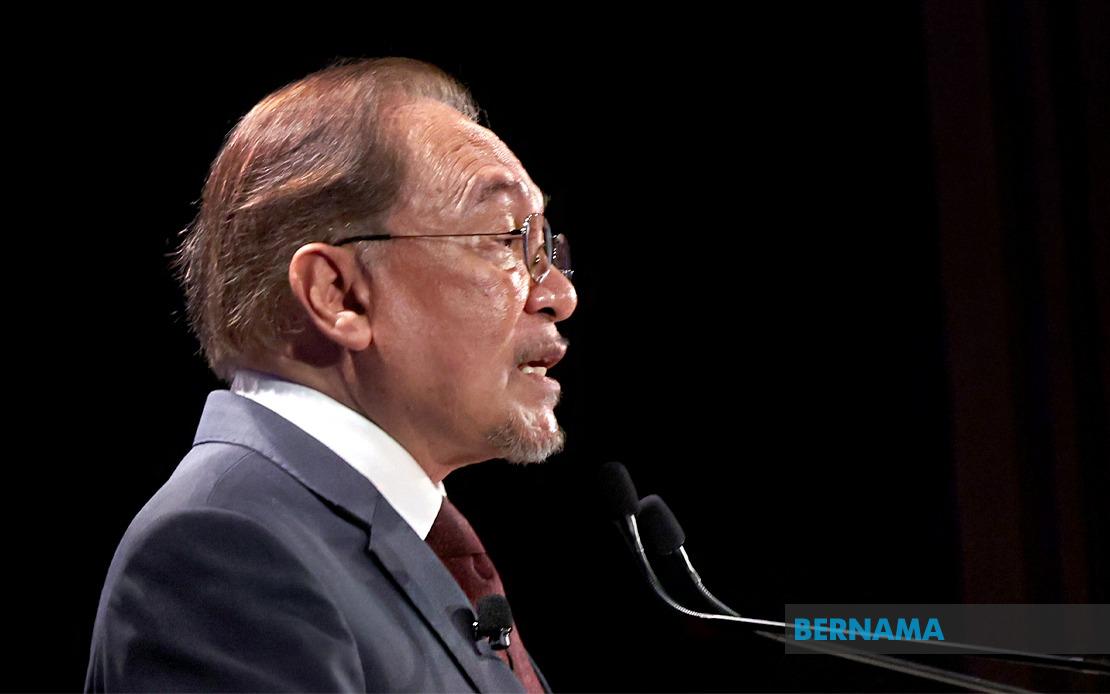
Prime Minister Datuk Seri Anwar Ibrahim is set for a demanding schedule on the final day of his official visit to Turkmenistan, engaging in a succession of high-level diplomatic engagements within the Central Asian nation situated along the Caspian Sea's eastern shoreline. The itinerary reflects the significance Malaysia places on deepening ties with a resource-rich regional hub that has emerged as an increasingly important partner for Malaysian business interests.
The day opens with formal proceedings at the Presidential Palace, where Anwar will participate in a welcoming ceremony conducted by Turkmenistan President Serdar Berdimuhamedov. This ceremonial component will be followed by a restricted bilateral meeting between the two leaders, providing an opportunity for candid discussion away from broader delegations. The structured format underscores the diplomatic protocol governing state visits and the importance both nations attach to this encounter.
During the subsequent bilateral meeting, Anwar and Berdimuhamedov are expected to conduct a comprehensive review of existing bilateral relations while identifying new vectors for cooperation. The discussions will encompass a diverse portfolio spanning conventional sectors such as trade, investment, and hydrocarbons alongside emerging areas including digital transformation, scientific research, and tourism development. This broad-based approach reflects Malaysia's strategy of expanding engagement beyond traditional economic pillars into knowledge-intensive and technology-driven domains where both nations can derive mutual benefit.
The visit will be punctuated by the formal signature of several binding documents, beginning with a joint statement that will serve as the overarching framework for the renewed relationship. An Air Services Agreement represents a particularly significant milestone, as it will facilitate expanded commercial aviation connectivity between Malaysia and Turkmenistan, potentially opening new routes and reducing travel friction between the nations. Additional memoranda of understanding will be signed covering transport cooperation between Malaysia's Ministry of Transport and Turkmenistan's State Service, alongside scientific partnership provisions linking the Academy of Sciences Malaysia with its Turkmenistan counterpart. Hydrocarbon-sector documents will further cement cooperation in oil and gas exploration and development.
The involvement of Malaysia's Ministry of Foreign Affairs through bilateral agreement-signings involving its research institute demonstrates the diplomatic dimension underlying economic partnerships. Such institutional linkages create sustained channels for dialogue beyond commercial transactions, enabling idea exchange and relationship continuity across political cycles. The Ministry of Transport accord signals intent to develop physical connectivity infrastructure, while the Academy of Sciences arrangement plants seeds for longer-term technological advancement and human capital development.
Following formal proceedings, Anwar will observe customary protocols by attending a presidential luncheon before participating in Friday prayers at the Turkmenbashi Ruhy Mosque, gestures reflecting respect for Turkmenistan's Islamic heritage and demonstrating the personal dimension of diplomatic engagement. These cultural observations carry symbolic weight in Central Asian contexts, where such recognition often shapes perceptions of sincerity and respect among counterparts.
The Malaysia-Turkmenistan Forum, to be jointly inaugurated by both leaders at the Chamber of Commerce and Industry of Turkmenistan, represents the business-facing component of the visit. This forum provides a platform for private-sector representatives from both nations to explore commercial opportunities, negotiate partnerships, and identify investment channels. Such forums have proven instrumental in translating political goodwill into tangible economic activity, and the high-level opening signals government commitment to removing barriers and facilitating commercial engagement.
Anwar's delegation reflects the whole-of-government nature of the engagement, including Minister of Investment, Trade and Industry Datuk Seri Johari Abdul Ghani and Minister of Economy Akmal Nasrullah Mohd Nasir. The presence of trade and economic ministers underscores that this visit prioritises commercial outcomes alongside diplomatic objectives, positioning Malaysia to capitalize on emerging opportunities within Central Asia's energy-dependent economy.
Turkmenistan's strategic significance for Malaysia extends considerably beyond its geographic remoteness. In 2025, the nation ranked as Malaysia's fourth-largest trading partner within Central Asia, with bilateral commerce reaching RM75.80 million. Malaysian exports to the country totalled RM75.50 million, representing a nine percent year-on-year expansion that suggests growing market penetration and product acceptance. More substantially, Petroliam Nasional Bhd (Petronas) has committed RM52.73 billion in cumulative investments since 1996, rendering Turkmenistan one of Malaysia's most significant overseas energy assets and a cornerstone of national energy security strategy.
Ashgabat, the capital and host city, presents an arresting architectural landscape that distinguishes it among Central Asian metropolises. The city holds the Guinness World Record for the highest concentration of white marble-clad buildings, exceeding 500 structures adorned with this distinctive material. Broad avenues, monumental public architecture, and extensive gold-leaf detailing create an aesthetic that reflects Turkmenistan's hydrocarbon wealth and state capacity. The 'White Marble City' designation has become integral to the nation's international brand, and the backdrop provided by such distinctive urban character subtly reinforces messages about modernity, stability, and development aspirations.
Turkmenistan's geographic position bordering Kazakhstan, Uzbekistan, Afghanistan, Iran, and the Caspian Sea positions it as a critical node within broader Central Asian geopolitics. The Caspian Sea itself, the world's largest enclosed body of water, represents a resource frontier and transportation corridor of immense strategic importance. Malaysia's engagement with Turkmenistan therefore reflects recognition that influence within Central Asia requires sustained presence and partnership across the region's most strategically positioned actors, particularly those controlling significant energy reserves.
The comprehensive nature of Anwar's itinerary on this final day demonstrates Malaysia's systematic approach to state-level diplomacy, combining ceremonial recognition with substantive negotiation, cultural respect with commercial pragmatism. By bringing together investment ministers, transport authorities, and scientific institutions within a single visit, Malaysia signals that partnership with Turkmenistan operates across multiple dimensions simultaneously. For Malaysian businesses and strategic planners, such high-level political commitment provides essential political cover and diplomatic infrastructure supporting longer-term commercial and energy objectives within Central Asia.