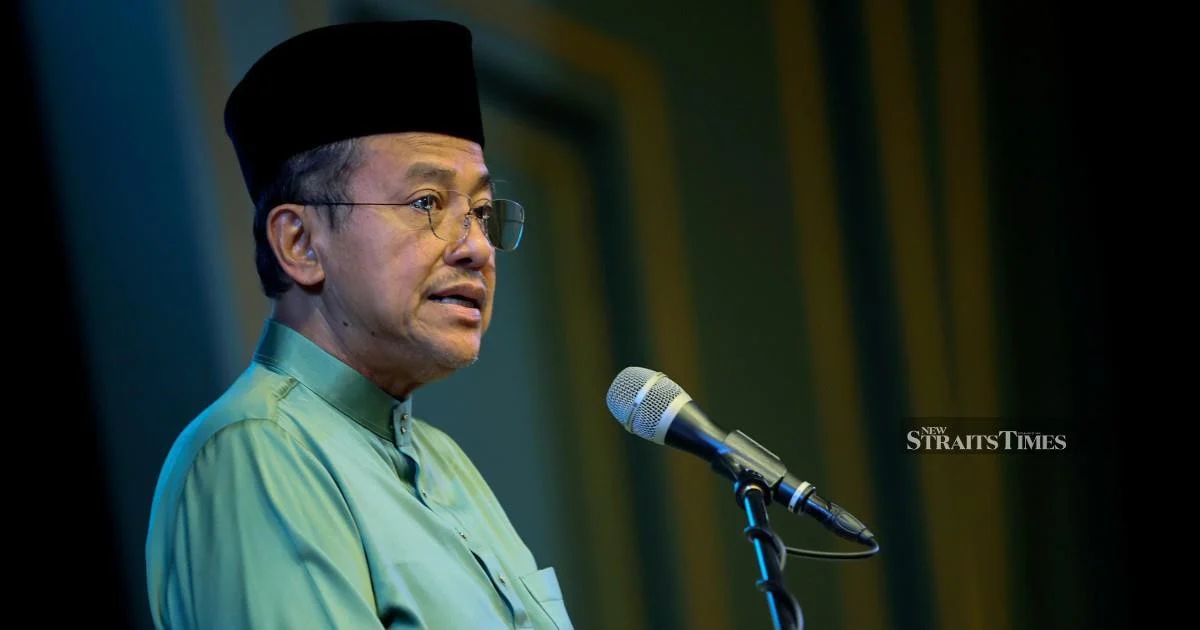
The Perikatan Nasional opposition bloc will turn its focus toward internal coalition dynamics when senior figures gather for a leadership council session in Temerloh, with Bersatu's organisational standing and strategic role expected to feature prominently in discussions. The timing of the summit underscores ongoing questions about how the coalition's component parties interact and align on major political questions, particularly given Bersatu's history as a splinter force that has shifted allegiances multiple times since its formation. PAS vice-president Datuk Seri Dr Ahmad Samsuri Mokhtar disclosed the agenda while speaking to reporters, indicating that deliberations on the numerically smaller but politically influential Malay-Muslim party would occupy central ground during the closed-door proceedings.
Bersatu occupies a peculiar position within Malaysian politics, having emerged from within UMNO before eventually repositioning itself across the political spectrum according to evolving circumstances. Its presence within PN carries significance disproportionate to its parliamentary representation, given the party's influence among younger urban voters and its historical proximity to key decision-makers. The forthcoming discussion likely reflects the broader coalitional tensions that have characterised opposition politics since the 2022 elections, when PN emerged as a significant force capable of shaping legislative outcomes without commanding an outright majority.
For Malaysian observers tracking coalition stability, such leadership meetings function as pressure valves where grievances accumulate and broader strategic questions get aired. The decision to publicly flag this particular agenda item suggests that whatever concerns surround Bersatu's participation have reached a level warranting formal discussion rather than back-channel resolution. This transparency contrasts with previous periods when coalition tensions remained largely opaque to public view, indicating that PN members may now view coalition management as a matter requiring broader stakeholder input.
The composition of the leadership council itself matters considerably when assessing potential outcomes. PAS dominates PN's structure both in terms of parliamentary numbers and grassroots organisation, while Perikatan comprises multiple smaller entities whose influence fluctuates based on electoral circumstances. Bersatu's former ties to the executive branch mean that discussions about its standing inevitably carry implications extending beyond purely parliamentary mathematics. Questions about resource allocation, campaign strategy, and candidate selection in future elections all connect to how parties define their respective roles within any alliance framework.
Regional context amplifies the significance of this internal PN reckoning. Southeast Asian coalition politics operates within narrow parameters where single-party dominance faces periodic challenges from opposition blocs forced to compromise across deep ideological divides. The ability of PN to maintain internal coherence while managing distinct agendas directly influences Malaysia's broader political trajectory and regional positioning. Should the coalition fracture, the consequences would extend well beyond parliamentary seating arrangements to encompass government formation scenarios and policy direction.
Bersatu's political history makes its current position inherently unstable. The party transitioned from opposition critic to government partner during the Muhyiddin Yassin administration, then back to opposition status following the government's collapse. Such trajectory shifts inevitably create questions about party reliability among coalition partners who must calculate whether Bersatu's commitment to opposition politics represents a permanent positioning or merely a tactical pause. These calculations become especially fraught when smaller parties hold disproportionate influence in closely balanced political environments.
The broader implications for Malaysian governance structures warrant consideration as well. Coalition-dependent governments require continuous maintenance of inter-party relationships that often demand concessions seemingly at odds with clear policy implementation. The energy devoted to managing Bersatu's position within PN reflects the reality that Malaysian politics operates within constrained majoritarian parameters, where no single entity commands sufficient parliamentary support to govern without elaborate accommodation frameworks. This necessity both strengthens and weakens opposition blocs, providing them greater leverage while simultaneously limiting their strategic flexibility.
For ordinary Malaysian voters observing these developments, the significance lies partly in understanding that opposition effectiveness depends on internal cohesion. A unified PN can present credible alternatives to government policy across multiple portfolios, while a fractious coalition offers little beyond reactive criticism. The willingness of senior figures to address Bersatu's status publicly may signal either confidence in resolving underlying tensions or anxiety that problems have reached crisis proportions. Only the subsequent meeting's outcomes will clarify which interpretation proves accurate.
Moving forward, the result of this Temerloh discussion will likely determine coalition trajectory for coming parliamentary sessions. Should PN leadership reaffirm Bersatu's full participation with enhanced recognition, it would signal strengthened bonds and coordinated opposition positioning. Conversely, any outcome reducing Bersatu's influence or questioning its long-term membership would fragment the coalition precisely when unified opposition voice matters most in Malaysian politics. The precision with which PN manages this delicate internal balance will substantially influence not just opposition effectiveness but the broader competitive environment shaping Malaysia's political future.

%22%2F%3E%3C%2Fpattern%3E%3C%2Fdefs%3E%3Crect%20width%3D%22100%25%22%20height%3D%22100%25%22%20fill%3D%22url(%23ph2h5apg)%22%2F%3E%3Crect%20width%3D%22100%25%22%20height%3D%22100%25%22%20fill%3D%22url(%23ph2h5app)%22%2F%3E%3Ctext%20x%3D%2250%25%22%20y%3D%2250%25%22%20text-anchor%3D%22middle%22%20dominant-baseline%3D%22central%22%20fill%3D%22rgba(255%2C255%2C255%2C0.95)%22%20font-family%3D%22Georgia%2C%20'Times%20New%20Roman'%2C%20serif%22%20font-weight%3D%22700%22%20font-size%3D%22320%22%20letter-spacing%3D%22-0.02em%22%3EMUDA%3C%2Ftext%3E%3C%2Fsvg%3E)