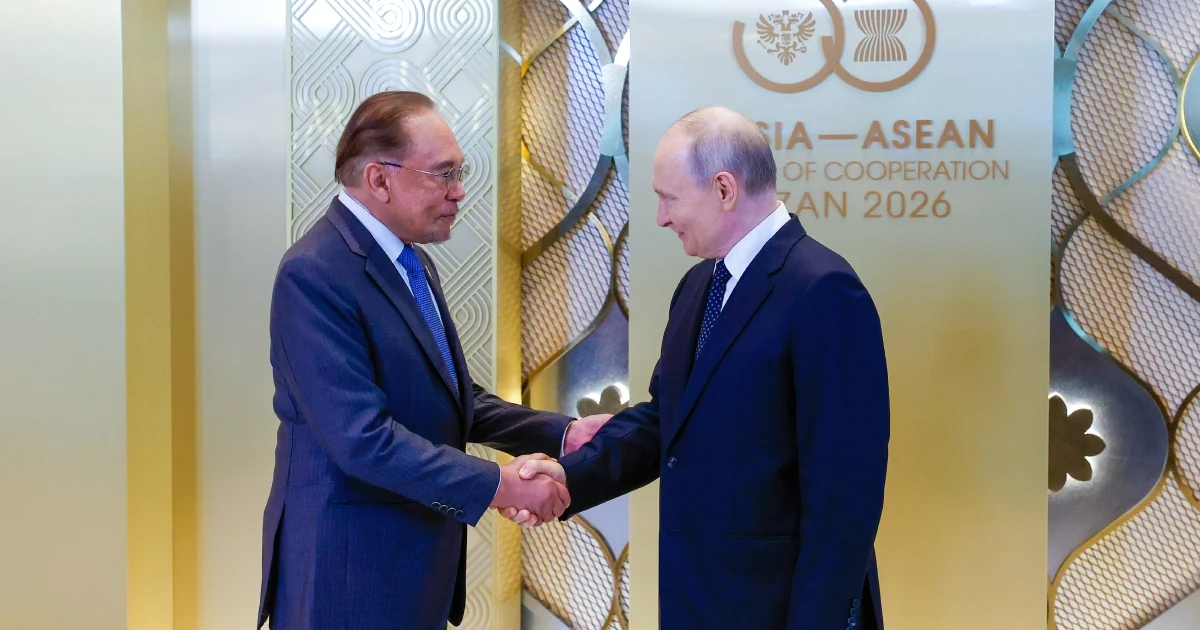
Prime Minister Datuk Seri Anwar Ibrahim announced in Bintulu today that Malaysia has obtained assurances from Russia regarding sustained energy deliveries, marking a significant development in the country's efforts to diversify its energy sourcing arrangements. The undertaking reflects Malaysia's broader diplomatic strategy to forge strong bilateral relationships with global energy producers, ensuring the nation's economic stability and industrial competitiveness in an increasingly volatile energy marketplace.
The pledge from President Vladimir Putin comes at a time when Malaysia faces mounting pressure to secure diverse and dependable energy sources. With global energy markets experiencing considerable turbulence stemming from geopolitical tensions and supply chain disruptions, the government has prioritized developing relationships with multiple major producers rather than relying on a limited number of suppliers. Russia's energy sector, one of the world's largest, positions the country as a crucial partner in Malaysia's long-term energy strategy.
Malaysia's approach to energy security reflects evolving regional geopolitical considerations. Southeast Asian nations increasingly recognize that their development trajectories depend on securing affordable and reliable power supplies. For Malaysia in particular, which possesses domestic hydrocarbon reserves but faces growing domestic consumption, complementary arrangements with external suppliers provide crucial flexibility. The energy partnership with Russia represents one element of this diversification, sitting alongside existing relationships with other major producers and traditional regional suppliers.
Anwar's remarks underscore the government's confidence in Russia's willingness to commit to long-term contractual arrangements with Malaysia. Such agreements typically span multiple decades and involve substantial infrastructure investments, making them expressions of strategic intent rather than transactional arrangements. The stability offered by long-term energy contracts provides Malaysian industries with predictability in their operating costs, a factor critical for maintaining competitiveness in global manufacturing and export sectors.
The timing of these assurances carries particular significance given Malaysia's industrial expansion plans. The government has prioritized manufacturing investments and digital economy development, both energy-intensive sectors requiring stable power supplies at competitive rates. Energy agreements with Russia could help offset costs associated with Malaysia's own energy transition initiatives, which involve substantial upfront investments in renewable infrastructure and grid modernization.
From a geopolitical perspective, Malaysia's deepening energy ties with Russia reflect the nation's wider balancing act in international relations. As a member of ASEAN and a country with substantial economic connections to Western markets, Malaysia must navigate complex diplomatic terrain. Energy partnerships constitute one area where Malaysia can maintain practical, mutually beneficial relationships with all major powers while avoiding alignment with specific geopolitical blocs—a position consistent with the government's stated foreign policy doctrine.
The energy sector holds particular importance for Malaysia's petrochemical industries and downstream manufacturing. Competitive energy pricing directly influences the profitability of energy-intensive industries that contribute substantially to Malaysia's export revenues and employment. By securing long-term arrangements with reliable suppliers offering stable pricing, the government aims to preserve Malaysia's competitiveness in regional petrochemical and refining sectors, areas where the nation possesses established expertise and infrastructure.
Regional observers note that Malaysia's energy partnerships extend beyond simple commercial transactions. Nations throughout Southeast Asia increasingly view energy relationships as fundamental to sovereignty and development. The region's rapid industrialization and urbanization have created insatiable energy appetite, making relationships with major producers strategically significant. Malaysia's successful negotiation of assurances from Russia demonstrates the government's diplomatic capability in securing outcomes aligned with national interests.
Looking forward, Malaysian policymakers must balance multiple energy considerations simultaneously. The transition toward renewable energy sources remains a government priority aligned with climate commitments, yet near-term industrial development requires continued reliance on conventional energy sources. Russia's long-term energy commitments provide breathing room for Malaysia to execute transition plans without precipitating industrial disruption or economic stress, permitting a measured approach to energy system transformation.
The announcement also reflects Russia's strategic interest in strengthening economic partnerships beyond Western markets. Facing international sanctions and trade restrictions, Russia has systematically expanded energy relationships throughout Asia. Malaysia, as a significant economic power within ASEAN with substantial energy requirements, represents an attractive partner for Russian energy firms seeking to diversify sales channels and secure reliable long-term market access.
For Malaysian energy consumers and businesses, the implications extend beyond diplomatic symbolism. Stable energy supplies and predictable pricing structures underpin industrial expansion, foreign investment attraction, and regional competitiveness. The government's success in securing Russian energy commitments contributes to broader confidence in Malaysia's economic management and future growth trajectory.
%22%2F%3E%3C%2Fpattern%3E%3C%2Fdefs%3E%3Crect%20width%3D%22100%25%22%20height%3D%22100%25%22%20fill%3D%22url(%23ph2h5apg)%22%2F%3E%3Crect%20width%3D%22100%25%22%20height%3D%22100%25%22%20fill%3D%22url(%23ph2h5app)%22%2F%3E%3Ctext%20x%3D%2250%25%22%20y%3D%2250%25%22%20text-anchor%3D%22middle%22%20dominant-baseline%3D%22central%22%20fill%3D%22rgba(255%2C255%2C255%2C0.95)%22%20font-family%3D%22Georgia%2C%20'Times%20New%20Roman'%2C%20serif%22%20font-weight%3D%22700%22%20font-size%3D%22320%22%20letter-spacing%3D%22-0.02em%22%3EMUDA%3C%2Ftext%3E%3C%2Fsvg%3E)