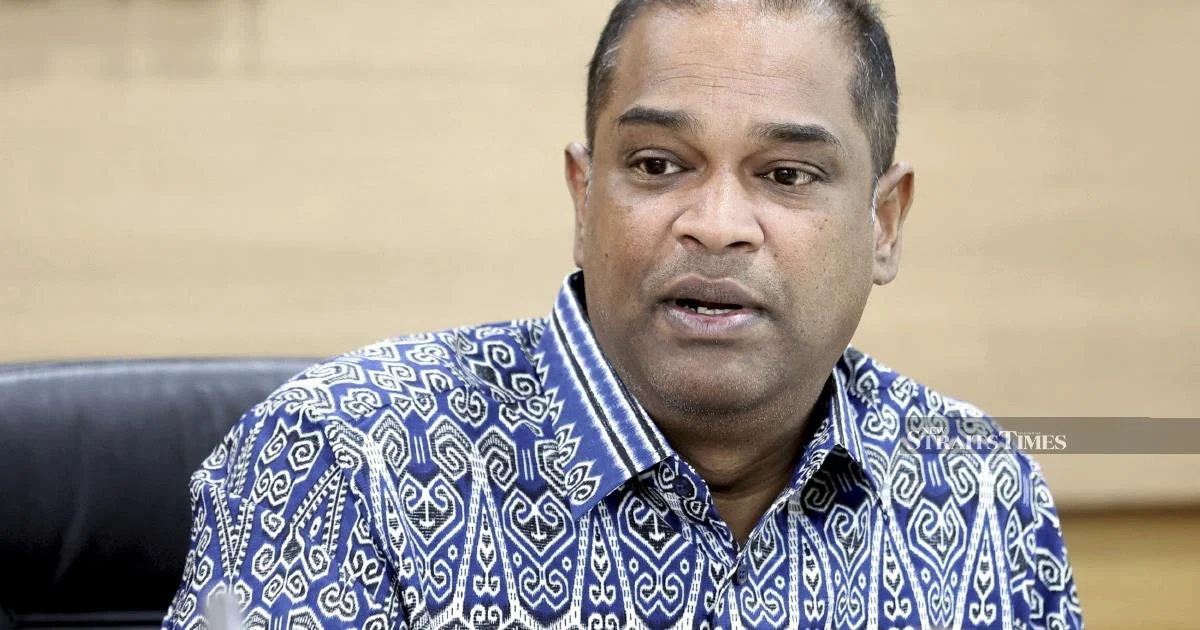
Political figures contesting the 16th Johor state election should refrain from entangling the royal institution in partisan campaigns, according to PKR vice-president Datuk Seri R. Ramanan. Speaking in Johor Baru, he expressed concern that various leaders are attempting to leverage the monarchy for political advantage during the forthcoming poll, a development he views as inappropriate and potentially damaging to an institution that ought to remain above the fray of electoral competition.
Ramanan's remarks underscore a persistent tension in Malaysian politics, where the boundary between constitutional monarchy and electoral gamesmanship has occasionally blurred. The Johor royal family holds particular significance in the state's political landscape, commanding deep respect among the populace and wielding considerable cultural influence. When political actors invoke royal support or seek to associate themselves with the institution, they tap into a wellspring of legitimacy that extends beyond ordinary partisan discourse. Ramanan's intervention suggests that several campaigns have crossed this line, treating the monarchy as a resource to be deployed rather than as a non-partisan symbol deserving protection.
The context of Johor elections carries additional weight given the state's historical importance in Malaysian federalism. Johor has traditionally been a political battleground where major shifts in electoral mathematics have reverberated nationwide. The state's administrative and commercial prominence, combined with its significant population, renders its electoral outcomes consequential for national coalition dynamics. When politicians invoke the royal institution during such contests, they risk politicising an entity whose constitutional role depends on maintaining distance from partisan competition.
Ramanan's warning reflects broader concerns within the opposition coalition about campaign conduct. PKR, as a component party in the ruling Pakatan Harapan alliance, maintains particular sensitivity to accusations of disrespecting traditional institutions. For the party, which has experienced state-level electoral setbacks in recent years, the election presents an opportunity to recover ground while simultaneously demonstrating commitment to constitutional norms. By publicly cautioning against royal exploitation, Ramanan positions his party as institutionally responsible, a calculated messaging strategy ahead of voting.
The 16th Johor election emerges at a moment when Malaysian politics exhibits heightened polarisation. Multiple coalition frameworks now compete for voter support, and the traditional boundaries separating acceptable and inappropriate campaign tactics have grown increasingly contested. In such an environment, peripheral issues can acquire outsized significance. If political opponents interpret Ramanan's statement as a rebuke of specific campaigners, the controversy itself could dominate subsequent coverage, potentially distracting from substantive policy discourse.
Historically, Johor's relationship with its royal institution has been characterised by unusual stability and public reverence. The state's Sultans have enjoyed sustained popularity precisely because they have generally remained aloof from day-to-day political controversy. This traditional distance between the throne and electoral contests has fortified the monarchy's position as a unifying symbol transcending party affiliation. Permitting politicians to weaponise the institution threatens to erode this carefully maintained separation, potentially diminishing the crown's capacity to function as a stabilising force during periods of political disagreement.
The implications for Southeast Asian observers merit consideration. Malaysia's constitutional monarchy has survived and adapted through multiple political transitions, partly because elite actors across the spectrum have broadly accepted limits on appropriating royal symbolism for partisan purposes. Should this informal consensus fracture—particularly in a state like Johor where the institution's standing is exceptionally high—the precedent could encourage similar boundary-crossing elsewhere, gradually normalising the politicisation of traditionally insulated institutions.
Ramanan's appeal also reflects internal coalition calculations within Pakatan Harapan. Different member parties maintain varying historical relationships with Johor's governance. PKR's interest in emphasising institutional propriety serves multiple purposes: it differentiates the coalition from potential opponents willing to engage in more aggressive tactics, appeals to conservative voters who value constitutional stability, and creates space for PKR to claim the high ground on governance standards. This rhetorical positioning, while rooted in genuine principle, simultaneously advances electoral strategy.
Looking ahead, the extent to which major political actors heed Ramanan's caution will shape the tenor of the campaign. Should candidates across all parties respect the boundary he has articulated, the election could proceed as a conventional contest where policy platforms and leadership records dominate discussion. Conversely, if competitors interpret his statement as weakness or dismissively invoke royal connections regardless, the resulting acrimony could leave lasting damage to the monarchy's political positioning and establish troubling precedents for future contests.
The upcoming election ultimately presents Johor voters with more than just a choice between competing coalitions. It also represents an implicit referendum on what standards of political conduct Malaysian society considers acceptable. By highlighting the inappropriateness of royal institution involvement in partisan campaigns, Ramanan has invited reflection on these broader norms. Whether the political establishment proves responsive to such appeals will reveal much about the maturity and institutional health of Malaysian democracy during an increasingly competitive electoral period.
%22%2F%3E%3C%2Fpattern%3E%3C%2Fdefs%3E%3Crect%20width%3D%22100%25%22%20height%3D%22100%25%22%20fill%3D%22url(%23ph2h5apg)%22%2F%3E%3Crect%20width%3D%22100%25%22%20height%3D%22100%25%22%20fill%3D%22url(%23ph2h5app)%22%2F%3E%3Ctext%20x%3D%2250%25%22%20y%3D%2250%25%22%20text-anchor%3D%22middle%22%20dominant-baseline%3D%22central%22%20fill%3D%22rgba(255%2C255%2C255%2C0.95)%22%20font-family%3D%22Georgia%2C%20'Times%20New%20Roman'%2C%20serif%22%20font-weight%3D%22700%22%20font-size%3D%22320%22%20letter-spacing%3D%22-0.02em%22%3EMUDA%3C%2Ftext%3E%3C%2Fsvg%3E)