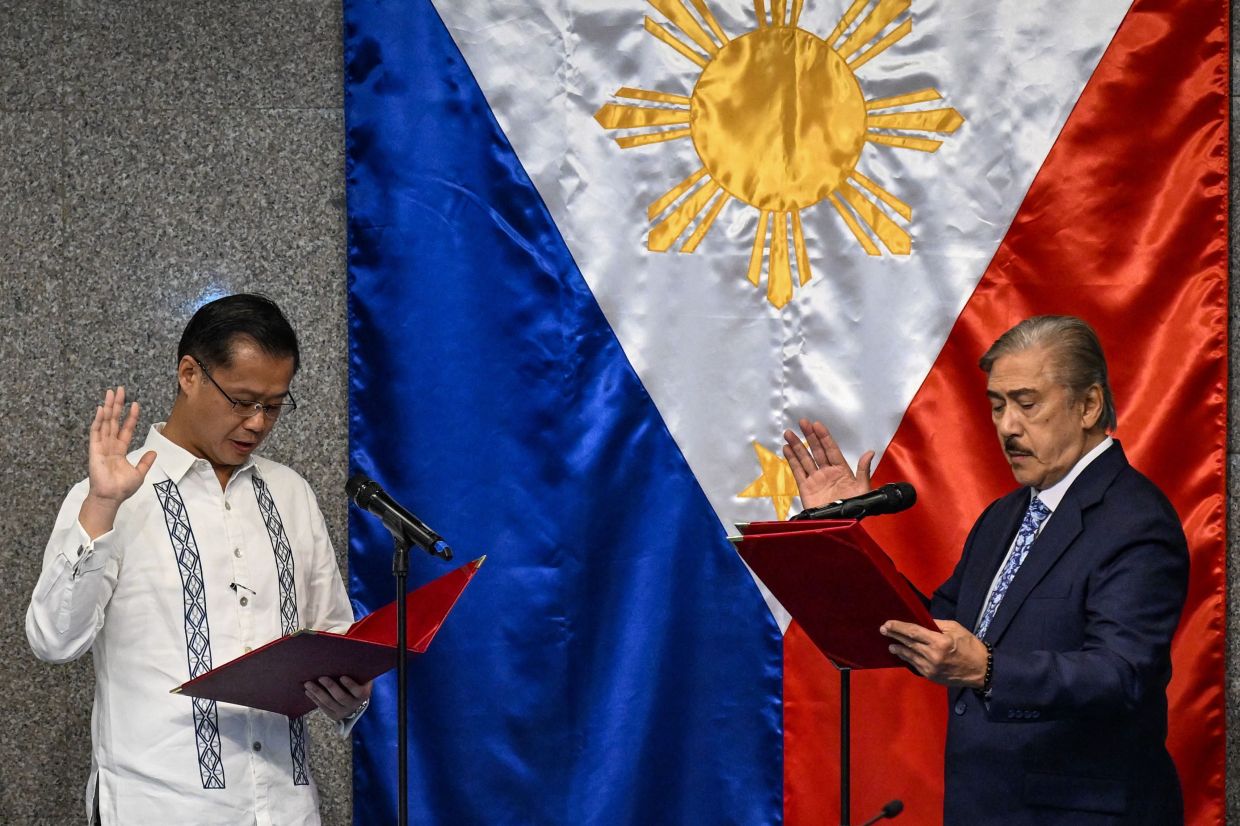
Senator Sherwin Gatchalian has been installed as the new president of the Philippine Senate following a special session held on Wednesday, June 17, marking a significant shift in the chamber's leadership after weeks of political manoeuvring. The Valenzuela City native, who previously held seats in both the Senate and the House of Representatives, secured the backing of exactly thirteen senators—the constitutional minimum required to elect a chamber officer—in a vote that reflects the delicate balance of power within the 24-member legislative body.
The path to Gatchalian's presidency was neither straightforward nor inevitable. Just two weeks earlier, on June 3, a different coalition of senators had moved against Alan Peter Cayetano, who had assumed the Senate presidency on May 11. That earlier manoeuvre appeared to install Gatchalian in a pro tempore capacity, with twelve senators voting to remove Cayetano from the top position. However, Cayetano disputed the legitimacy of that action, arguing that a full thirteen votes were necessary to conduct official business regarding the election or removal of senior Senate officers. The technical dispute over voting thresholds had left the chamber in an unusual state of contested leadership.
The turning point came when Senator Joel Villanueva, a long-time Cayetano supporter, switched his allegiance to Gatchalian's bloc. This single defection fundamentally altered the arithmetic of Philippine Senate politics. Recognising that the numbers had shifted irreversibly against him, Cayetano acknowledged on Tuesday that his position had become untenable. Rather than force a prolonged confrontation, he signalled his readiness to relinquish the presidency, a decision that effectively cleared the way for Wednesday's formal election and prevented further institutional turmoil within the chamber.
Gatchalian's credentials span multiple levels of Philippine governance. His tenure as Mayor of Valenzuela City, a significant administrative post in the Metro Manila region, provided him with executive experience beyond the legislative sphere. His prior service in the House of Representatives gave him familiarity with legislative processes and relationships across the political spectrum. These varied roles positioned him as a figure capable of bridging factional divides within the Senate, though his election was ultimately achieved through the narrow margin permitted by constitutional rules.
The Senate's current composition adds complexity to understanding the significance of this leadership transition. The chamber nominally comprises 24 members, yet only 22 senators are actively sitting. This reduction stems from serious complications affecting two prominent legislators. Senator Jinggoy Estrada turned himself over to police custody earlier in June and subsequently faced suspension from office for ninety days, following the anti-graft court Sandiganbayan's judgment in a corruption case. The second vacancy results from Senator Ronald Dela Rosa's status as a fugitive sought by the International Criminal Court, with his whereabouts remaining unknown and effectively removing him from legislative participation.
These absences reshape Senate dynamics in ways that extend beyond mere numerical reduction. The temporary loss of sitting members heightens the strategic importance of every senator present during votes on procedural matters. The requirement for thirteen votes to elect a Senate president becomes proportionally more consequential when the total working membership is constrained. Every defection carries outsized weight, and building coalitions demands careful cultivation of relationships among remaining members. Villanueva's decision to support Gatchalian therefore represented not simply a personal choice but a determinative shift in factional strength within the legislature.
The political manoeuvring surrounding the Senate presidency reflects deeper currents within Philippine governance. Institutional offices carry significance beyond their formal functions, often serving as proxies for broader political alignments and influence networks. Control of the Senate presidency confers procedural authority, agenda-setting power, and considerable symbolic weight within the broader structure of government. The weeks-long struggle over this position, despite its apparent technical nature, actually represented competing visions of how the Senate should conduct its affairs and which political forces should guide its direction.
For Malaysian observers and regional analysts, the Philippine Senate situation illustrates dynamics that resonate across Southeast Asia's democracies. Legislative bodies in the region frequently experience shifting coalitions, procedural disputes, and leadership contests that reflect evolving political landscapes. The willingness of legislators like Villanueva to switch positions, the significance of narrow voting margins, and the impact of individual absences on institutional functioning are patterns familiar to observers of Southeast Asian parliaments. Understanding how neighbours navigate these challenges offers insights into comparative legislative practice and the mechanics of democratic governance in the region.
Gatchalian's assumption of the Senate presidency now demands he navigate the chamber's multiple substantive agendas while managing the delicate political balance that enabled his election. His narrow margin of support—precisely thirteen votes—provides him no cushion for further defections should subsequent contested votes arise. The Senate will also need to address the vacancies created by Estrada's suspension and Dela Rosa's fugitive status, questions that may themselves become vehicles for further political contestation. The new president's success will partly depend on his ability to consolidate initial support and build broader consensus around legislative priorities.